Map

Abra

Cordillera Administrative Region
Luzon
Capital Bangued
Population 251,080
Area 3,976 km²
Municipalities 27
Cities 0
Island Group Luzon
Languages Ilocano, Itneg, Kankanaey

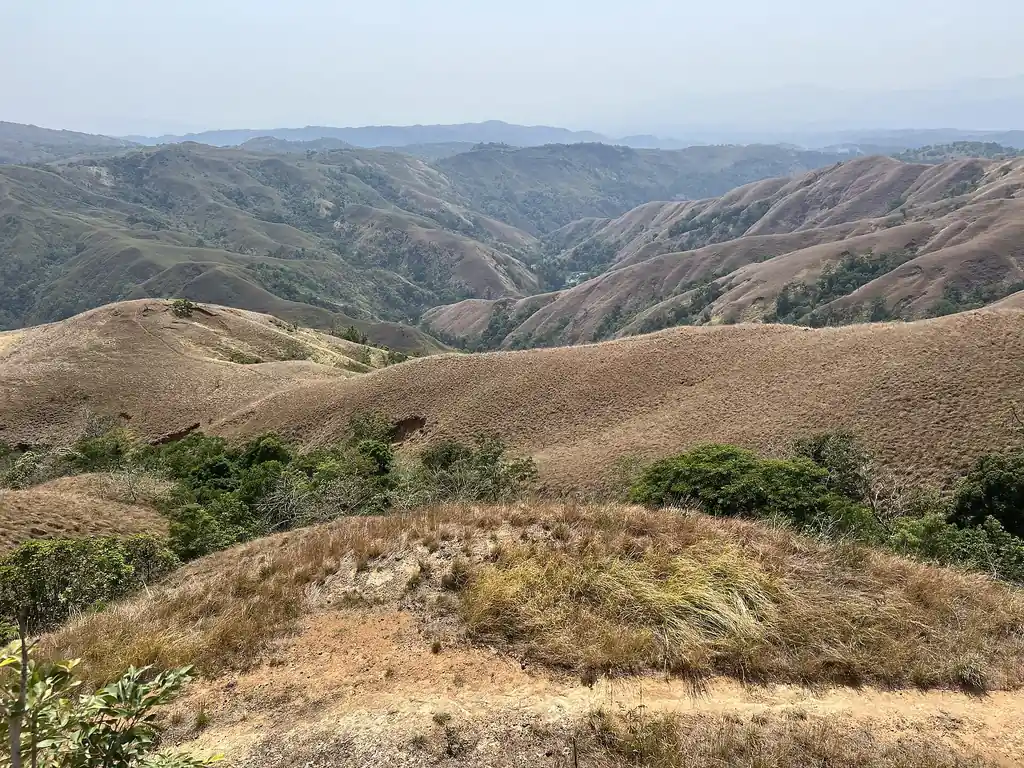
Abra is a landlocked province deep in the Cordillera mountains of northern Luzon — a province of river valleys, tribal territories, and roads that wind through forest before descending into the next settlement. The Abra River is its artery, running south toward the Ilocos coast.

BanguedCapital
3,976 km²Area
27Municipalities
LuzonIsland Group

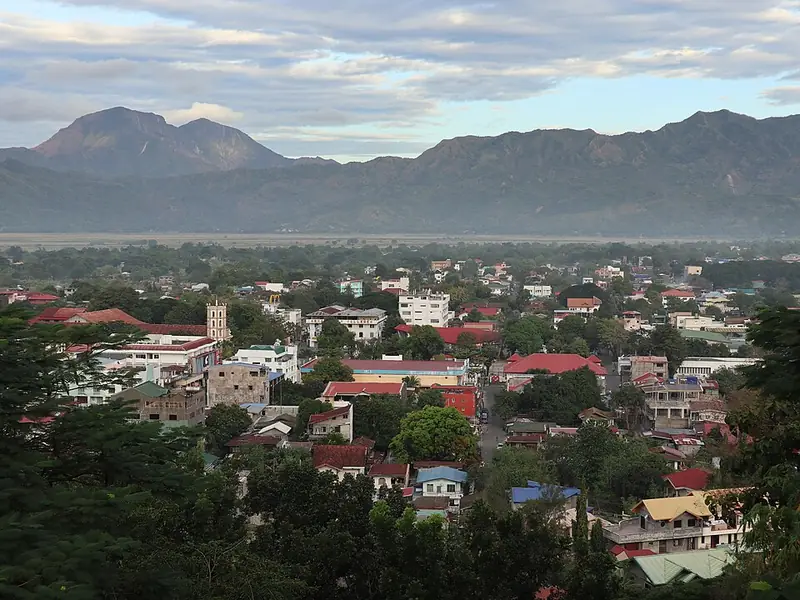
Bangued sits in the Abra River valley, surrounded by mountains. It is a small city that serves as the commercial and administrative centre of a province that is otherwise dispersed across difficult terrain. Travel within Abra requires patience and a tolerance for unpaved roads.

A Province Between Two Worlds

Abra sits between the Ilocos coastal plain to the west and the central Cordillera highlands to the east. This position made it a border zone for centuries — Ilocano lowlanders moving upriver, Itneg and Kankanaey highlanders moving down. The province carries both identities.

The Itneg people — also known as the Tinguian — are the indigenous community most associated with Abra, and their presence here predates recorded history. They are known for their distinctive weaving, their animist spiritual practices, and a cultural resilience that has survived four centuries of lowland pressure.

The Itneg Before Contact

The Itneg (Tinguian) people lived in the mountain valleys of Abra long before any Spanish expedition reached this part of Luzon. They practiced wet rice cultivation, maintained elaborate ritual systems tied to the agricultural calendar, and traded with Ilocano lowlanders on terms they controlled. They were not isolated — they were selective.

1598

First Spanish Contact

Spanish colonial records begin to mention the people of the Abra valley by the late 16th century. Dominican missionaries made early forays into the mountain communities, but conversion was slow, partial, and frequently reversed. The Itneg accepted some Spanish trade goods while continuing their own spiritual practices.

1709

Abra Becomes a Province

The Spanish established Abra as a separate administrative province in 1709, with Bangued as its centre. The province boundaries roughly followed the Abra River valley and its tributary systems — the geographic logic of a mountain province where rivers are roads.

Resistance and Accommodation

Throughout the Spanish period, Itneg communities in the highland interior were never fully pacified. Several major uprisings — including the rebellion of 1763, coinciding with the British occupation of Manila — showed that the mountains of Abra remained contested territory. The Spanish controlled the valley floor; the ridges above remained Itneg land.

1900

American Period — Roads and Schools

The American administration focused on infrastructure: roads into the mountain communities, public schools, and the introduction of English as a medium of instruction. These changes began the slow displacement of indigenous practices by national institutions — a process still incomplete in the most remote barangays of Abra.

1966

Mountain Province Reorganisation

Abra's boundaries were adjusted during the reorganisation of Cordillera provinces in the mid-20th century, separating it administratively from some of the highland communities with whom it had long shared territory.

The Abra River Route

For centuries before paved roads, the Abra River was the main highway connecting the highland interior to the Ilocos coast. Boats, rafts, and wading parties moved goods — tobacco, beeswax, rattan, woven textiles — down to the lowland markets at Vigan and Laoag. The trade made Bangued prosperous by highland standards.

Abra's culture is shaped by the meeting of two worlds: the Ilocano lowland tradition that moved upriver over several centuries, and the indigenous Itneg heritage that has occupied these mountains since before recorded memory. The province holds both — sometimes in tension, usually in an accommodation that neither side would fully describe as comfortable.

Itneg Weaving

The Itneg are among the finest weavers in the Philippines. Their textiles — woven on backstrap looms from hand-spun cotton — feature intricate geometric patterns in deep reds, whites, and blacks. Each pattern carries meaning: family lineage, community identity, the status of the wearer. No two master weavers produce identical cloth.

Pinilian Weaving

Abra's pinilian weave — a traditional Itneg textile technique using supplementary weft threads — is recognised as one of the intangible cultural heritages of the Philippines. It is taught from mother to daughter, passed within family lines, and produced on the same backstrap loom design used for generations.

The Cañao — Ritual Feast

The cañao is the most important communal ceremony in Itneg society — a multi-day ritual feast involving animal sacrifice, music, dance, and the affirmation of social bonds. It is held to mark harvests, to heal illness, to resolve community disputes, and to honour the dead. To be invited to a cañao is to be trusted.

The Ilocano Calendar

In the lowland municipalities of Abra, the Catholic calendar dominates community life — fiestas for patron saints, Holy Week processions, Christmas traditions brought from Ilocos Norte and Ilocos Sur. Bangued celebrates its town fiesta with particular energy, drawing residents back from the cities for the annual reunion that is the fiesta's real function.

Abra's cuisine sits at the junction of Ilocano lowland cooking and Cordillera highland practice. The Ilocano tradition — defined by fermented flavours, preserved meats, and the creative use of bitter vegetables — dominates the capital and the valley towns. In the highland barangays, mountain ingredients and indigenous preparation methods hold their own.

Dinengdeng

The defining Ilocano dish: a clear, light broth of fermented fish (bagoong isda) and whatever vegetables the garden produces — bitter melon, squash, string beans, moringa leaves, eggplant. It is not a recipe so much as a principle — use what is fresh, keep the broth honest, do not overcook. In Abra, river fish replaces the saltwater varieties of the coastal Ilocos.

Etag

Smoked and salt-cured pork, a Cordillera tradition shared across the highland provinces. In Abra, Itneg communities produce etag using traditional drying and smoking methods. The result is intensely flavoured, almost black on the outside, and used sparingly — a few pieces can flavour a pot of broth for an entire family.

Bagnet Capital

Abra and the neighbouring Ilocos provinces compete for the title of best bagnet — twice-cooked deep-fried pork belly that shatters on the bite. In Bangued, several market stalls specialise in it. Eat it on the day of purchase. It does not improve with time.

Pinakbet

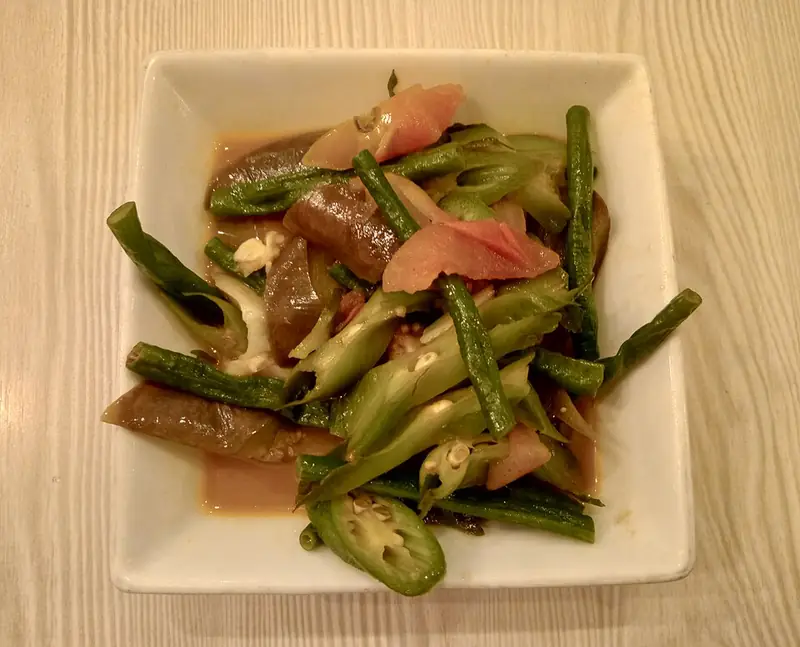
Ilocano vegetable stew built on bagoong alamang (shrimp paste) and a medley of bitter melon, squash, okra, eggplant, and long beans. The Abra version often adds river fish and local root vegetables. It is the everyday food of the valley, present at almost every family table.

Rice wine (tapuy or basi) is made in highland communities using traditional fermentation methods. Basi — sugarcane wine — is a stronger lowland tradition brought from Ilocos, where it was the subject of the famous Basi Revolt of 1807. In Abra, both exist, alongside commercially produced spirits.

Abra is a linguistically layered province. Ilocano serves as the common language of commerce, education, and inter-community communication across the valley towns. Indigenous languages — Itneg and Kankanaey — remain the daily languages of highland communities.

Ilocano

Ilocano is the language of the Ilocos region — brought into the Abra valley by lowland settlers moving upriver over several centuries. It is the third most widely spoken Philippine language nationally, and in Abra it functions as the lingua franca between communities that speak entirely different indigenous languages at home.

Itneg (Tinguian)

Itneg is spoken by the indigenous communities of Abra's mountain interior. It is not a single language but a cluster of related varieties: Binongan, Maeng, Masadiit, Inlaod, and others — each associated with a specific river valley or highland district. Speakers of one variety may not fully understand speakers of another.

The Tinguian Name Question

The Spanish colonial term for the indigenous people of Abra was 'Tinguian' — meaning, roughly, 'people of the mountains.' The people themselves prefer the term 'Itneg,' which is their own name for their community. Both terms are used in Philippine academic and government literature, but 'Itneg' is now preferred in formal contexts.

Kankanaey

Kankanaey is a Cordillera language spoken primarily in Benguet and Mountain Province, but Abra's eastern highland communities — where the province borders these areas — include Kankanaey-speaking populations. It belongs to the northern Luzon branch of the Philippine language family, related to but distinct from Itneg.

Abra is reached from the Ilocos coast via the Abra River valley — a comfortable drive from Laoag or Vigan into the mountains. From Manila, the northern expressway to the Ilocos and then east into Bangued is the standard approach. The province is not a major tourist destination, which is part of its character.

8–9 hrsFrom Manila
1.5 hrsFrom Vigan
Nov–MayBest season
BanguedGateway

Bangued

The provincial capital sits in the Abra River valley, compact and unassuming. The public market is the centre of daily life. The Abra River itself — wide, brownish-green, and fast during the rainy season — runs along the town's edge. Bangued is a working capital, not a tourist centre, but it is a useful base for exploring the province.

Tineg and the Deep Interior

Tineg municipality in the far northeast of the province sits deep in the Cordillera highlands, reachable by unpaved road through forest. The Itneg communities here have the least contact with lowland life and the most intact traditional practices. This is where the pinilian weaving masters live. Visit with a guide who has prior relationships in the community.

Abra River

The river runs through the heart of the province, passing through Bangued and the agricultural municipalities of the valley floor. River swimming, bamboo raft trips, and riverside camping are informal activities that locals have been doing for generations and that no official tourism programme has yet organised.

Itneg Village Visits

Independent visits to Itneg weaving communities require a local introduction. Ask at the Bangued tourism office for accredited guides with community ties. Arrive early in the day, bring a contribution to the household (rice is always appropriate), and do not photograph ceremonies without explicit permission.

The Weavers of the Tineg Valley

There is a skill in Abra that takes years to acquire and a lifetime to master. The Itneg women of the Tineg valley sit at their backstrap looms in the morning light and produce cloth that no machine can replicate — not for lack of trying, but because the cloth is not the point. The point is the knowledge encoded in the pattern, the family memory carried in the geometry, the conversation between a weaver and the tradition she inherited.

A pinilian textile from Abra can take weeks to complete. The supplementary weft threads are placed by hand, one by one, following a pattern held in memory rather than written in any guide. When a master weaver dies without passing the pattern to a daughter or granddaughter, that specific arrangement of colour and geometry disappears. Not archived. Not preserved. Gone.

The National Commission for Culture and the Arts has recognised pinilian weaving as a national intangible heritage. But recognition does not put food on a weaver's table, and young women in Tineg have the same calculations to make as young women everywhere: whether to stay with the loom, or go to the city. Some stay. The cloth continues. The mathematics of loss and survival runs through every thread.

The Basi Revolt's Shadow

In 1807, the people of Ilocos Sur rose against the Spanish government's monopoly on basi — the sugarcane wine that was the everyday drink of the Ilocano lowlands. The Basi Revolt was suppressed within months, but its memory runs through the culture of the entire Ilocos-Abra region. It is remembered not as a failure but as evidence: that the people of this corner of Luzon have always understood what is being taken from them, and have not always accepted it quietly.