Map

Agusan del Sur

Caraga
Mindanao
Capital Prosperidad
Population 702,985
Area 10,314 km²
Municipalities 13
Cities 1
Island Group Mindanao
Languages Manobo, Cebuano, Higaonon

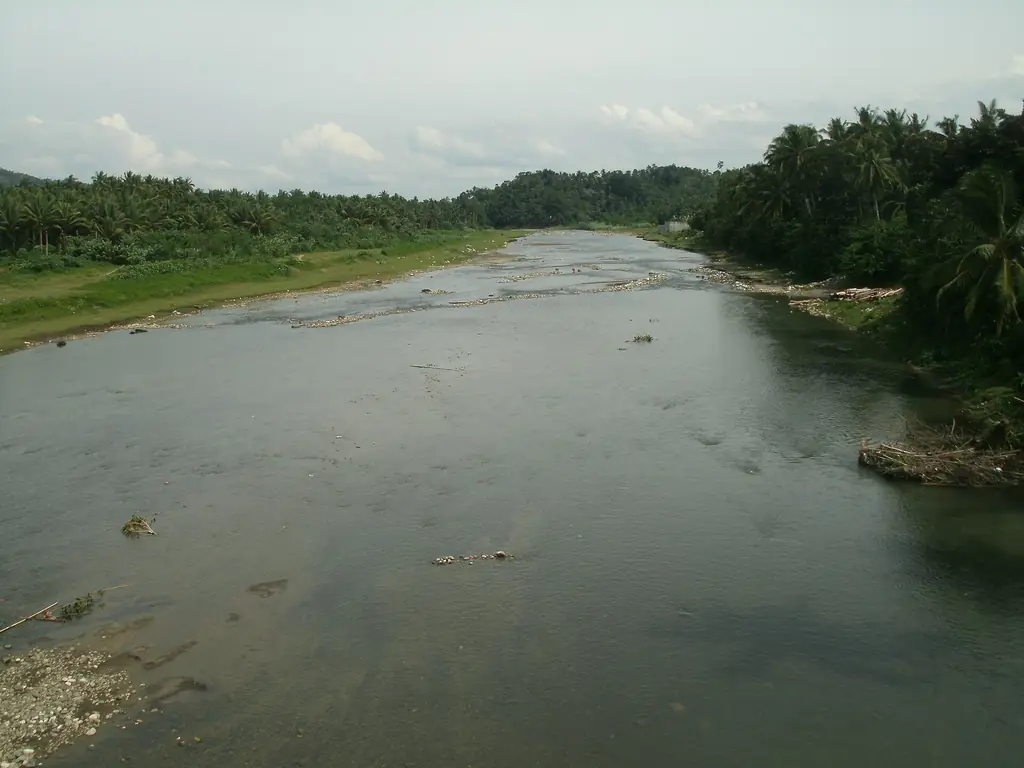
Agusan del Sur is the largest province in the Caraga region, occupying a wide basin in the heart of Mindanao. The Agusan River drains most of the province, feeding into one of the most significant wetland systems in Southeast Asia — the Agusan Marsh, a sprawling freshwater swamp that shifts its edges with the rains.

ProsperidadCapital
10,314 km²Area
13Municipalities
MindanaoIsland Group

Prosperidad is a quiet capital, understated in the way that interior Mindanao towns often are. The province around it is not built for tourism or spectacle — it is built for farming, for the river, and for the communities that have lived along the Agusan for centuries.

Largest in Caraga

At 10,314 km², Agusan del Sur is the largest province in the Caraga region and one of the largest in Mindanao. Its interior is difficult to traverse — rivers often serve as roads in the wet season.

The Manobo people are the dominant indigenous group here. Several Manobo subgroups occupy the upland forests and riverine areas of the province. Their customs, including the Bagobo-Manobo rituals and the role of the tribal chieftain or datu, remain active parts of community life in many areas.

The Agusan basin was home to Manobo and related peoples long before Spanish contact. Spanish missionaries and soldiers moved into the Agusan valley during the 17th and 18th centuries, establishing mission towns along the river. Control was never complete — upland communities remained largely outside the colonial reach.

1609

Spanish Penetration of the Agusan Valley

Spanish forces began moving into the Agusan River valley, establishing presence in what was then considered the interior wilderness of Mindanao.

1914

Agusan Province Established

The American colonial government formally organized Agusan as a province, consolidating control over the Agusan basin under a civil government structure.

1967

Division into Agusan del Norte and Agusan del Sur

The original Agusan province was split into two: Agusan del Norte covering the northern basin toward Butuan Bay, and Agusan del Sur covering the larger southern interior.

1989

Agusan Marsh Declared a Wildlife Sanctuary

The national government declared the Agusan Marsh a protected area, recognizing its ecological significance as one of the largest freshwater wetlands in the Philippines.

The province was a site of significant conflict during the Marcos-era insurgency and into the post-EDSA period. The NPA maintained a presence in the interior highlands for decades. Development has been uneven as a result — government reach extended along the Agusan River towns while the uplands remained remote.

The Manobo are not a single people but a cluster of related ethnic groups who share linguistic and cultural roots. The Agusan Manobo, the Tigwa-Manobo, the Higaonon — each group has distinct territory, dialect, and practice. What they share is a deep relationship with the forest and the river.

The Agusan Image

In 1917, a Manobo woman found a gold figurine in the Agusan Marsh — a seated figure, part human, part deity, made of hammered gold. The Agusan Image, as it became known, is now held at the Field Museum in Chicago. It remains one of the most important pre-colonial artifacts ever recovered in the Philippines, and its departure from the country is a source of ongoing cultural conversation.

A Marsh That Breathes

The Agusan Marsh expands dramatically during monsoon season, sometimes doubling in area. Communities living within it build homes on stilts or houseboats and navigate by dugout canoe. The marsh is home to the Philippine crocodile, the Philippine eagle's habitat zone, and dozens of endemic bird species.

Indigenous Rights and Land

Indigenous peoples in Agusan del Sur hold ancestral domain claims over significant portions of the province. The passage of the Indigenous Peoples' Rights Act in 1997 gave formal recognition to these claims, though conflicts over logging, mining, and agricultural conversion persist. The NCIP (National Commission on Indigenous Peoples) maintains offices in the province to manage these disputes.

Food in Agusan del Sur follows the broad pattern of Mindanao interior cooking — river fish, root crops, foraged greens, and pork from backyard animals. The Agusan River provides tilapia, mudfish, and freshwater shrimp that form the basis of daily meals.

Nilasing na Isda

Fish marinated in vinegar and spices, then fried until crisp. A common preparation along the Agusan River using whatever the catch provides — tilapia, mudfish, or carp.

Sinuglaw

A combination of grilled pork and raw fish cured in vinegar, common across Mindanao. In Agusan del Sur, it is made with freshwater fish from the river rather than the coastal versions found in Davao or Butuan.

Ginataang Puso ng Saging

Agusan del Sur
15 minutesPrep
25 minutesCook
4Serves
Ingredients
  • 1 large, slicedbanana blossom
  • 2 cupscoconut milk
  • 200g, slicedpork belly
  • 4 cloves, mincedgarlic
  • 1 medium, slicedonion
  • 2 tbspfish sauce
  • 2 pieceslong green chili
Method
  1. Soak sliced banana blossom in salted water for 10 minutes, then squeeze dry.
  2. Sauté garlic and onion in oil until fragrant. Add pork belly and cook until lightly browned.
  3. Add banana blossom and stir for 2 minutes.
  4. Pour in coconut milk and bring to a simmer. Season with fish sauce.
  5. Add green chilies and cook uncovered for 15 minutes until the sauce thickens and the banana blossom is tender.
Cook's note

Banana blossom absorbs coconut milk slowly. Do not rush the final simmer.

Market Towns

The public markets in San Francisco and Bayugan carry fresh river catch most mornings. Dried mudfish and smoked tilapia are also available and travel well as pasalubong.

Cebuano is the dominant language of daily commerce and public life in Agusan del Sur, brought into the province through Visayan migration during the American period and accelerating in the mid-20th century. It is the language of markets, local government, and schools.

Manobo Languages

The Manobo language cluster includes Agusan Manobo, Tigwa Manobo, and several related tongues. These are distinct languages, not dialects of Cebuano or of each other, with their own phonologies and grammatical structures. They are spoken primarily in upland and riverside indigenous communities.

Oral Literary Tradition

The Manobo have a rich oral literature including the Ulahingan, a cycle of epic poems recited by trained chanters called tigbabal. A full recitation can take several nights. Efforts to document these epics have been ongoing since the 1960s.

Filipino and English are used in formal education and government. In practice, most residents in town centers code-switch freely between Cebuano and Filipino, while indigenous communities maintain their heritage languages in home and ceremonial contexts.

Agusan del Sur is not on the standard tourist circuit, which is partly its appeal. Getting here requires commitment — a flight to Butuan or Davao, then a several-hour overland journey. The reward is the marsh, the river, and the relative absence of crowds.

Butuan (BXU), ~2 hrs northNearest Airport
~4 hrs by road via TagumFrom Davao
March to May (dry season)Best Season
Caraga (Region XIII)Region

Agusan Marsh Wildlife Sanctuary

A 14,836-hectare protected wetland, the marsh is best explored by motorized banca from barangay Bunawan Brook. Expect birds, crocodiles, and the floating village communities of the Manobo. The surrounding peatlands are among the most ecologically sensitive areas in Mindanao.

Bunawan

The municipality of Bunawan sits at the edge of the marsh and serves as the main entry point for marsh visits. It is also where Lolong — the largest crocodile ever measured in captivity, at 6.17 metres — was captured in 2011. Lolong died in 2013 and his remains are displayed at the Bunawan Eco-Park.

Bayugan City

The most accessible city in Agusan del Sur, Bayugan serves as a commercial stopover for travelers heading deeper into the province. Markets here stock fresh produce from the surrounding agricultural municipalities.

Arranging Marsh Tours

Contact the Protected Area Management Board (PAMB) in Bunawan before visiting the marsh. Guides are required and available at the eco-park entrance. Early morning entries give the best chance of bird sightings.

In 1917, a Manobo woman named Maria was working near the banks of a tributary of the Agusan River when she found something in the mud. It was heavy, gold-colored, and shaped like a seated figure — a woman, or perhaps a deity, with elongated ears and hands resting on her knees. Maria brought it to a local school teacher named R.E. Templeton, who brought it to the attention of American colonial officials.

The figure — now known as the Golden Tara of Agusan or the Agusan Image — passed through several hands before arriving at the Field Museum in Chicago, where it has been held since 1922. It is made of hammered gold alloy, stands about 19 centimeters high, and is dated to roughly the 9th to 10th century. Scholars debate its cultural origins: some see Hindu-Buddhist influences from the Sri Vijaya trading networks, others point to indigenous Manobo symbolic systems. The figure does not fit neatly into any single cultural tradition.

What the discovery revealed was that the Agusan basin — remote, difficult, flooded for months each year — was once connected to the wider world of maritime Southeast Asia. Gold-working of this sophistication does not emerge from isolation. The marsh and the river were trade corridors, not barriers. The communities that lived along them were not peripheral. They were, for a time, part of something larger.

The figure remains in Chicago. The Philippine government has not formally requested its return, and the Field Museum has not offered. In Bunawan, the story of how it was found and where it went is still told. Maria's name is remembered. The mud of the Agusan, it turns out, holds more than fish.