Map

Basilan

BARMM
Mindanao
Capital Isabela City
Population 415,505
Area 1,327 km²
Municipalities 11
Cities 1
Island Group Mindanao
Languages Yakan, Tausug, Chavacano, Filipino

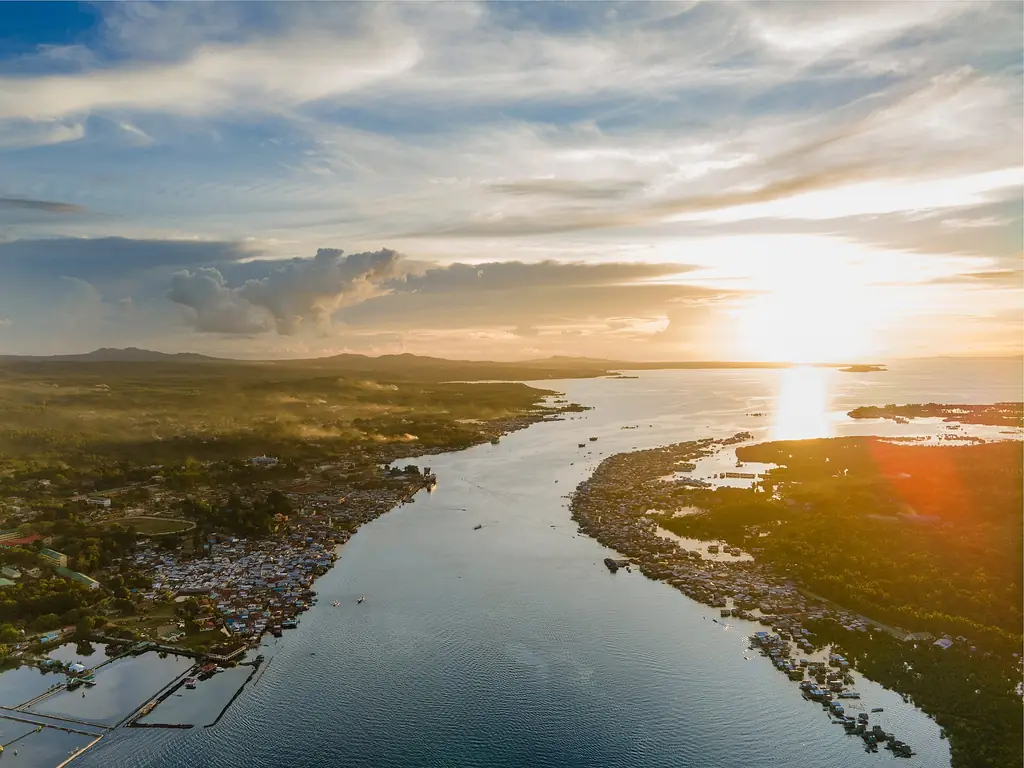
Basilan is an island province at the southern tip of the Zamboanga Peninsula, separated from Zamboanga City by a narrow strait. It is part of the Bangsamoro Autonomous Region in Muslim Mindanao (BARMM), and it is predominantly Muslim in population and character. The island is forested, agricultural, and has spent much of the past thirty years living with the consequences of armed conflict.

Isabela CityCapital
1,327 km²Area
11Municipalities
MindanaoIsland Group

Isabela City is unusual in Basilan's context — it is the provincial capital but it is not part of the province administratively, having been constituted as an independent city in 2000. It is predominantly Christian in population, a product of 20th-century migration from Visayas. The rest of the island is overwhelmingly Muslim.

The Yakan

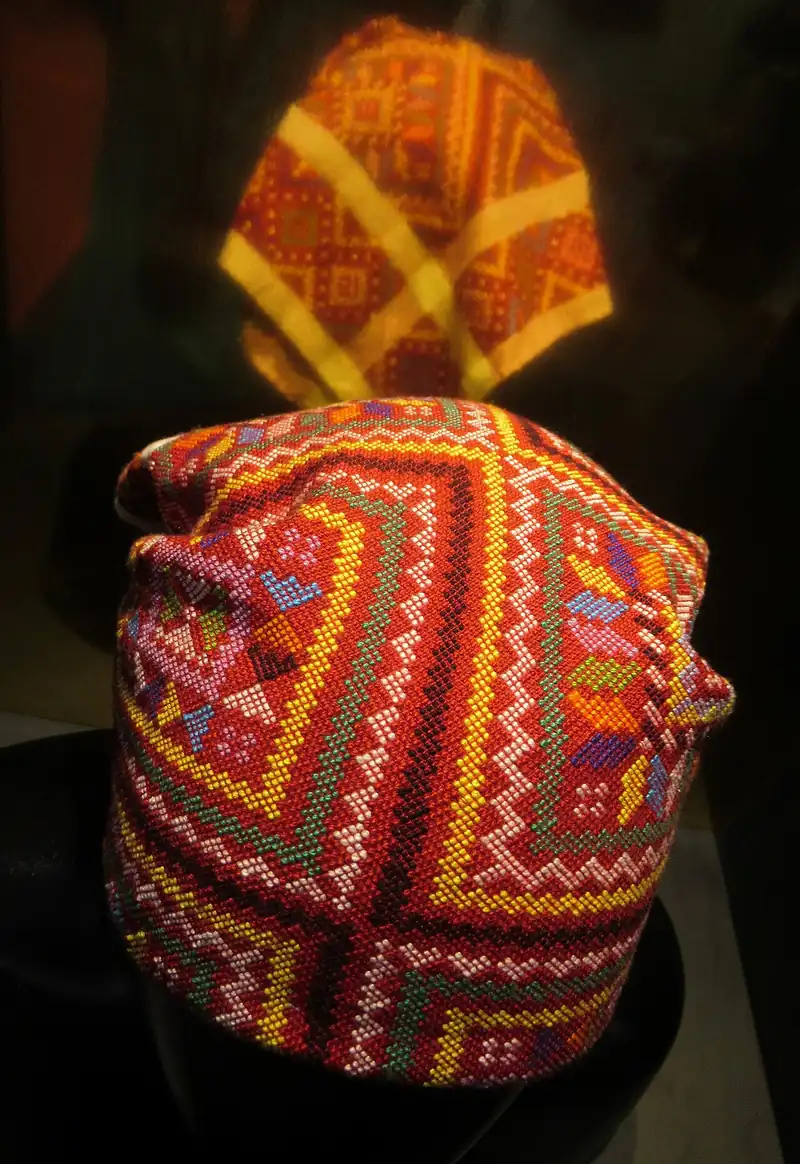
The Yakan are the indigenous Muslim people of Basilan, distinct from the Tausug of Sulu and the Maguindanao of the mainland. They are known for geometric woven cloth — intricate patterns in primary colors on cotton fabric — that is among the most technically demanding textile work in the Philippines.

Basilan's economy rests on rubber, coconut, and abaca cultivation. The island is one of the Philippines' main rubber-producing areas, with large plantation estates established during the American period. The forests have been significantly reduced by agricultural conversion over the past century.

Basilan has been under the influence of the Sulu Sultanate since the 15th century. The Yakan inhabited the island and maintained a distinct identity while acknowledging Tausug suzerainty. Spanish attempts to control Basilan were contested for centuries, and the island's population mounted regular resistance to colonial authority.

15th century

Sulu Sultanate Extends Influence to Basilan

The Sultanate of Sulu, based on Jolo, extended its political influence over Basilan. The Yakan maintained local autonomy while operating within the broader Sultanate network.

1845

Spain Establishes Fort in Isabela

After centuries of unsuccessful attempts to control the island, Spain established a fortified garrison at Isabela de Basilan, using it as a base for naval operations against Moro raiders.

1899–1913

American Military Campaign in Basilan

American forces fought a sustained campaign to subdue Basilan after the Philippine-American War. The Yakan and Tausug communities resisted American authority with armed resistance that lasted more than a decade.

1991–present

Abu Sayyaf Operations

The Abu Sayyaf Group, an armed militant organization, emerged in Basilan in the early 1990s. The group carried out kidnappings, bombings, and attacks that severely disrupted life on the island and made international news. Military operations against Abu Sayyaf have continued for three decades.

The Bangsamoro peace process, which produced the BARMM in 2019, has brought a degree of stability to the region. Basilan is now part of the autonomous region, and local governance has shifted significantly. The security situation, while improved, remains something travelers must monitor.

The Yakan are the cultural anchor of Basilan. Their weaving tradition is one of the most sophisticated in the Philippines, producing cloth with geometric patterns executed in supplementary weft technique — a process that requires counting threads and maintaining precise mathematical sequences across the full width of the fabric.

Yakan Weaving

Yakan cloth is immediately recognizable: tight geometric patterns in red, yellow, green, black, and white, on a plain cotton ground. The patterns have names and meanings — different designs are appropriate for different occasions, garments, and social contexts. The cloth is used for the traditional dress of both men and women, for ceremonial occasions, and increasingly for sale as art and fashion.

Panglay Dance

The Panglay is the traditional dance of the Yakan, performed at weddings and celebrations. It features slow, precise hand and arm movements that reflect Islamic aesthetic sensibilities. The dance is accompanied by kulintang (brass gong) music.

Islam on the Island

Islam came to Basilan through the Sulu trading networks in the 15th century. The practice of Islam among the Yakan incorporates elements of pre-Islamic Austronesian tradition — beliefs about spirits, land, and ancestral protection that coexist with Quranic practice. This is characteristic of Islam across island Southeast Asia, where conversion was gradual and syncretic.

Basilan's food is halal, built on seafood, chicken, beef, and coconut milk. The flavors are assertive — turmeric, ginger, lemongrass, and chili appear in most savory dishes. The food shares characteristics with the broader Moro culinary tradition found across Sulu and coastal Mindanao.

Tiyula Itum

A dark beef or chicken soup cooked with burned coconut — the coconut is charred and ground, then dissolved into the broth. The result is black, smoky, and complex. It is the most distinctive dish of the Tausug and is found across the Sulu region including Basilan.

Ketupat

Rice cooked in woven palm-leaf pouches, compressing it into a dense, chewy cake. Common across Muslim Mindanao and the Malay world, ketupat is served at Eid celebrations and community feasts. In Basilan, it is eaten with grilled chicken or fish and sambal.

Chicken Piaparan

Basilan / Muslim Mindanao
20 minutesPrep
40 minutesCook
4Serves
Ingredients
  • 1 whole, cut into serving pieceschicken
  • 2 cupscoconut milk
  • 2 tsp ground or 1 thumb fresh, gratedturmeric
  • 2-inch knob, mincedginger
  • 2 stalks, bruisedlemongrass
  • 1 large, slicedonion
  • 5 cloves, mincedgarlic
  • 2–3 piecesgreen chili
  • to tastesalt
Method
  1. Sauté garlic, onion, ginger, and lemongrass until fragrant.
  2. Add turmeric and stir for one minute.
  3. Add chicken pieces and cook until lightly browned on all sides.
  4. Pour in coconut milk and bring to a simmer.
  5. Add green chilies and cook uncovered for 30 minutes, stirring occasionally, until chicken is tender and sauce has thickened.
  6. Season with salt. Serve with steamed rice.
Cook's note

Fresh turmeric gives a more vivid color and flavor than ground. The sauce should reduce to a thick coating consistency — do not add water.

Yakan is the indigenous language of Basilan, spoken by the Yakan people who form the majority of the island's Muslim population. It is a Malayo-Polynesian language distinct from Tausug and Maguindanao, with its own phonology and lexicon. Yakan speakers also typically know Tausug and Chavacano.

Chavacano in Isabela

Isabela City has a significant population of Chavacano speakers — the Spanish-based creole language that originated in Zamboanga City. This reflects the city's history as a predominantly Christian settlement connected to Zamboanga. Chavacano is used in commerce and daily life alongside Filipino and Yakan.

Tausug — the language of the Sulu Sultanate — is understood across Basilan and used in inter-community commerce. It functions as a regional trade language for the Sulu Sea corridor. Filipino and English are standard in schools and government.

The linguistic landscape of Basilan reflects its layered history: indigenous Yakan, the Sulu Sultanate's Tausug, the Spanish colonial Chavacano, and the national Filipino. Each language marks a different layer of the island's contact with the outside world.

Basilan requires security awareness before and during travel. The situation has improved significantly since the peak conflict years of the 2000s, but travelers should check advisories from the Department of Foreign Affairs and coordinate with local contacts before visiting. Within Isabela City, movement is generally safe.

Ferry from Zamboanga City (~30 min)Access
Zamboanga (ZAM)Nearest Airport
Isabela City (administratively separate)Capital
Check DFA travel advisories before visitingAdvisory

Yakan Weaving Village

Weaving communities in Lamitan City and surrounding municipalities welcome visitors who want to observe and purchase Yakan cloth. The weavers work on traditional backstrap or floor looms, and the finished textiles are available for purchase directly from producers.

Isabela City Waterfront

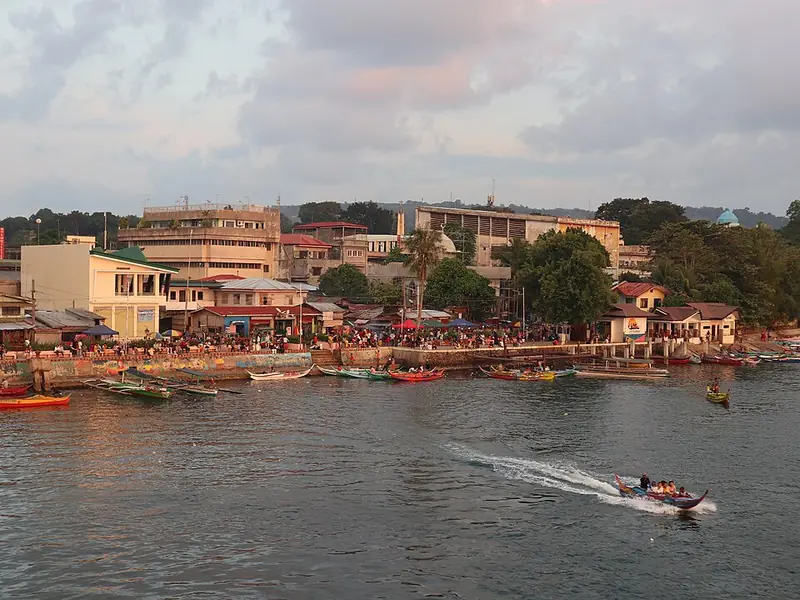
The city's waterfront faces Zamboanga across the strait. The public market here is one of the best places on the island to find fresh seafood and a cross-section of Basilan's mixed population going about daily business.

White Beach, Maluso

A quiet beach on the western side of the island, accessible from Maluso municipality. The sand is white, the water is clear, and the village nearby offers basic food. The beach is largely unknown outside the province.

Travel Advisory

Parts of Basilan's interior and certain municipalities have ongoing security concerns related to armed group activity. Travel to Isabela City and Lamitan is generally manageable with local guidance. Avoid inland travel without a reliable local contact.

A Yakan weaver holds the pattern in her head. There is no written chart, no printed template. The design — diamonds nested inside diamonds, borders of interlocking chevrons, the count of warp threads between each color shift — exists only in memory, transmitted from mother to daughter over years of watching and then doing. When a weaver dies without passing on a pattern, that pattern is gone.

The Yakan have been weaving on Basilan for as long as oral history reaches. The cloth they produce, called pis syabit and bunga sama among other names, is classified by pattern complexity and occasion. Wedding cloth requires different patterns from festival cloth. The sash a man wears to Friday prayers carries different markings than the one worn to a headman's gathering. The textile is a language with its own grammar.

The decades of conflict affected the weaving. When communities displaced to evacuation centers, the looms stayed behind. When women spent years in temporary housing, the regular rhythm of production was disrupted. Some patterns were not relearned after the displacement. The cultural toll of the conflict shows up in these absences — in the patterns that now exist only in the memory of the oldest weavers, or not at all.

The peace process brought some stability, and the weaving has recovered in the communities that returned to their land. Organizations working on Yakan cultural preservation have documented patterns and supported weaving cooperatives. In Lamitan and Isabela, younger women are learning the craft again. The cloth continues to be made. Some of what was lost cannot be recovered. But the loom is still moving, and the thread is still being counted, and the pattern is still being held in the weaver's mind, which is where it has always lived.