Map

Bataan

Central Luzon
Luzon
Capital Balanga City
Population 801,542
Area 1,373 km²
Municipalities 11
Cities 1
Island Group Luzon
Languages Tagalog, Kapampangan

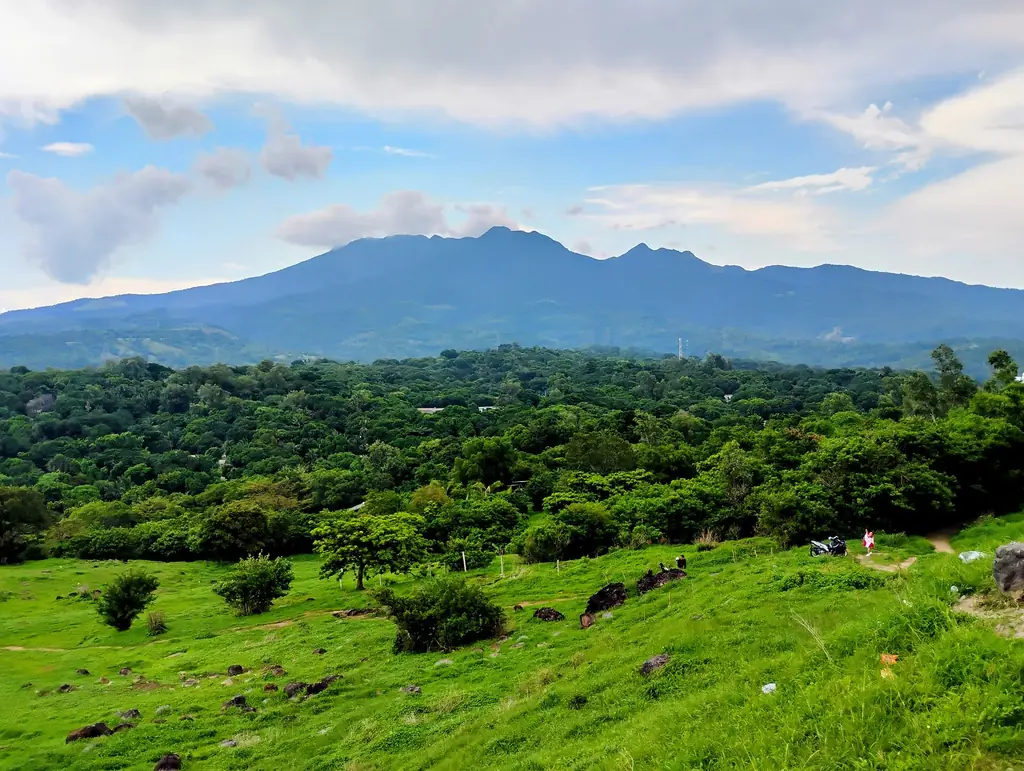
Bataan is a peninsula on the western side of Manila Bay, in Central Luzon. It juts south into the bay, separated from Cavite province across the water. The peninsula is defined by the Bataan mountain range, which runs down its spine, and by its particular place in the history of the Second World War — a place where Filipino and American soldiers made their last organized stand against the Japanese in the spring of 1942.

Balanga CityCapital
1,373 km²Area
11Municipalities
LuzonIsland Group

Balanga City is the commercial and administrative center of the province — a medium-sized city that has grown significantly since the 1990s with industrialization along Manila Bay. The city is clean and functional, with a well-maintained heritage zone around its old church.

The Last Stand

When Japanese forces invaded Luzon in December 1941, Filipino and American troops were pushed back into the Bataan Peninsula, where they held for three months against superior forces. The fall of Bataan on April 9, 1942, was followed immediately by the Bataan Death March — one of the most documented war crimes of the Pacific War.

Modern Bataan is an industrial province — home to the Bataan Economic Zone and refineries along the bay. The war history is central to provincial identity, marked by memorials, museums, and an annual commemoration on Araw ng Kagitingan (Day of Valor) every April 9.

Bataan was organized as a province during the Spanish period and served as a defensive position controlling access to Manila Bay. The Americans recognized its strategic value and built Fort Dimas-Alang in the early 20th century. The peninsula's military significance was fatally confirmed in 1941–1942.

December 1941

Japanese Invasion of Luzon

Japanese forces landed in northern Luzon on December 8, 1941, hours after the attack on Pearl Harbor. General Douglas MacArthur ordered the retreat of Filipino-American forces into the Bataan Peninsula under War Plan Orange, concentrating 80,000 troops on the peninsula.

January–April 1942

Battle of Bataan

For three months, Filipino and American forces held the Bataan Peninsula against Japanese assault. Short on food, medicine, and ammunition, and with no relief coming from the United States, the defenders suffered from disease and starvation. On April 9, 1942, Major General Edward King Jr. surrendered — the largest surrender of American-led forces in history.

April 9–April 17, 1942

The Bataan Death March

Following the surrender, approximately 76,000 Filipino and American prisoners of war were forced to march 100 kilometers to Camp O'Donnell under brutal conditions. Estimates of those who died on the march range from 5,000 to 18,000 Filipino soldiers and 500 to 650 Americans — from beatings, execution, disease, and exhaustion.

January 1945

Liberation of Bataan

American and Filipino forces under General MacArthur returned to Luzon and liberated Bataan in January 1945. The liberation came too late for the thousands who had died at Camp O'Donnell and the prison camps.

1972

Bataan Nuclear Power Plant Construction Begins

The Marcos government contracted Westinghouse to build a nuclear power plant in Morong. The plant was completed but never operated due to safety concerns and political opposition. It remains a functioning museum and controversial landmark.

Memory of the war is the central cultural fact of Bataan. The province marks April 9 as Araw ng Kagitingan with ceremonies at the Death March memorials, the Mount Samat National Shrine, and military cemeteries. Veterans organizations — dwindling now as the last survivors pass — have held the memory alive for decades.

Mount Samat

The Dambana ng Kagitingan (Shrine of Valor) atop Mount Samat is the dominant symbol of Bataan's war history. The 92-meter Latin cross visible from Manila Bay marks the summit, and a museum and memorial complex at the base documents the battle. The view from the cross arm, reached by elevator, covers the entire peninsula and Manila Bay.

Filipino Soldiers

The popular memory of the Bataan Death March often foregrounds American suffering, but the majority of those who fought and died were Filipino. Of the 76,000 prisoners who marched, approximately 64,000 were Filipino soldiers. Their sacrifice is the central fact of Araw ng Kagitingan.

Bataan Economic Zone

Post-war Bataan developed into an industrial corridor along Manila Bay. The Bataan Export Processing Zone, established in the 1970s, brought manufacturing employment and migrant workers from across Luzon. The industrial character of the coastal towns contrasts with the forested interior and the memorial sites in the uplands.

Bataan's food reflects its position as a Central Luzon province with a long coastline on Manila Bay. Seafood — crabs, shrimp, fish — from the bay is central to local cooking. The province also has an agricultural interior producing rice, vegetables, and livestock.

Alimango sa Gata

Blue crabs cooked in coconut milk with ginger and chili. Manila Bay crabs are prized for their fat, and alimango (mud crabs) from the bay's mangrove areas are considered the best. The coconut milk sauce absorbs the crab fat and becomes extraordinary.

Kare-Kare

Oxtail and tripe in a thick peanut-based sauce, served with bagoong (fermented shrimp paste) on the side. A dish common across Central Luzon with particular associations with Pampanga, but deeply embedded in Bataan cooking as well. The peanut sauce is made from ground roasted peanuts and toasted rice.

Sinigang na Hipon sa Bayabas

Bataan / Central Luzon
15 minutesPrep
25 minutesCook
4Serves
Ingredients
  • 500g, heads onlarge shrimp
  • 6 ripe pieces, quarteredguava (bayabas)
  • 3 medium, quarteredtomatoes
  • 1 medium, quarteredonion
  • 1 bunch, trimmedkangkong (water spinach)
  • 100g, cut into 2-inch piecessitaw (string beans)
  • 2 tbspfish sauce
  • 6 cupswater
Method
  1. Bring water to a boil. Add guava, tomatoes, and onion. Boil for 10 minutes until guava softens.
  2. Press the guava pieces with the back of a spoon to release their juice. Strain the broth if desired for clarity, or leave the solids in.
  3. Add string beans and cook for 3 minutes.
  4. Add shrimp and cook until pink, about 3–4 minutes.
  5. Season with fish sauce. Add kangkong, stir, and remove from heat. Serve immediately.
Cook's note

Guava as the souring agent gives a slightly sweet-tart flavor different from tamarind. Use ripe guava, not unripe. The shrimp must not be overcooked — add them last.

Tagalog is the primary language of Bataan, spoken throughout the province. Bataan Tagalog has its own character — distinct from Manila Tagalog and showing some influence from the Kapampangan-speaking areas of Pampanga to the north.

Kapampangan is spoken in some communities in the northern municipalities bordering Pampanga, reflecting the historical connection between the two provinces. Trade and intermarriage have produced bilingual households in the border areas.

Sambal Language

The Sambals — an indigenous group who historically inhabited parts of Zambales and western Central Luzon — have a small presence in Bataan. The Sambal language is distinct from Tagalog and Kapampangan. Most Sambal speakers in Bataan now also speak Tagalog.

English has a strong presence in Bataan, partly because of the province's history with American forces and partly because of the export processing zones, where English is the working language for international business. The provincial capital has a notably high rate of functional English literacy.

Bataan is a half-day drive from Manila and increasingly easy to reach via the SCTEX and BCLEX expressways. The province is manageable as a day trip from the capital, though staying overnight allows time for the shrines, the coast, and the Bataan Nuclear Power Plant tour.

~2.5 hrs via SCTEX–BCLEX expresswayFrom Manila
Manila to Orion by fast craft (~2 hrs)Ferry Option
Araw ng Kagitingan — April 9Commemoration
Central Luzon (Region III)Region

Mount Samat National Shrine (Dambana ng Kagitingan)

The memorial cross and museum complex atop Mount Samat is the primary destination in Bataan. The museum documents the Battle of Bataan and the Death March. An elevator inside the cross ascends to a viewing gallery with panoramic views of the peninsula and Manila Bay.

Bataan Death March Marker, Mariveles

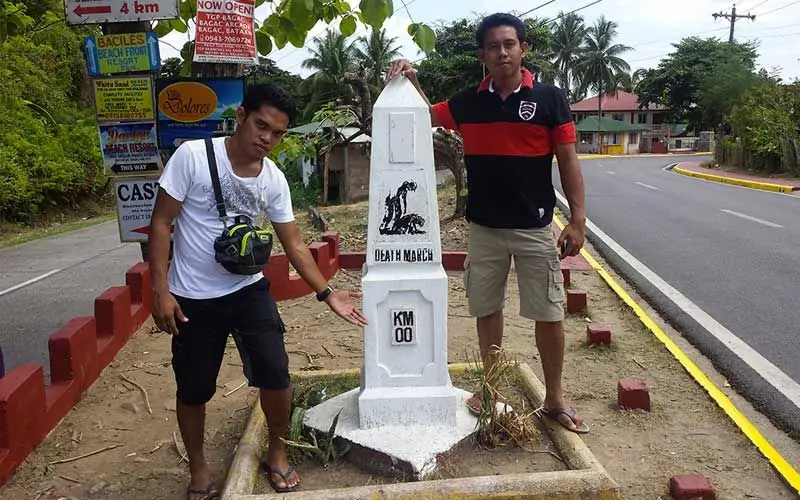
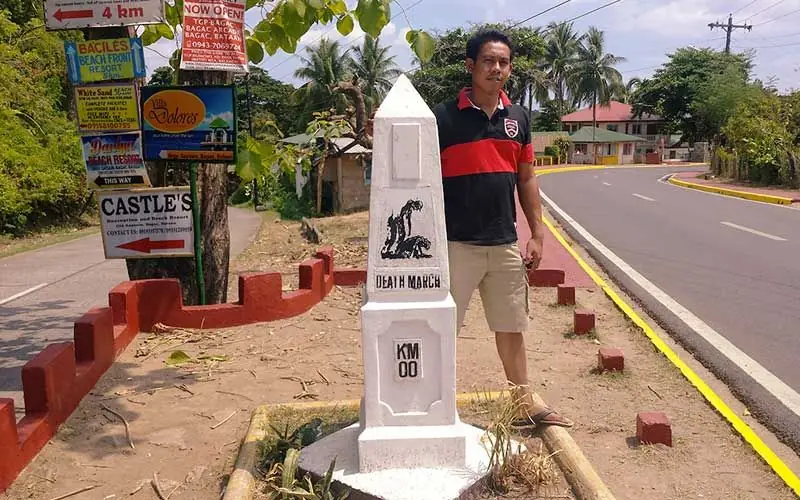
The Death March began in Mariveles, at the tip of the peninsula. A marker in the town commemorates the starting point. The route north along the old road to San Fernando, Pampanga, is marked at intervals by kilometer posts.

Bataan Nuclear Power Plant, Morong

Completed in 1984 but never operated, the BNPP is now open for tours. It is the only nuclear power plant in Southeast Asia that was built but never used. The tour includes the reactor building, control room, and an exhibition on its history and the controversy surrounding it.

April 9 Commemoration

Visiting on Araw ng Kagitingan (April 9) means witnessing a live ceremony at the Mount Samat shrine, often attended by the President and veterans' groups. It is one of the more solemn national observances in the Philippine calendar.

On the morning of April 9, 1942, Major General Edward P. King Jr. sent a flag of truce to the Japanese lines. He had no authority from MacArthur in Australia or from Washington to surrender. He did it anyway. His 76,000 men were starving, sick, and out of ammunition. He surrendered to save their lives. It did not save many of them.

The Japanese had not planned for prisoners. Their calculations had expected Filipino and American forces to collapse faster than they did. The three-month defense of Bataan was a military failure in the sense that it ended in surrender, but it was also a disruption of the Japanese timetable that had strategic consequences for the Pacific War. What followed the surrender had no strategic value of any kind. It was a march.

Seventy-six thousand prisoners were walked north in April heat. The distance was about 100 kilometers. Some were put on trains partway through. Most walked. There was little water, no food, and a consistent policy of beatings and executions for those who fell. The exact number who died on the march and in the immediate aftermath at Camp O'Donnell is still debated. The minimum estimates are 5,000 Filipino and 500 American soldiers. Some historians put the Filipino death toll much higher.

Every April 9, Bataan holds ceremonies. The cross on Mount Samat is illuminated. Veterans — fewer every year — attend in dress uniform. School children are brought to the memorials. The province has made the memory of what happened here into its central civic identity, and it does not allow the forgetting. The men who marched have mostly died now, but Bataan insists on their names.