Map

Batanes

Cagayan Valley
Luzon
Capital Basco
Population 17,246
Area 219 km²
Municipalities 6
Cities 0
Island Group Luzon
Languages Ivatan, Ilocano

Batanes is the northernmost province of the Philippines, a group of islands in the Luzon Strait between Luzon and Taiwan. It is the smallest province in the country by land area, and one of the most isolated. The islands sit directly in the path of Pacific typhoons, and everything about life here has been shaped by that fact.

BascoCapital
219 km²Area
6Municipalities
LuzonIsland Group

Basco, on the main island of Batan, is a small capital of stone houses, a lighthouse, and a harbor facing the South China Sea. The town is quiet in a way that reflects both its isolation and the culture of the Ivatan people who have lived here for thousands of years.

Closest to Taiwan

Batanes is geographically closer to Taiwan than to Manila. On clear days, the island of Taiwan is visible from the northernmost islands of the group. The Ivatan people have genetic and cultural connections to the Taiwanese aboriginal populations — evidence of the ancient Austronesian migrations that populated the Pacific.

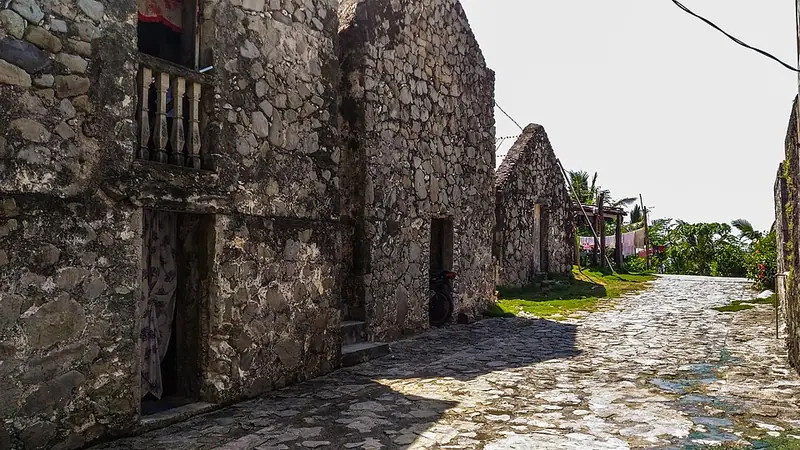
The Ivatan stone houses — built from volcanic rock and cogon grass roofing, with walls thick enough to resist 200-kilometer-per-hour typhoon winds — are the signature image of Batanes. They represent a practical architecture evolved over centuries of living with extreme weather.

The Ivatan are among the earliest inhabitants of the Philippine archipelago, with archaeological evidence of settlement going back at least 4,000 years. Their origins connect to the Austronesian migrations from Taiwan, and linguistic analysis shows Ivatan's close relationship to Formosan languages. The islands' isolation preserved a distinct culture that Spanish colonization only partially altered.

c. 2000 BCE

Austronesian Settlement

Archaeological evidence indicates human settlement of the Batanes islands at least 4,000 years ago, connected to the southward migration of Austronesian-speaking peoples from Taiwan through the Philippine islands into Southeast Asia and the Pacific.

1687

First Spanish Contact

Spanish missionaries and soldiers reached the Batanes islands in the late 17th century. Initial contact was limited by the islands' distance from Manila and the difficulty of maintaining a mission in such extreme weather.

1783

Spanish Establish Permanent Administration

Spain established a permanent colonial administration in Batanes, building churches and introducing the reducción system that concentrated scattered Ivatan settlements into coastal towns. The stone church architecture began in this period.

1898

End of Spanish Rule

The Spanish-American War ended Spanish rule in the Philippines. Batanes was incorporated into the American colonial Philippines, though its remoteness meant American presence was light.

1942

Japanese Occupation

Japanese forces occupied Batanes during the Second World War, using the islands' position in the Luzon Strait for strategic purposes. The occupation was followed by American reoccupation in 1945.

Batanes was declared a UNESCO World Heritage tentative site in 2006 for its cultural landscape — the combination of stone architecture, traditional land use, and the physical environment of the islands.

Ivatan culture is organized around the family, the community, and the management of a difficult environment. The concept of vakul — the traditional head covering woven from dried palm leaves, worn by Ivatan women while working in the fields — is emblematic of Ivatan practical ingenuity. It is a sun and rain hat that can withstand typhoon winds.

Stone Architecture

Ivatan stone houses are built from andesite, a volcanic rock quarried on the islands, with walls often 60 centimeters thick. The roof is a deep cogon grass thatch that insulates and sheds water. The design — low profile, small windows, massive walls — is engineered to survive the typhoons that hit Batanes multiple times each year. Houses built centuries ago still stand.

Hexagonal Boat Navigation

Ivatan fishermen traditionally navigated using the tatala — a traditional boat designed for the rough seas of the Luzon Strait. Fishing in Batanes requires departing in early morning when seas are calmer and returning before afternoon swells build. The sea here is among the most unpredictable in the Philippine archipelago.

Community Labor

The Ivatan practice of mañanabur — communal labor shared among families for farming, construction, and other large tasks — reflects the practical necessity of cooperation in a small island community. The tradition has continued into contemporary life, particularly for house construction and agricultural clearing.

Ivatan food is shaped by isolation and weather. The islands cannot import fresh ingredients reliably, and months of rough seas can cut the supply line from Luzon. The traditional diet is built around what can be grown, caught, or preserved on the islands — root crops, fresh fish, and dried or fermented stores for typhoon season.

Uvud Balls

Balls made from the pith of the banana trunk — uvud — mixed with minced pork or fish, shaped, and simmered in coconut milk or a light broth. The banana trunk pith has a texture somewhere between firm tofu and young jackfruit. It is one of the most distinctively Ivatan preparations.

Dibang (Flying Fish)

Flying fish caught in the Luzon Strait, dried and grilled. Dibang season runs from March to June, when the fish migrate through the strait. During this period, flying fish appears fresh daily in Basco market. Outside the season, dried dibang is available year-round.

Vunung (Ivatan Pork and Vegetable Stew)

Batanes
20 minutesPrep
50 minutesCook
4-6Serves
Ingredients
  • 500g, cubedpork belly or ribs
  • 3 medium tubers, peeled and cubedgabi (taro)
  • 2 medium, cubedsweet potato (camote)
  • 1 medium, slicedbanana blossom
  • 4 cloves, mincedgarlic
  • 1 medium, slicedonion
  • 1-inch knob, slicedginger
  • to tastesalt
  • 5 cupswater
Method
  1. Sauté garlic, onion, and ginger. Add pork and brown on all sides.
  2. Add water and bring to a boil. Skim the foam.
  3. Add taro and sweet potato. Simmer for 20 minutes until beginning to soften.
  4. Add banana blossom. Season with salt.
  5. Cook for another 15–20 minutes until pork is tender and root vegetables are fully cooked.
  6. The stew should be brothier than a stew and thicker than a soup. Serve with rice.
Cook's note

Gabi must be fully cooked — undercooked taro causes throat irritation. The sweet potato and gabi will naturally thicken the broth as they break down.

Ivatan is the language of the Batanes islands, spoken by virtually the entire provincial population. It is a Philippine language but belongs to its own branch of the Austronesian family, most closely related to the aboriginal languages of Taiwan rather than to Tagalog or the Visayan languages. This relationship reflects the islands' position as a point on the Austronesian migration route from Taiwan southward.

Taiwan Connection

Ivatan shares vocabulary and grammatical features with Formosan languages of Taiwan — languages spoken by Taiwan's aboriginal peoples. This is not cultural borrowing but evidence of a common ancestry: both are descendants of the Proto-Austronesian language spoken in Taiwan more than 5,000 years ago.

Filipino and English are taught in schools and used in government. Most Ivatans speak both fluently — the isolation of the islands, paradoxically, has produced a highly educated population with strong practical motivation to be conversant in the national and international languages.

Within Ivatan, there are dialect differences between the main Batan Island, Itbayat (the largest island by area), and Sabtang. These are mutually intelligible but carry distinct vocabulary and pronunciation patterns. The Sabtang dialect is considered particularly conservative.

Batanes is one of the most sought-after provincial destinations in the Philippines, with a reputation that exceeds its infrastructure. Getting there requires advance planning, weather flexibility, and a tolerance for cancelled flights. Once arrived, the landscape is unlike anything else in the country.

Basco Airport (BSO) — small prop aircraft onlyAirport
~2 hrs by light aircraft; no ferry optionFrom Manila
February to May (calmer weather)Best Season
June–October; flights often cancelledTyphoon Risk

Sabtang Island

The most traditionally preserved island in Batanes, reached by a 30-minute bangka ride from Batan in good weather. The stone villages of Savidug and Chavayan look largely as they did when the Spanish colonial administration built them. Overnight homestays in stone houses are available.

Batan Island Coastal Road

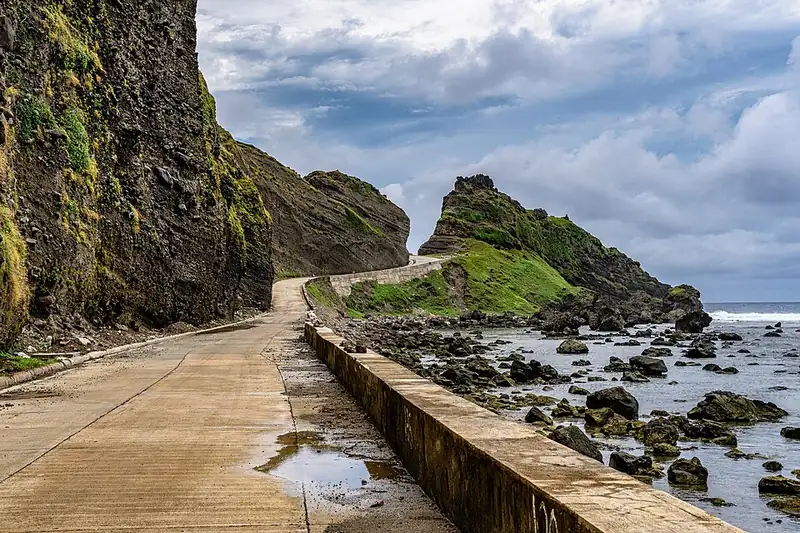
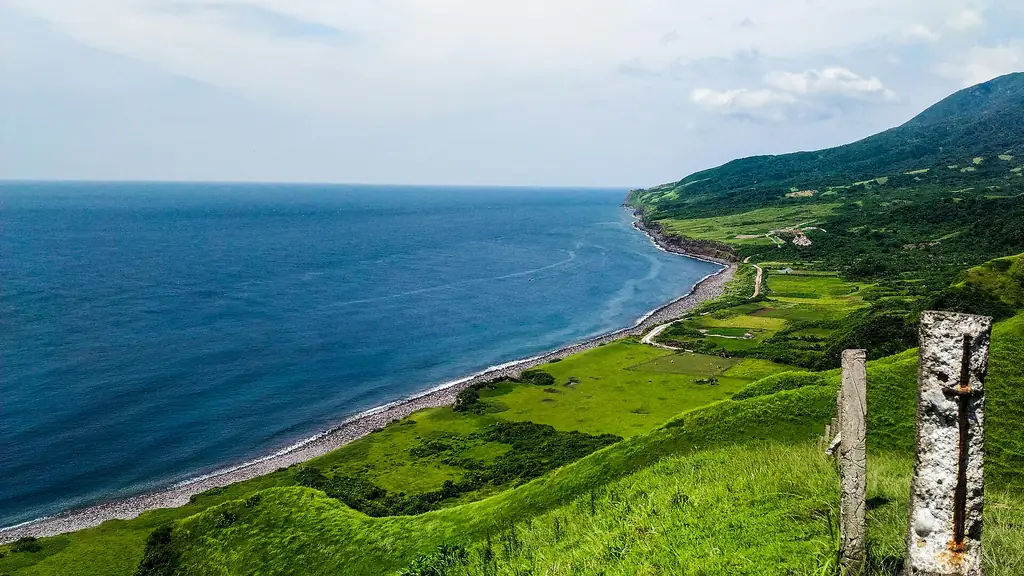
The road circling Batan Island passes through Basco, several traditional villages, the Naidi Hills, and along coastal cliffs above the South China Sea. Renting a scooter and doing the circuit at your own pace is the standard way to see the island. Rolling green hills, stone walls, and ocean views throughout.

Vayang Rolling Hills

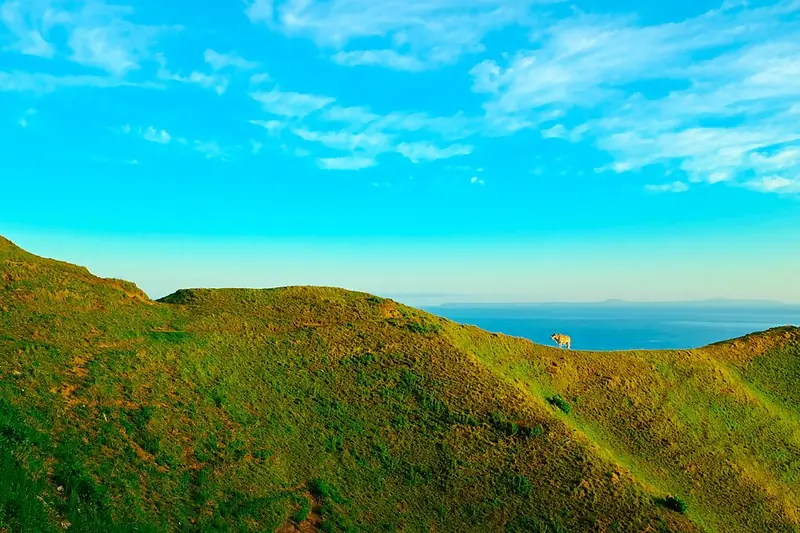
Grassland hills in the western part of Batan Island, shaped by centuries of grazing and the constant wind. The hills slope toward sea cliffs with the South China Sea below. On clear days, Itbayat Island is visible to the north.

Weather Dependency

Batanes travel is hostage to weather. Flights are regularly cancelled due to fog, wind, and typhoons. Build at least two buffer days into your schedule. Do not have a flight home the day after your Batanes flight is scheduled to land.

The house has been here for two hundred years. The walls are three boulders thick, cut from the andesite of the island and fitted together without mortar. The roof is cogon grass, relaid every generation by the family who owns the house and the neighbors who come to help. The windows are small. The ceilings are low. It is not a comfortable house by urban standards, but it has survived forty-seven typhoons by direct count — the family keeps the record.

The Ivatan did not build like this because they had no other option. They built like this because they understood what the sea would send. The Luzon Strait is one of the most consistently violent bodies of water in Asia — typhoons form east of the Philippines and curve northwest directly across the Batanes islands. The stone house is not picturesque. It is an answer to a problem that has no other solution.

Travelers who come to Batanes for the photographs — and many do — take pictures of the stone houses against green hills and blue sky. What the photographs do not capture is the wind. The wind in Batanes is not a weather event. It is a constant condition, stronger in some seasons than others but never absent. The cogon grass bends under it. The cattle lean into it. The stone houses stand against it the way they always have — by being heavier than anything the wind can move.

The family who owns the two-hundred-year house still lives in it. Their great-grandchildren grew up inside those walls and moved to Manila for work. When they return for Christmas, they sleep in the house where their ancestors slept. The floors are the same. The walls are the same. Outside, in the dark, the wind off the strait comes through without stopping, and the house receives it as it always has, which is to say without moving at all.