Map

Bulacan

Central Luzon
Luzon
Capital Malolos City
Population 3,708,890
Area 2,797 km²
Municipalities 21
Cities 3
Island Group Luzon
Languages Tagalog, Kapampangan

Bulacan sits in Central Luzon immediately north of Metro Manila, and its history is inseparable from the birth of the Philippine Republic. Malolos City, the provincial capital, hosted the Malolos Congress in 1898 and was the seat of the first Philippine Republic in 1899. Today Bulacan is one of the most industrialized provinces in the country, part of an expanding urban corridor that has consumed much of the open land between Manila and the northern provinces.

Malolos CityCapital
2,797 km²Area
21Municipalities
3Cities
LuzonIsland Group
Central Luzon (III)Region

Cradle of the Republic

The province has long been among the more prosperous parts of Luzon. Its proximity to Manila made it a commercial hub during the Spanish period, and an educated middle class — the ilustrado class — emerged here in the 19th century. Several of the architects of Philippine independence were Bulaqueños. This tradition of political and intellectual engagement has marked the province's character ever since.

Three cities anchor the province: Malolos (the capital), Meycauayan (one of the most densely industrialized in Central Luzon), and San Jose del Monte (one of the most populous cities in the Philippines, a sprawling residential area housing workers from the Metro Manila corridor). The mix of historical significance and industrial output defines modern Bulacan.

Did You Know?

Bulacan is the birthplace of Francisco Balagtas, whose 1838 epic poem Florante at Laura is considered the masterpiece of classical Filipino literature.

Bulacan was among the earliest provinces organized under Spanish colonial rule. Its fertile lowlands and river systems made it valuable for agriculture, and its proximity to Manila made it strategically important. The province produced much of the rice and commercial goods that supplied the colonial capital.

1578

Province Established

Bulacan is formally established as a province under Spanish colonial administration, one of the earliest in Luzon.

1838

Florante at Laura

Francisco Balagtas publishes his metrical romance Florante at Laura while imprisoned in Bataan. The work, written partly as a veiled critique of Spanish colonial injustice, becomes the foundational text of Filipino literature.

1896

Revolution Begins

Bulacan joins the Philippine Revolution against Spain. The province becomes a major theater of guerrilla and conventional combat. Several prominent revolutionary leaders come from Bulacan's educated class.

September 15, 1898

Malolos Congress Opens

The Malolos Congress convenes at the Barasoain Church in Malolos. Delegates from across the Philippines gather to draft a constitution for the new republic.

January 21, 1899

Malolos Constitution Ratified

The Malolos Constitution — the first democratic constitution in Asia — is ratified. Three days later, the First Philippine Republic is inaugurated with Emilio Aguinaldo as president. Malolos serves as the republic's capital.

March 31, 1899

American Advance

American forces under General MacArthur capture Malolos after a battle that destroys much of the town. The First Philippine Republic retreats northward. The fall of Malolos marks the effective end of the republic as a functioning government, though fighting continues for years.

The 20th century brought industrialization, with textile mills, gold jewelry manufacturing, and later semiconductor and electronics assembly plants transforming Bulacan's economy. The provincial identity remains tied to the revolution, however — Barasoain Church and the Malolos City Hall are maintained as national shrines.

Bulacan's cultural life is rooted in its revolutionary heritage and its tradition of literary and artistic production. The province has produced a remarkable number of writers, painters, and composers for its size. This is partly a product of the ilustrado class that emerged in the 19th century — educated, Spanish-speaking, and engaged with Enlightenment ideas — and partly a matter of proximity to Manila's institutions.

Pista ng Obando

The Obando Fertility Rites, held every May in Obando town, are among the most distinctive religious festivals in the Philippines. Three days of street dancing are dedicated to Santa Clara (for childless women seeking fertility), San Pascual Baylon (for men seeking marriage), and the Virgin of Salambao (for fishermen). Couples who have been blessed with children after praying at Obando return to dance in thanksgiving. The ritual blends Catholic devotion with what appears to be pre-colonial fertility ceremony.

Literary Birthplace

Beyond Balagtas, Bulacan gave the Philippines composer Nicanor Abelardo, whose kundiman songs defined a generation of Filipino romantic music in the early 20th century.

FB

Francisco Balagtas

Poet, Father of Filipino Literature1788–1862

Born Francisco Baltazar in Bigaa (now Balagtas town, named after him), he wrote Florante at Laura during imprisonment. The poem uses an Arcadian setting to critique Spanish colonialism and articulate values of love, justice, and nationhood. He is considered the Tagalog Shakespeare.

NA

Nicanor Abelardo

Composer1893–1934

From San Miguel, Bulacan. Abelardo elevated the kundiman — the Filipino romantic song form — from folk music to art song. His compositions, including Nasaan Ka Irog and Bituing Marikit, remain in the repertoire of Filipino classical singers. He died at 40 of tuberculosis.

Bulacan's food traditions are closely linked to its position as a prosperous Central Luzon province with access to both freshwater and coastal resources. The province is known for sweets and delicacies — a legacy of Spanish colonial prosperity and an active trading economy. Chicharon (pork cracklings) from Bulacan is considered among the best in the country.

Chicharon Bulacan

Pork skin deep-fried to a light, airy crackle. Bulacan chicharon is distinguished by a puffier, less dense texture than most regional variants. It is eaten with spiced vinegar and is the default pasalubong when visiting from or returning to Bulacan.

Pastillas de Leche

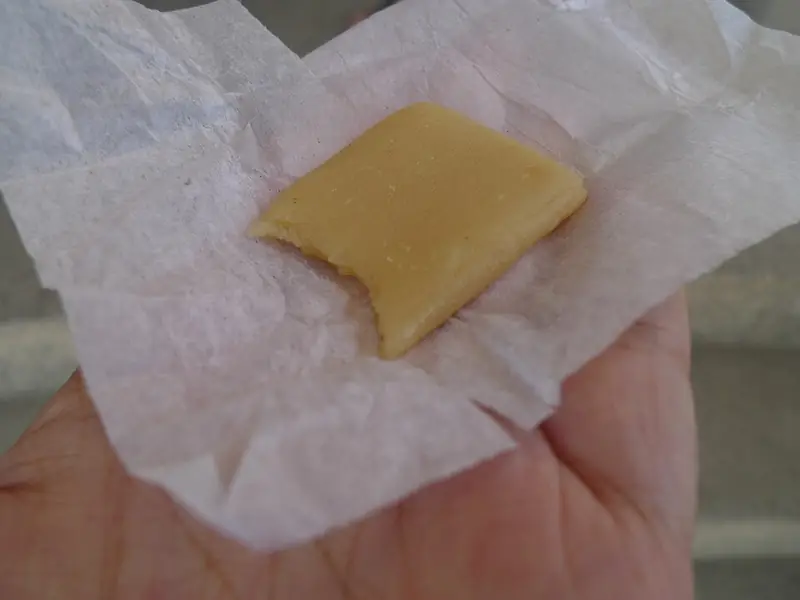
Soft milk candy made from carabao milk and sugar, rolled into cylinders and wrapped in paper twisted at both ends. San Miguel town is the center of pastillas production in Bulacan. The wrapping paper — pabalat — is itself an art form, cut into elaborate lace-like patterns.

Pastillas de Leche

San Miguel, Bulacan
10 minutesPrep
30 minutesCook
20 piecesServes
Ingredients
  • 1 literCarabao milk (or full-fat cow's milk)
  • ½ cupWhite sugar
  • 2 tablespoonsCondensed milk
  • ¼ cupWhite sugar for coating
Method
  1. Combine milk and sugar in a heavy-bottomed pan over medium-low heat. Stir constantly.
  2. Add condensed milk. Continue stirring as the mixture thickens — this takes about 25 minutes. Do not stop stirring or the milk will scorch.
  3. When the mixture pulls away from the sides of the pan and forms a soft mass, remove from heat.
  4. Allow to cool until handleable. Roll portions into small cylinders, about 4cm long.
  5. Roll each piece in white sugar to coat. Wrap in paper if desired.
Cook's note

Authentic pastillas uses fresh carabao milk, which is fattier and richer than cow's milk. The resulting candy has a more pronounced milky flavor. Do not rush the cooking — patience determines the final texture.

Pabalat Art

When buying pastillas in San Miguel, look for the artisanal versions wrapped in pabalat — handcut decorative paper wrappers. The craft of making pabalat has been recognized as intangible cultural heritage.

Bulacan is a Tagalog-speaking province, and the Tagalog spoken here — sometimes called Bulakeño — is considered by linguists to be among the most conservative dialects, preserving vocabulary and pronunciations that have been lost in Metro Manila's urban speech. The Tagalog of Bulacan influenced the standardized Filipino taught in schools, partly through the dominance of Bulacan writers like Balagtas in the literary canon.

Tagalog (Bulakeño dialect)Primary language
Filipino / EnglishSecond language
Tagalog verse (balagtasan)Literary tradition

The Balagtasan

The balagtasan — a formal poetic debate in Tagalog verse, named after Francisco Balagtas — originated in Bulacan and became a major cultural form across Tagalog-speaking Philippines in the early 20th century. Two debaters argue opposing sides of a question entirely in improvised or prepared verse, judged by the quality of argumentation and the mastery of Tagalog prosody. The form is still performed at provincial festivals.

Named for a Poet

The municipality of Balagtas (formerly Bigaa) was renamed in honor of Francisco Balagtas in 1951 — the only Philippine municipality known to be renamed specifically to honor a writer.

Bulacan is one of the easiest provinces to reach from Manila, lying along the main north corridor of Luzon. Most of the province's historical sites are in and around Malolos City, manageable as a day trip from the capital. The province is congested along the main highway — especially through Meycauayan and Marilao — but traffic eases past Malolos.

45–90 min by car (NLEX)From Manila
Victory Liner, Farinas from Cubao/SampalocBy bus
PNR to Malolos (when operational)By train
History and heritage tourismBest for

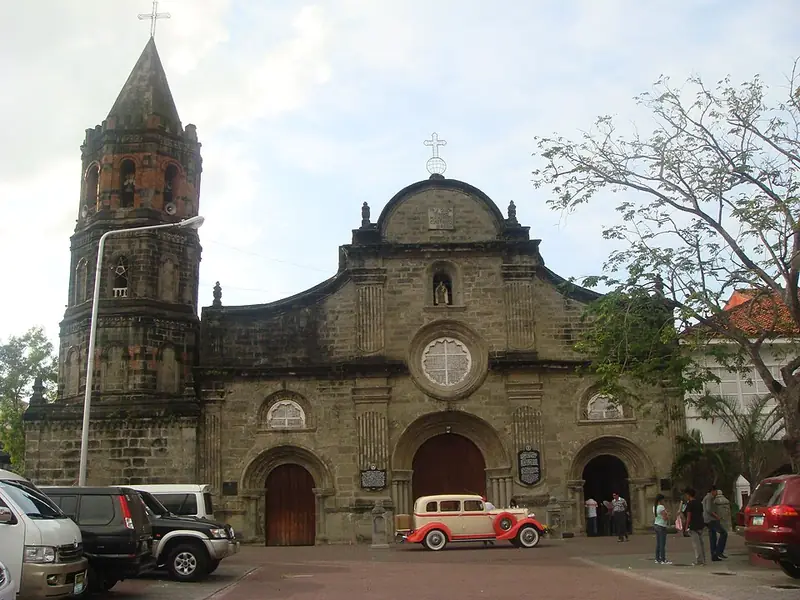
Barasoain Church (Our Lady of Mt. Carmel Parish)

The site of the Malolos Congress in 1898 and the ratification of the Malolos Constitution in 1899. The church itself dates to 1859. A museum on the grounds displays documents and artifacts from the First Philippine Republic. This is the most important revolutionary heritage site in the Philippines outside of Cavite.

Malolos City Hall (Casa Real)

The restored colonial-era government building adjacent to Barasoain Church. The complex has been maintained as a heritage zone, with several 19th-century stone structures still standing. The area around the church and city hall gives a sense of what Malolos looked like as the capital of a young republic.

Biak-na-Bato National Park

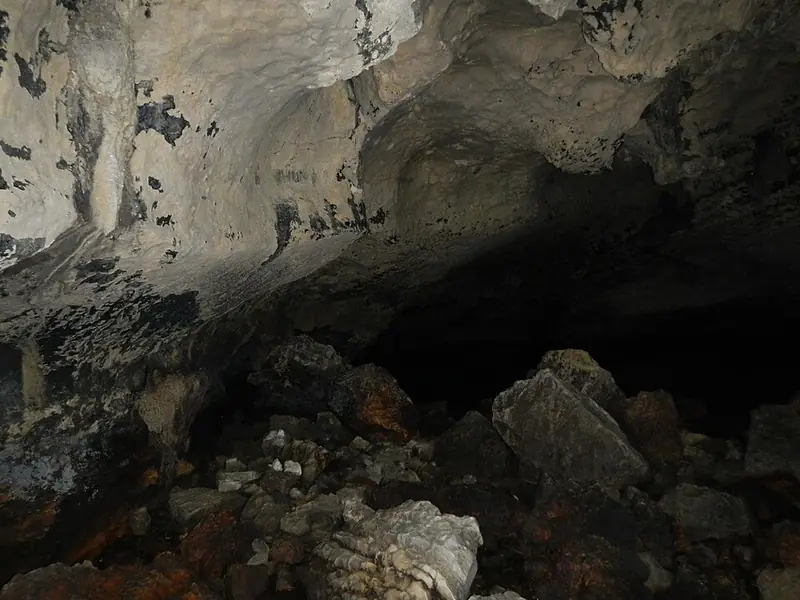
Located in San Miguel, this park encompasses the cave system where Emilio Aguinaldo's revolutionary government signed the Pact of Biak-na-Bato in 1897. The pact temporarily ended fighting with Spain. The caves — accessible by short hike — were used as rebel headquarters. The park has a small museum and picnic grounds.

San Miguel Pastillas Shops

The town of San Miguel is the pastillas capital of the Philippines. Shops along the main road sell fresh pastillas de leche, often with pabalat wrappers. Some shops allow visitors to observe the production process. Best visited in the morning when production is active.

The Constitution and the Church

On January 21, 1899, inside a church in Malolos that had been converted into a congressional hall, delegates voted to ratify the first democratic constitution written in Asia. The Malolos Constitution was far from perfect — it restricted the franchise, gave significant power to a unicameral assembly, and was written in a hurry by men who had been fighting a war eight months earlier. But it was a constitution, drafted by Filipinos, for Filipinos, in a country that had never before governed itself.

Ten weeks later, American soldiers marched into Malolos and burned parts of it down. The delegates had already fled. The First Philippine Republic had lasted less than a year as a functioning government, though its president kept fighting for three more years. The church was repaired. The constitution was filed away in archives. The republic became a historical fact rather than a political one.

What Bulacan retained was the memory, and the memory turned into a particular civic pride — the kind that comes from knowing your ground meant something. The historians came later and the national shrines were built later, but the families of Malolos had been telling the story themselves for generations. The church still stands on the same plaza. On quiet weekdays, when the school groups are gone, you can sit in a pew where a delegate once voted, and the place holds more than most monuments manage.