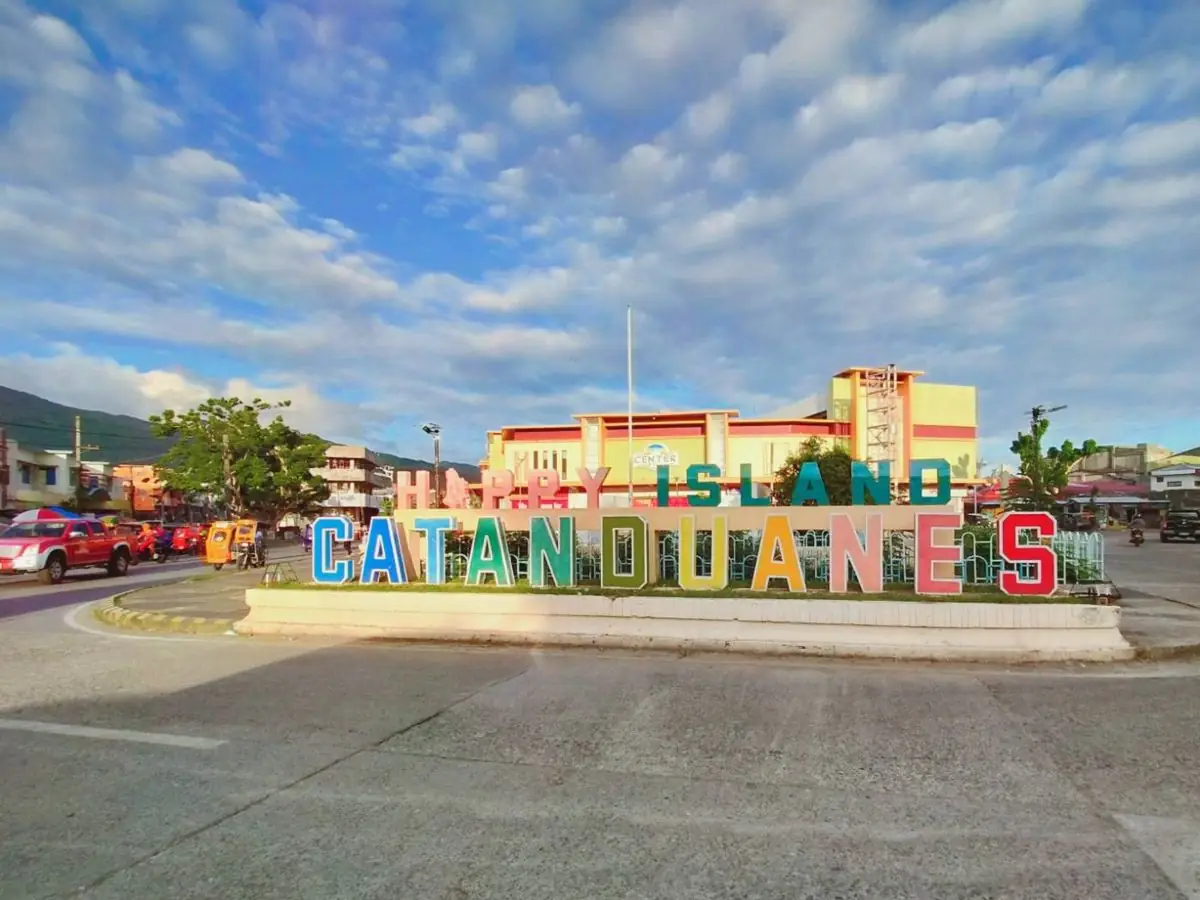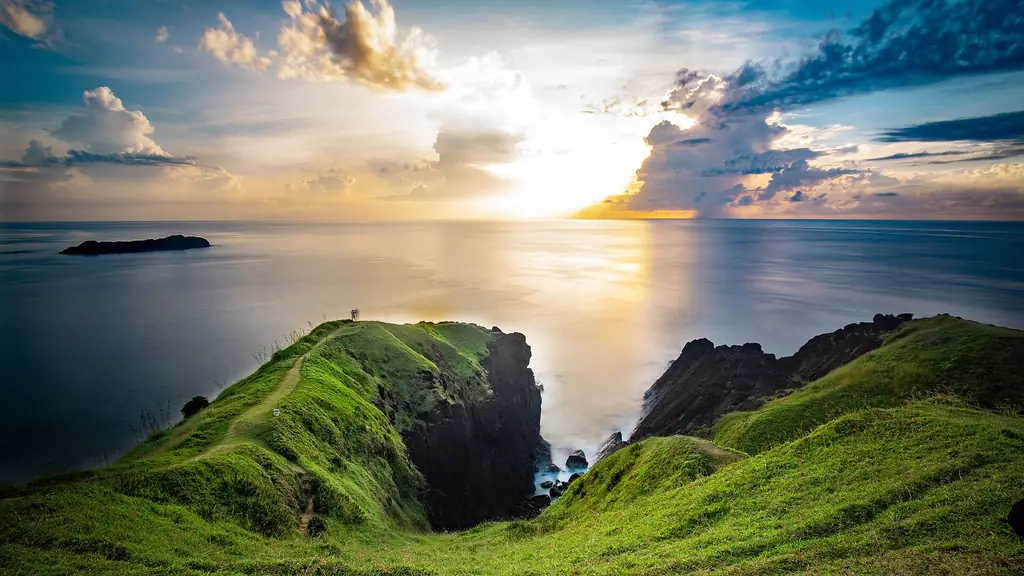
Catanduanes is an island province in the Bicol Region, separated from the southeastern tip of Luzon by the Maqueda Channel. It faces the Philippine Sea directly to the east, which means it receives the full force of Pacific typhoons before they make landfall on Luzon — an average of six to seven typhoons per year. This exposure has shaped everything about the island: its architecture, its agriculture, its people, and its character. The province calls itself the 'Land of the Howling Winds.'
ViracCapital
1,512 km²Area
11Municipalities
LuzonIsland Group
Bicol (V)Region
In the Path of the Storm
The island is roughly triangular, mountainous in the interior, with a narrow coastal strip around most of its perimeter. The eastern coast, facing the Pacific, is where typhoon swells are most severe and where the world-class surf breaks are found — including Puraran, which draws international surfers each year for its powerful, consistent barrels.
★
Did You Know?Puraran Beach on Catanduanes' eastern coast is considered one of the best surfing spots in the Philippines, producing powerful, consistent right-hand barrel waves during typhoon season — precisely when most people are moving away from the coast.
Virac, the capital, is a compact provincial town on the southwestern coast, sheltered from direct Pacific exposure. The town has the province's only airport and serves as the primary entry point for the island. Despite its remote location and regular typhoon damage, Catanduanes has a literate, resourceful population with a reputation for resilience.
Catanduanes was among the more isolated provinces under Spanish colonial rule — the difficult sea crossing, the typhoon frequency, and the mountainous terrain made administration challenging. The island was repeatedly devastated by storms throughout the colonial period, requiring reconstruction efforts that strained both the colonial administration and local communities.
1573Spanish Contact
Spanish expeditions make contact with Catanduanes as part of the broader colonization of the Bicol Peninsula and adjacent islands. Augustinian missionaries begin establishing mission stations.
1636Province Established
Catanduanes is organized as a separate administrative district within the colonial system, governed primarily by the Franciscan order which establishes missions across the island.
1898Revolution
Catanduanes participates in the Philippine Revolution. The island's isolation limited direct military confrontation but local leaders formally aligned with the revolutionary government.
1945Liberation
American and Filipino forces liberate the island from Japanese occupation. The war years had been economically devastating, with agricultural production severely disrupted.
1945Province Restored
Catanduanes, which had been merged with Camarines Sur at various points under American rule, is re-established as a separate province after liberation.
The pattern of typhoon devastation and reconstruction has continued into the modern era. Super Typhoon Rolly (Goni) made landfall on Catanduanes in November 2020 with winds exceeding 225 km/h — one of the strongest landfalls ever recorded globally. The island was severely damaged and required years of rebuilding.
Catanduanes is Bikolano in culture and language, sharing the regional traditions of the Bicol Peninsula while maintaining an island distinctiveness born from its isolation. The people of Catanduanes — sometimes called Catanduanons — are known for their toughness and their capacity to rebuild after repeated typhoon devastation.
Life with Typhoons
On an island that receives an average of six to seven typhoons per year, construction methods, agricultural timing, and social organization have all adapted to the typhoon cycle. Traditional homes were built low, with thick walls and small windows. Root crops that can survive wind and flooding are planted alongside rice. Communities maintain informal systems of mutual aid that activate whenever a storm damages homes and fields.
★
Abaca ProvinceCatanduanes is one of the major producers of abaca (Manila hemp) in the Philippines. The fibrous stalks of the abaca plant are processed into rope, paper, and woven products. Abaca cultivation in Catanduanes dates to the pre-colonial period.
The Catanduanes Tigsik Festival celebrates the island's abaca industry and its cultural heritage through street dancing and cultural presentations. The festival is held in October and is centered in Virac. The name tigsik refers to the traditional abaca fiber-stripping tool.
Catanduanes food follows the Bikolano tradition with the modifications imposed by island geography. Coconut milk, chilies, and seafood are the foundation. Root crops — taro, cassava, sweet potato — are more prominent here than on the mainland, a reflection of their typhoon resilience. The island produces a local wine from coconut palm sap called lambanog, though the Bicol mainland version is more widely known.
Kinunot na Pagi
Shredded stingray cooked in coconut milk with moringa leaves and bird's eye chili. The Catanduanes version uses stingray caught in the surrounding waters. The fish is dried briefly before shredding to firm up the texture, then slow-cooked until the coconut milk reduces to a thick, rich sauce.
Tulingan sa Gata
Tuna (tulingan/bullet tuna) simmered in coconut milk with ginger, garlic, and chili. The fish's firm flesh holds up well to the rich coconut sauce. Common in coastal Catanduanes homes where bullet tuna is caught in abundance.
20 minutesPrep
40 minutesCook
4Serves
Ingredients
- 500gYoung green jackfruit, peeled and cut
- 2 cupsCoconut milk
- ½ cupCoconut cream
- 150g, cubedPork belly
- 2 tablespoonsBagoong alamang (shrimp paste)
- 3, slicedSiling haba (finger chili)
- 3–5, crushedSiling labuyo (bird's eye chili)
- 4 cloves, mincedGarlic
- 1, slicedOnion
Method
- Sauté garlic and onion until soft. Add pork belly and cook until lightly browned.
- Add bagoong and stir to incorporate. Cook 2 minutes.
- Add jackfruit pieces and stir to coat in the bagoong mixture.
- Pour in coconut milk. Bring to a simmer. Add finger chilies.
- Cook uncovered over medium heat until jackfruit is tender, about 25–30 minutes.
- Add bird's eye chilies and coconut cream. Stir and cook another 10 minutes until sauce thickens.
- Serve with rice.
Cook's noteYoung jackfruit absorbs flavor well but needs time to become fully tender. If using canned young jackfruit, reduce cooking time by 10 minutes. The bagoong provides the salt — taste before adding extra.
The language of Catanduanes is a dialect of Bikol, distinct enough from the Naga Central Bikol to be classified by some linguists as a separate language — Catanduanes Bikol. It has two main varieties: the Virac dialect spoken in the capital and southern municipalities, and the Pandan dialect spoken in the northern part of the island. Both share the characteristic musicality of Bikol languages.
Bikol (Catanduanes variety)Primary language
Virac, PandanMain dialects
High with Central BikolMutual intelligibility
Filipino, EnglishOther
Isolation has both preserved and differentiated the island's language. Catanduanes Bikol retains some vocabulary and features that have been lost in the mainland varieties, while also developing its own innovations. The island's oral literary tradition includes folk songs, riddles, and narrative poems related to fishing, typhoons, and agricultural life.
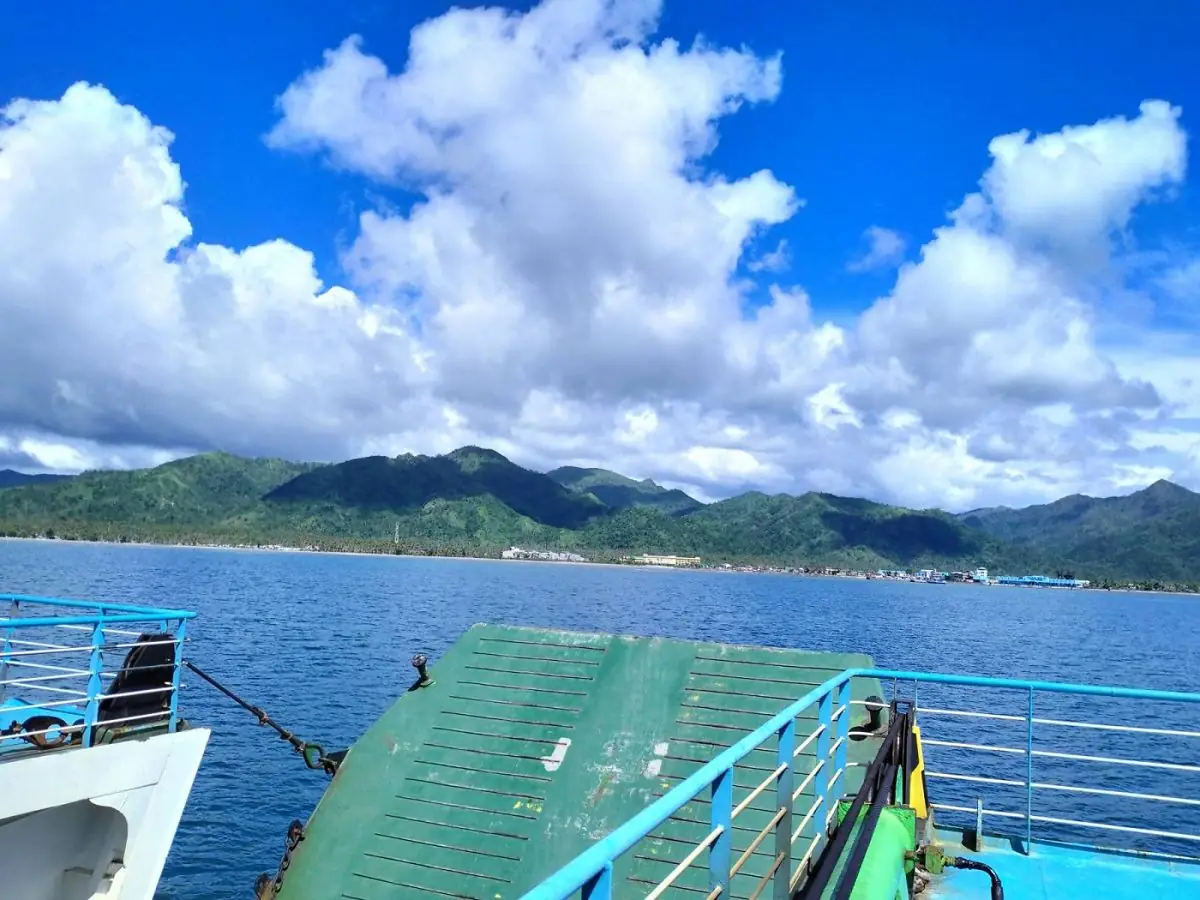
Catanduanes is reached by domestic flight from Manila to Virac (approximately 1 hour) or by ferry from Tabaco City in Albay (approximately 2.5 hours). The ferry route is scenic but should not be attempted during typhoon weather. Within the island, motorcycles and tricycles are the main modes of transport. The eastern coast roads are scenic but can be damaged after major typhoons.
~1 hour to Virac AirportFrom Manila by air
2.5 hrs from Tabaco, AlbayBy ferry
August–NovemberSurfing season
Typhoon season July–NovemberCaution
Puraran Beach
On the eastern coast near the municipality of Baras, Puraran is a beach known primarily among surfers for its consistent right-hand barrel waves called 'Majestic.' The waves are generated by Pacific swells and are most powerful during typhoon season — August through November — when surf conditions are at their best but general weather is at its worst. The beach is quiet outside surf season.
Balongbong Falls
A two-tiered waterfall in the interior of the island near Viga municipality. The falls drop into clear, cold pools fed by interior forest streams. Reaching them requires a hike through farmland and secondary forest. One of several waterfalls scattered across the island's interior highlands.
Twin Rock Beach Resort Area
Two volcanic rock formations rising from the sea near Bato municipality, accessible by outrigger boat. The rocks are known for diving — the underwater formations and the fish life around the rocks are among the better dive sites on the island. A small beach resort area has developed nearby.
◆
Typhoon PlanningDo not schedule a Catanduanes trip during known typhoon conditions. Check PAGASA forecasts carefully. The island's ferry connection to Albay is suspended when signal conditions deteriorate, which can strand travelers for multiple days.
After the Storm
On November 1, 2020, Super Typhoon Rolly made landfall on the eastern coast of Catanduanes with sustained winds of 225 kilometers per hour. It was one of the strongest landfalls in recorded history — stronger, in terms of sustained winds at landfall, than Typhoon Haiyan/Yolanda in 2013. The difference was mostly in the size of the affected population. Catanduanes has fewer than 300,000 people.
In the days after Rolly, photos circulated of Virac and the coastal municipalities: roofs stripped clean, trees snapped, boats thrown inland, the road to Puraran submerged under debris. The casualty count was lower than expected, partly because the people of Catanduanes know exactly what to do when a serious typhoon comes — you evacuate, you go to concrete, you wait. The island has been doing this for centuries.
What takes longer to rebuild is the abaca crop — the plants need three years to mature after replanting. The coconut trees take longer. The road to the eastern coast was impassable for months. By the end of 2021 the surfers were back at Puraran, the waves indifferent to everything that had happened. The island rebuilt as it always has: household by household, field by field, with the next season already on the horizon.