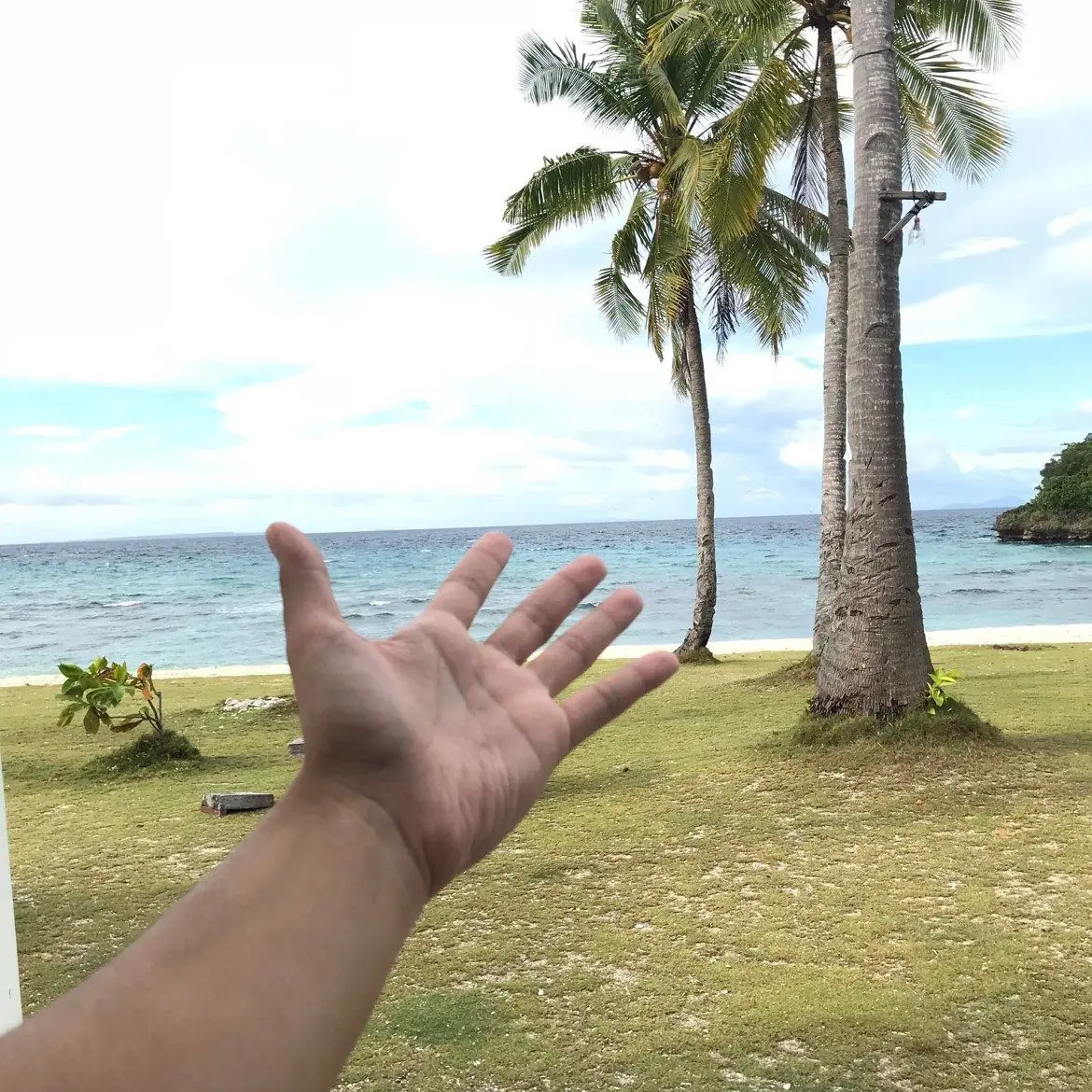
Cebu is the most populous province in the Visayas and among the most economically significant in the Philippines. Cebu City — the Queen City of the South — is the second most important urban center in the country and the oldest city in the Philippines, predating Manila as a Spanish settlement by five years. The province occupies a long, narrow island running north-south in the Central Visayas, flanked by the Visayan Sea to the west and the Camotes Sea to the east.
Cebu CityCapital
5,088 km²Area
44Municipalities
9Cities
VisayasIsland Group
Central Visayas (VII)Region
Where Spain First Took Root
Cebu is where Ferdinand Magellan planted a cross and where, six weeks later, Lapu-Lapu killed him at the Battle of Mactan. Both events are commemorated within kilometers of each other. The island became Spain's first permanent settlement in the Philippines in 1565 under Miguel López de Legazpi, and the Basilica Minore del Santo Niño — the oldest Roman Catholic church in the Philippines — was built on the site where a statue of the Child Jesus was found, the same statue Magellan had given to Rajah Humabon's wife in 1521.
★
Did You Know?The Santo Niño image in Cebu's basilica is the oldest Catholic religious artifact in the Philippines, brought by Magellan in 1521 and rediscovered intact by Legazpi's expedition in 1565 — 44 years later.
Cebu's pre-colonial history places it as one of the most active trading ports in Southeast Asia. The polity of Zubu (Cebu) traded with China, Borneo, Java, and Malacca before European contact. The arrival of Magellan's fleet was not the island's first contact with the outside world — it was simply the contact that changed the trajectory of the archipelago.
April 7, 1521Magellan Arrives
Ferdinand Magellan's fleet anchors off Cebu. He allies with Rajah Humabon and baptizes thousands of Cebuanos, including the rajah and his wife, Hara Amihan (baptized Juana). He presents the Santo Niño image to the queen.
April 27, 1521Battle of Mactan
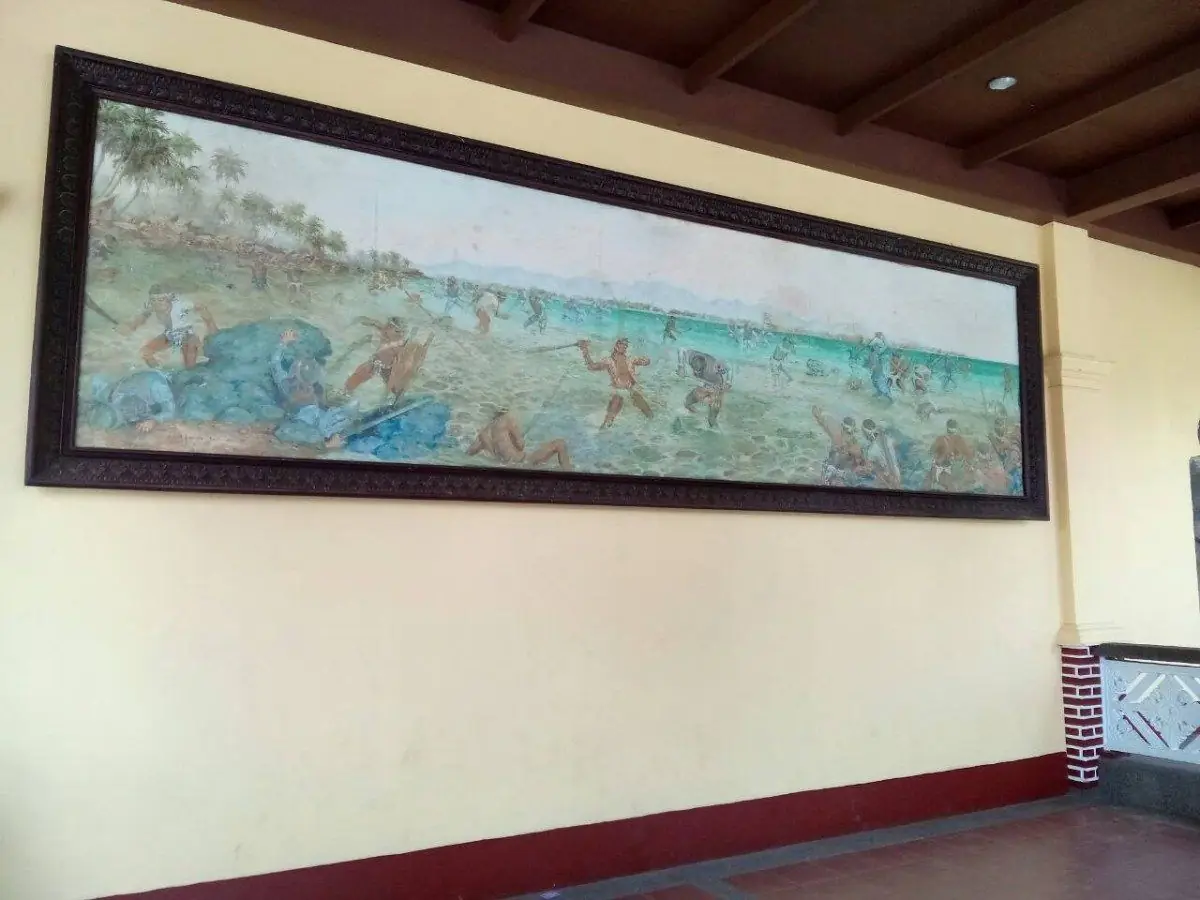
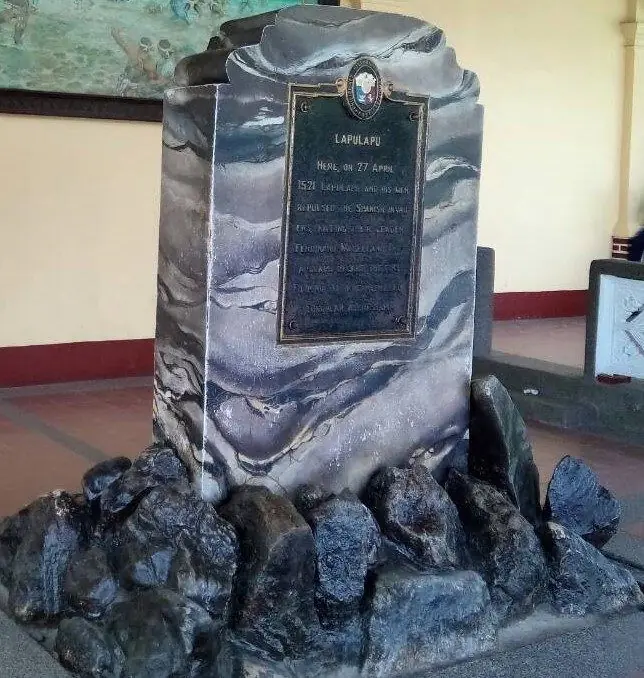
Magellan leads an attack on Mactan Island against Datu Lapu-Lapu, who refused to acknowledge Spanish authority. Magellan is killed in the shallow water by Lapu-Lapu's warriors. His expedition continues without him to complete the first circumnavigation.
1565Spanish Colonization
Miguel López de Legazpi establishes the first permanent Spanish settlement in the Philippines at Cebu. His men rediscover the Santo Niño image intact in a house. The settlement becomes Villa del Santísimo Nombre de Jesús — the first Spanish city in the Philippines.
1571Capital Moves to Manila
Legazpi transfers the colonial capital to Manila, recognizing its superior harbor position for governing the archipelago. Cebu remains important as a regional center but cedes primacy.
1898Revolution and American Period
Cebu joins the Philippine Revolution and briefly becomes a free territory before American forces arrive in 1899. Cebu proves a significant center of resistance to American colonial rule, with guerrilla fighting lasting into the early 1900s.
1942–1945World War II
Japanese forces occupy Cebu in April 1942. The occupation is brutal. Cebu City suffers heavy damage during the 1945 liberation, with much of the old colonial infrastructure destroyed.
2013Typhoon Yolanda / Haiyan
Super Typhoon Haiyan strikes the Visayas on November 8, causing significant damage in Cebu. The province suffers casualties and destruction of coastal communities, though the worst damage falls on Samar and Leyte.
Cebu is the cultural capital of the Visayas and the center of the Cebuano-speaking world. The Sinulog Festival — held every third Sunday of January in honor of the Santo Niño — is the largest festival in the Philippines by attendance, drawing millions of participants and tourists. The dance at the center of the festival is a controlled, repetitive movement forward and backward — sinulog means 'like water current.'
Sinulog
The Sinulog street dance competition brings thousands of costumed dancers from across Cebu and the wider Philippines. The grand parade transforms the streets of Cebu City into a moving spectacle that has been compared to Rio's Carnaval in scale and energy. The religious component — the novena masses at the Basilica, the procession of the Santo Niño image — precedes the secular street festival.
Lapu-Lapu
Datu of Mactan, Defender Against Magellanc. 1491 – unknownThe ruler of Mactan Island who refused to submit to Spanish authority and killed Magellan in the Battle of Mactan on April 27, 1521. The circumstances of his life before and after the battle are largely unrecorded. He was later elevated to the status of the first Filipino hero — a designation contested by historians who note that the concept of the Philippines did not exist in 1521.
★
Sto. Niño ImageThe Santo Niño of Cebu is one of the most venerated religious images in Asia. The original image has been damaged and repaired over centuries; its current form is a composite of original material and restoration. It wears robes changed by the basilica's devotional community.
Cebu has one of the strongest regional food identities in the Philippines. Cebuano cooking uses less coconut milk than other Visayan cuisines and emphasizes grilling, sourness, and the direct flavors of fresh seafood and pork. The lechon from Cebu — slow-roasted whole pig — is widely considered the best in the Philippines, a claim contested by Iloilo and Negros but generally conceded by everyone else.
Cebu Lechon
Whole pig slow-roasted over charcoal for 4–6 hours, stuffed with lemongrass, garlic, onion, and spices. The skin is lacquered to a deep red-brown and cracks like porcelain when cut. Unlike Manila's lechon, Cebu lechon needs no liver sauce — the meat is seasoned from the inside and the skin is flavorful on its own. Casa Verde and CnT Lechon are among the most famous operations.
Ngohiong
A Cebuano-Chinese spring roll — ground pork and jicama (singkamas) seasoned with five-spice powder and wrapped in a thin pastry skin, then deep-fried. The five-spice is the distinguishing element. Eaten with sweet chili sauce or a sweet vinegar dip, ngohiong is a ubiquitous street snack in Cebu City.
20 minutesPrep
0 minutes (cured)Cook
4Serves
Ingredients
- 400g, cubedTanigue (Spanish mackerel), sashimi-grade
- ½ cupCoconut vinegar
- 2 tablespoonsCalamansi juice
- 2 tablespoons, finely mincedGinger
- 1, thinly slicedRed onion
- 2, thinly slicedRed chili
- 2 tablespoonsCoconut cream
- to tasteSalt
- ½, sliced thinCucumber
Method
- Cube fish into 2cm pieces. Rinse in cold water and pat dry.
- Combine fish with coconut vinegar and calamansi. Toss to coat. Let cure 10 minutes until flesh turns opaque.
- Drain most of the curing liquid.
- Add ginger, red onion, chili, and coconut cream. Toss.
- Season with salt. Add cucumber.
- Serve immediately.
Cook's noteCoconut vinegar is the authentic acidulant for Cebuano kinilaw — the flavor is softer and slightly sweet compared to cane vinegar. The coconut cream addition is a Cebuano touch that adds richness. Use only the freshest fish.
✦
Lechon in CebuOrder lechon at Carcar City (south of Cebu City) or at the dedicated lechon houses in the city. Carcar's lechon is served in a dense market setting where vendors chop portions to order. Arrive by 10am — the best pieces go first.
Cebuano (also called Bisaya or Visayan) is the primary language of Cebu province and the most widely spoken language in the Philippines after Tagalog. It is the lingua franca of the Visayas and much of Mindanao, spoken as a first or second language by roughly 25–27 million people. The Cebuano of Cebu City is the prestige variety, the standard against which other Cebuano dialects are measured.
Cebuano (Bisaya)Language
~27 millionTotal speakers
2nd most spoken in PhilippinesStatus
Visayas + most of MindanaoSpread
Cebuano has a substantial literary tradition, including print journalism dating to the 19th century. The Bisaya magazine, founded in 1930, is one of the longest-running periodicals in the Philippine regional press. The University of San Carlos and the University of the Philippines Cebu have produced significant Cebuano language scholarship.
★
Language of MindanaoCebuano became the dominant language of coastal and lowland Mindanao through 20th-century migration from the Visayas. In provinces like Davao, Bukidnon, and South Cotabato, Cebuano serves as the everyday lingua franca even among people whose ancestors spoke entirely different languages.
Cebu is one of the best-connected domestic destinations in the Philippines. Mactan-Cebu International Airport handles extensive domestic and international traffic, with direct connections to Manila, Hong Kong, Singapore, Seoul, Tokyo, Dubai, and other cities. The airport is on Mactan Island, connected to Cebu City by two bridges. The city itself is a major hub for inter-island ferry travel.
Mactan-Cebu InternationalAirport
~1 hour by airFrom Manila
Yes (Hong Kong, Singapore, Tokyo, etc.)International flights
Pier 1–4, Cebu CityFerry hub
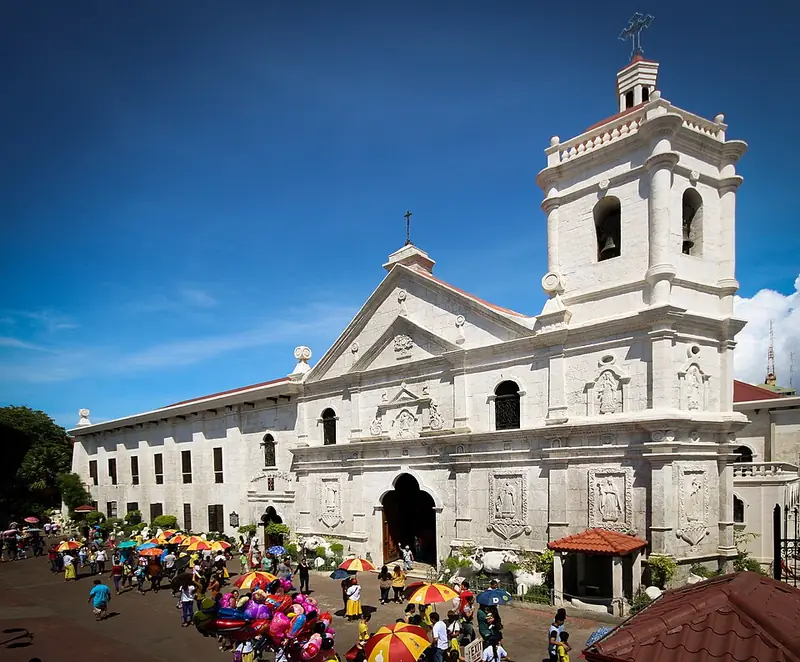
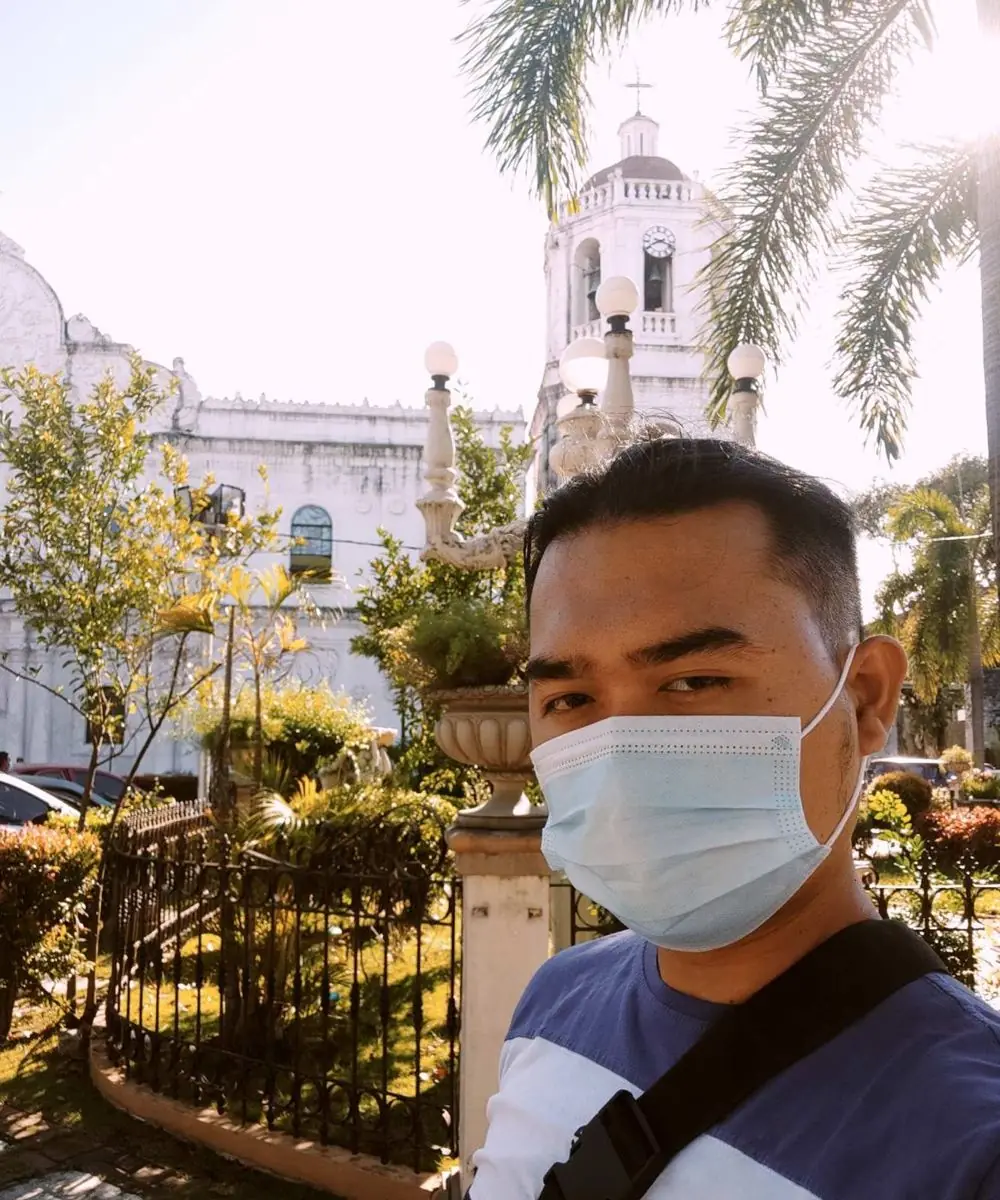
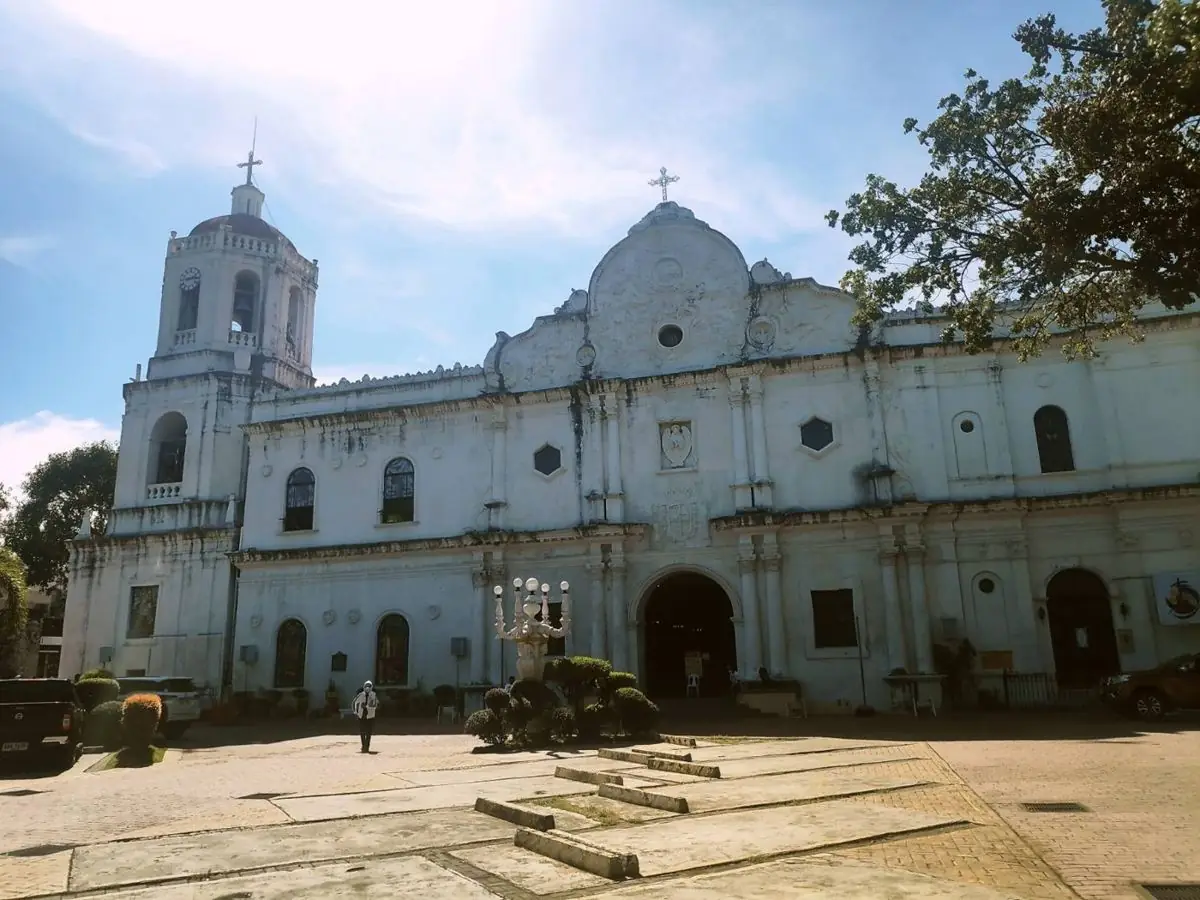
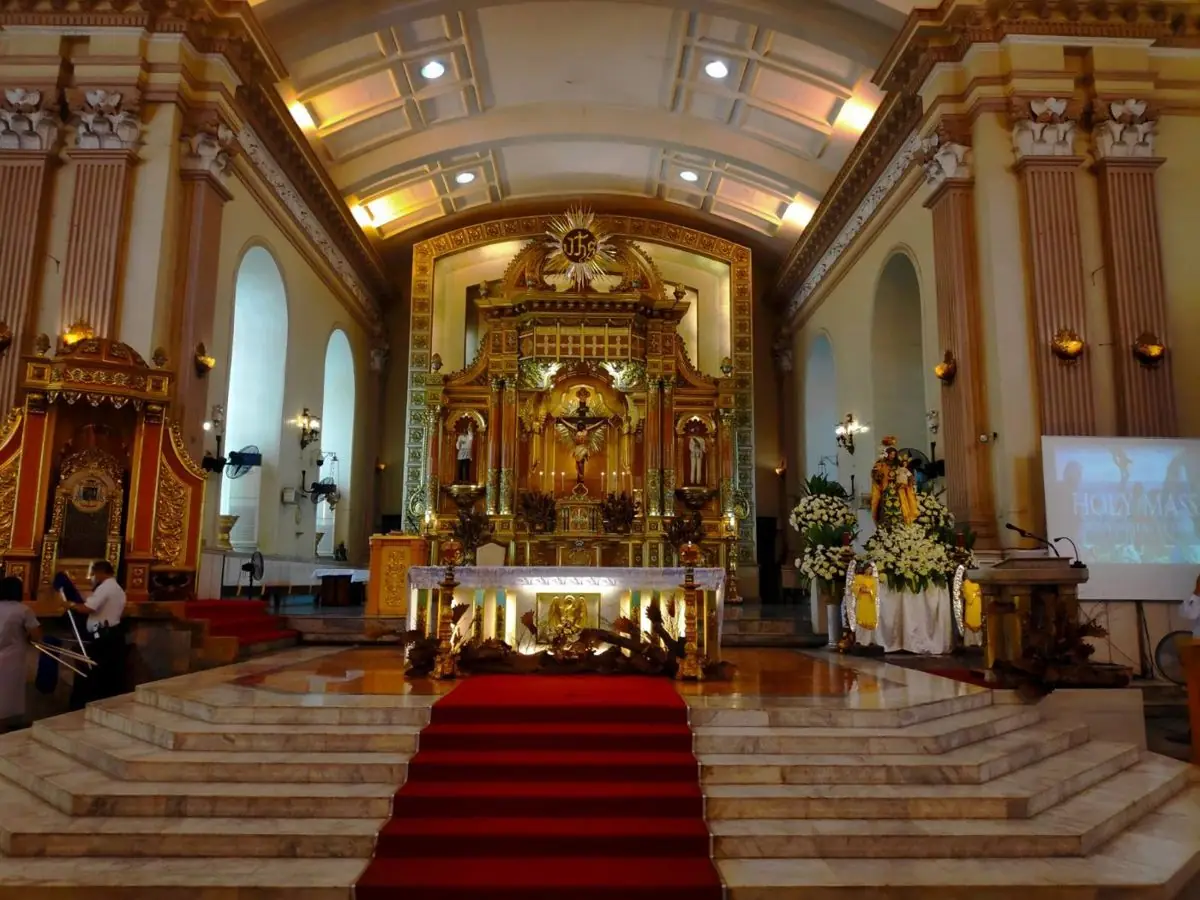
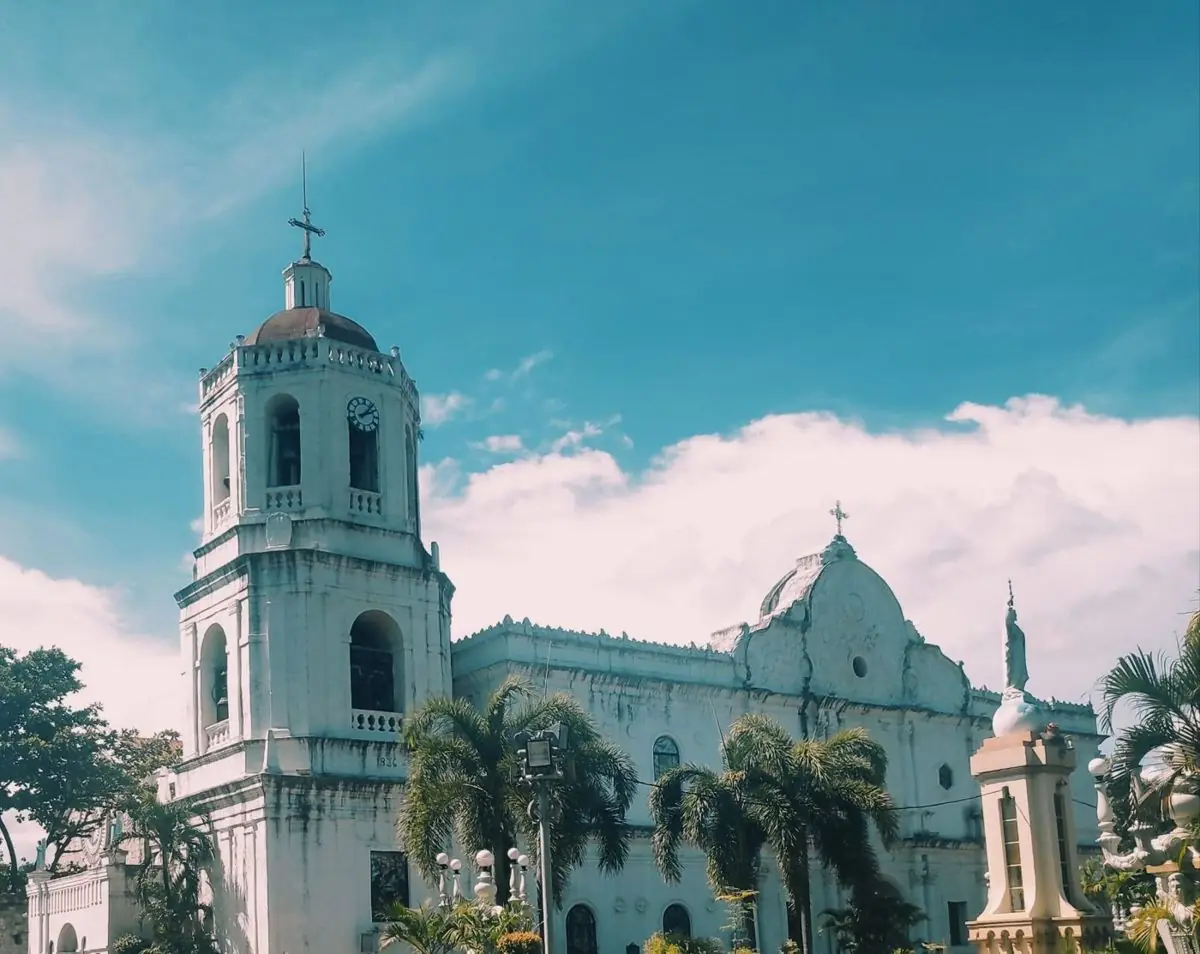
Basilica Minore del Santo Niño
The oldest Roman Catholic church in the Philippines, built on the site where Legazpi's soldiers found the Santo Niño image in 1565. The current structure is largely 20th-century reconstruction, but the religious atmosphere is unaffected by this history. The image is venerated daily by hundreds of devotees. During Sinulog week, the crowds number in the millions.
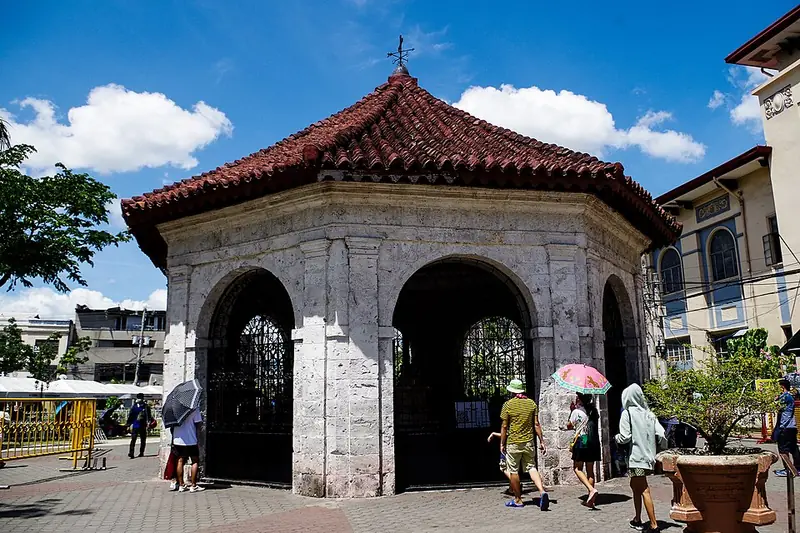
Magellan's Cross
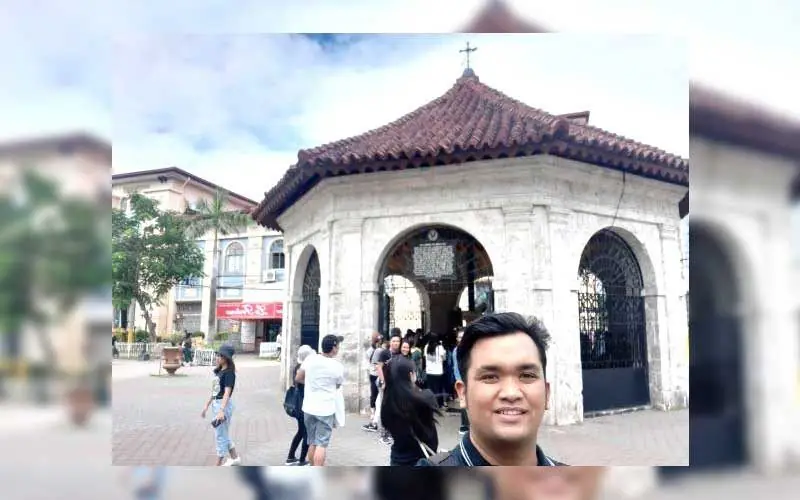
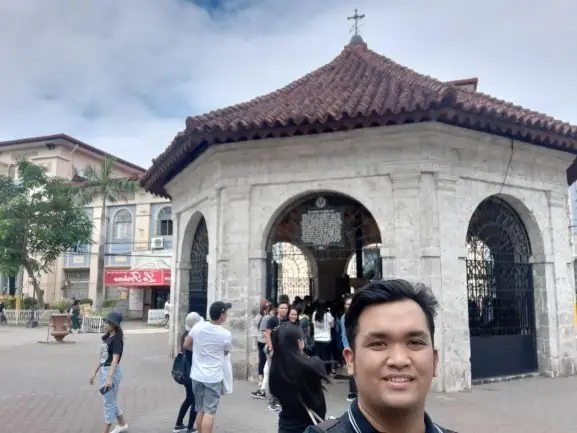
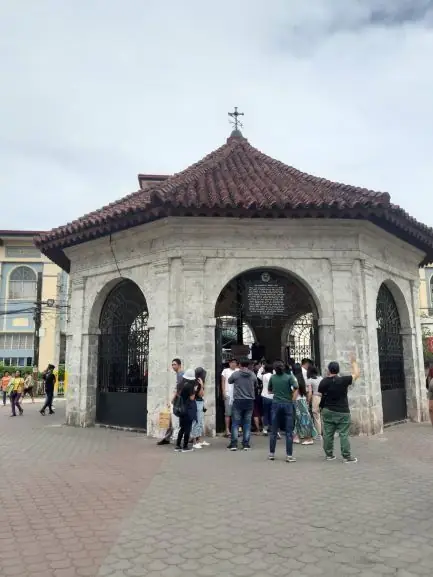
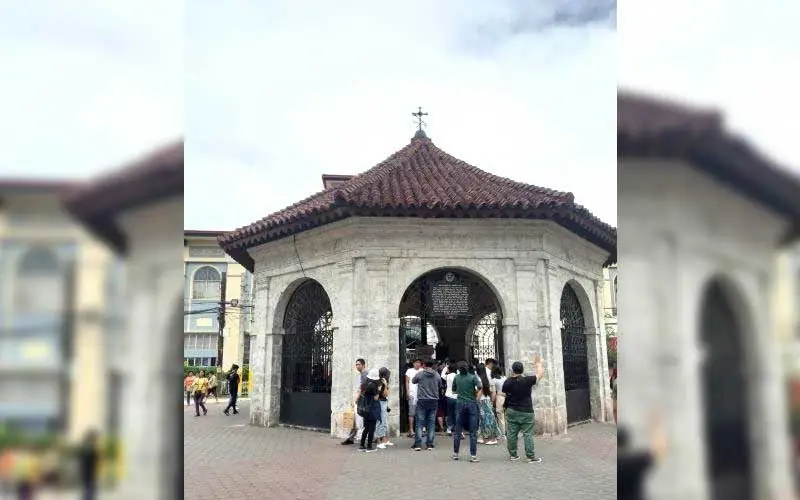
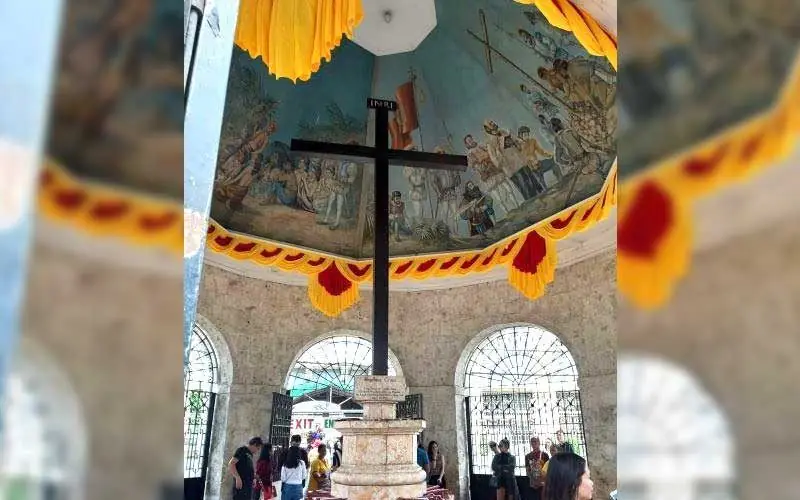
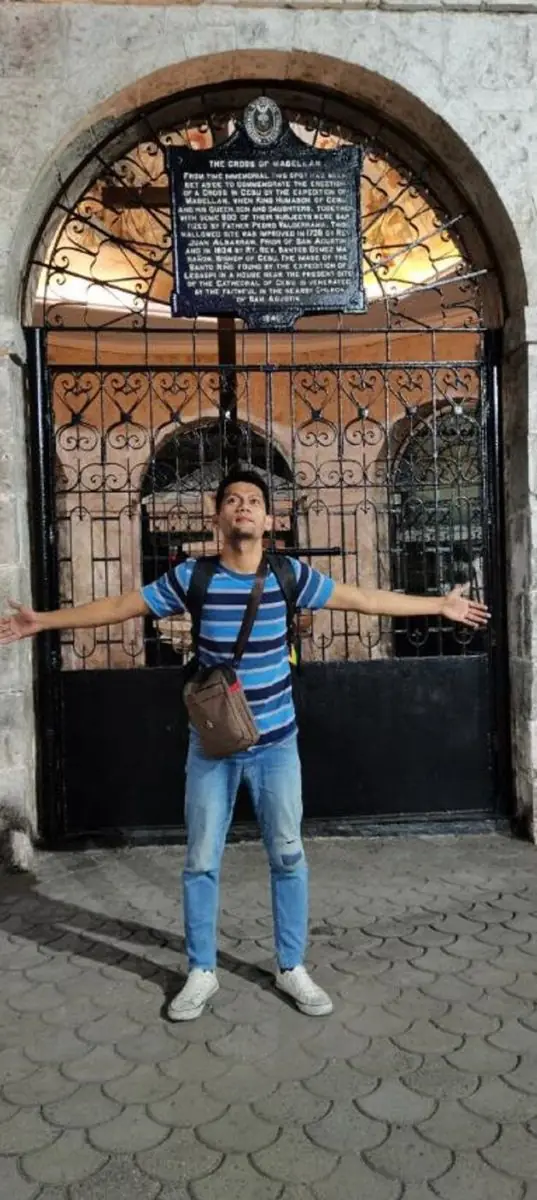
A cross planted by Magellan in April 1521 to mark the first mass in the Philippines — the original is allegedly encased inside the current wooden cross displayed in a small chapel adjacent to the Basilica. The chapel is always open. The cross is surrounded by ceiling paintings of the baptism of Rajah Humabon.
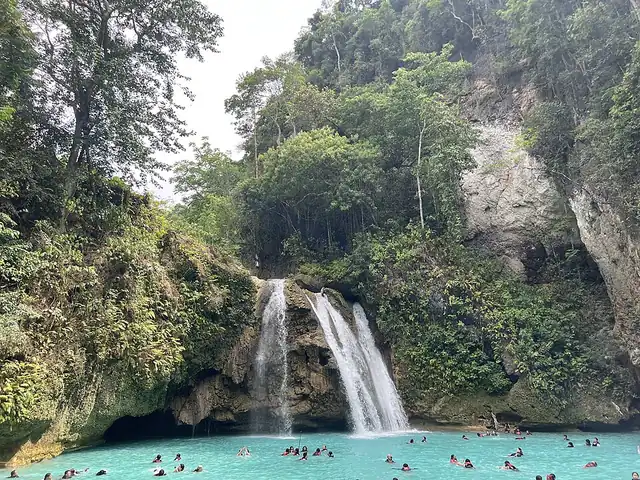
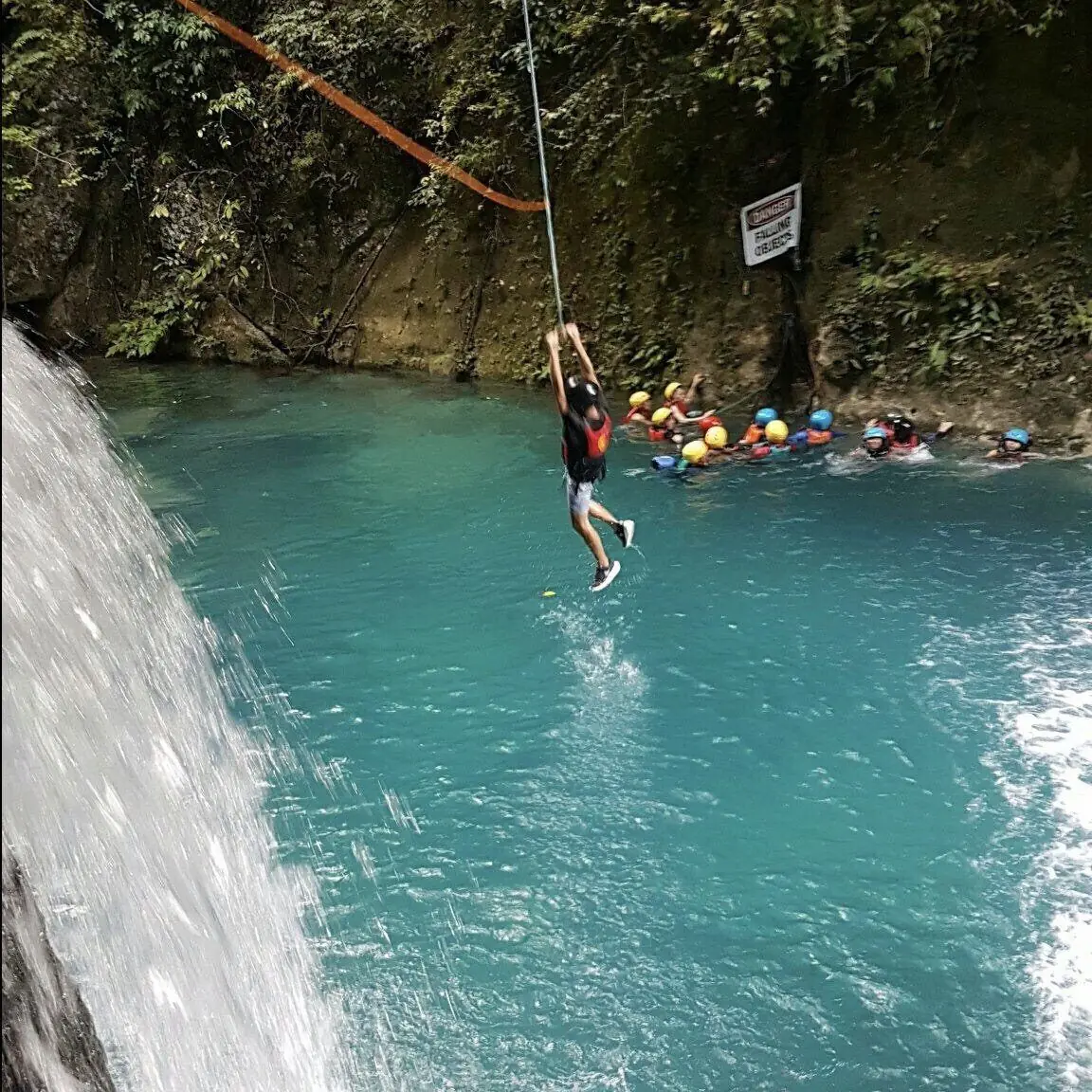
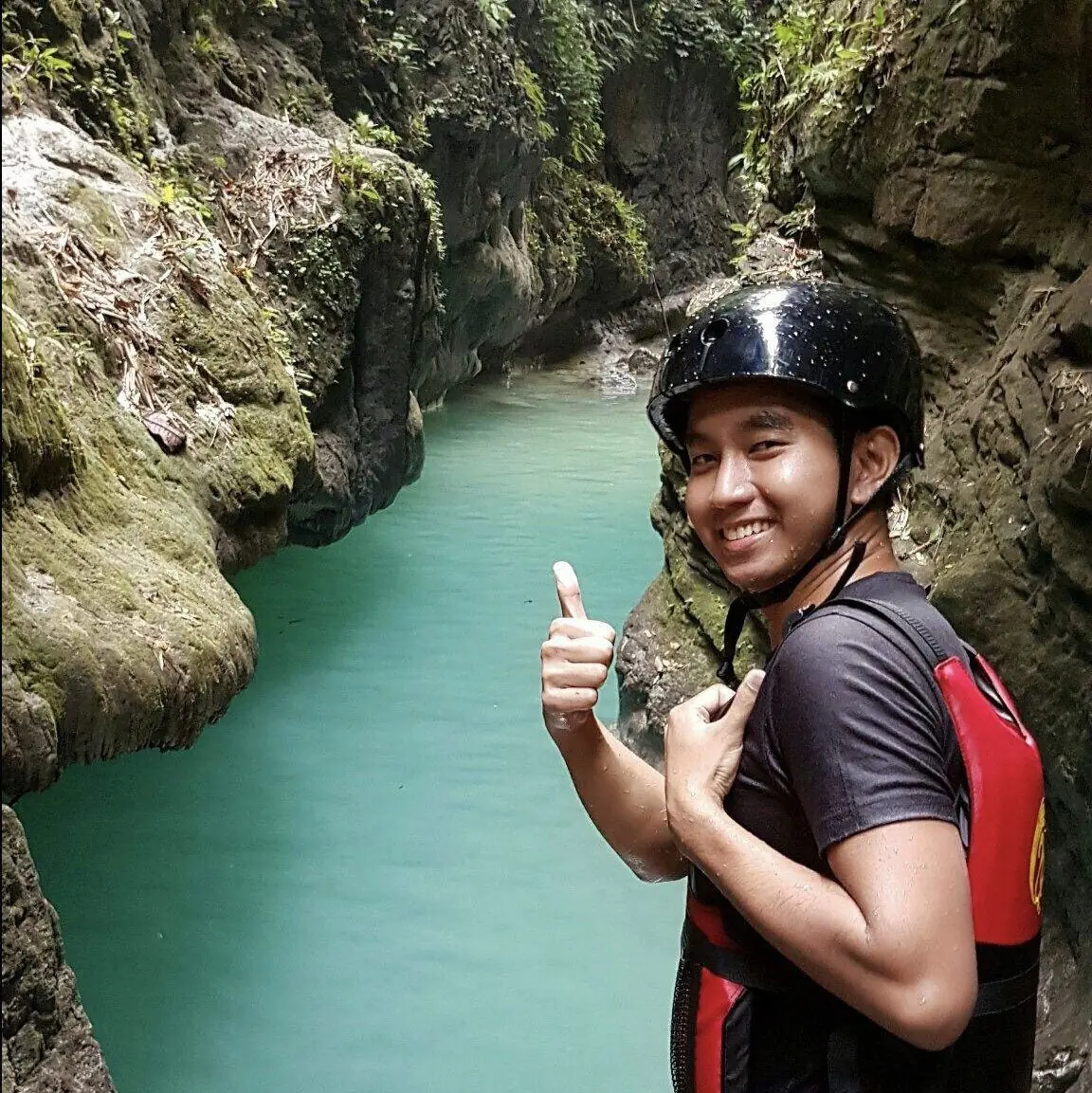
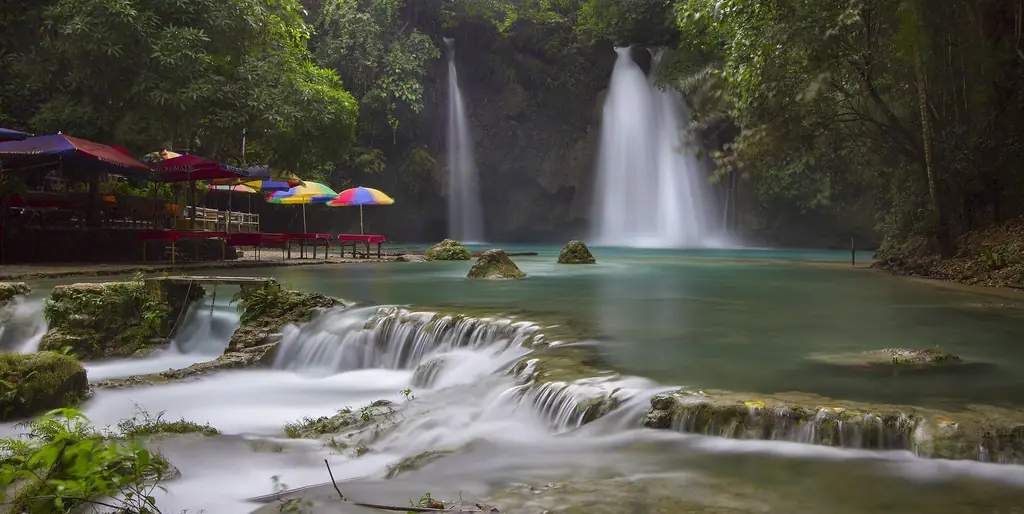
Kawasan Falls, Badian
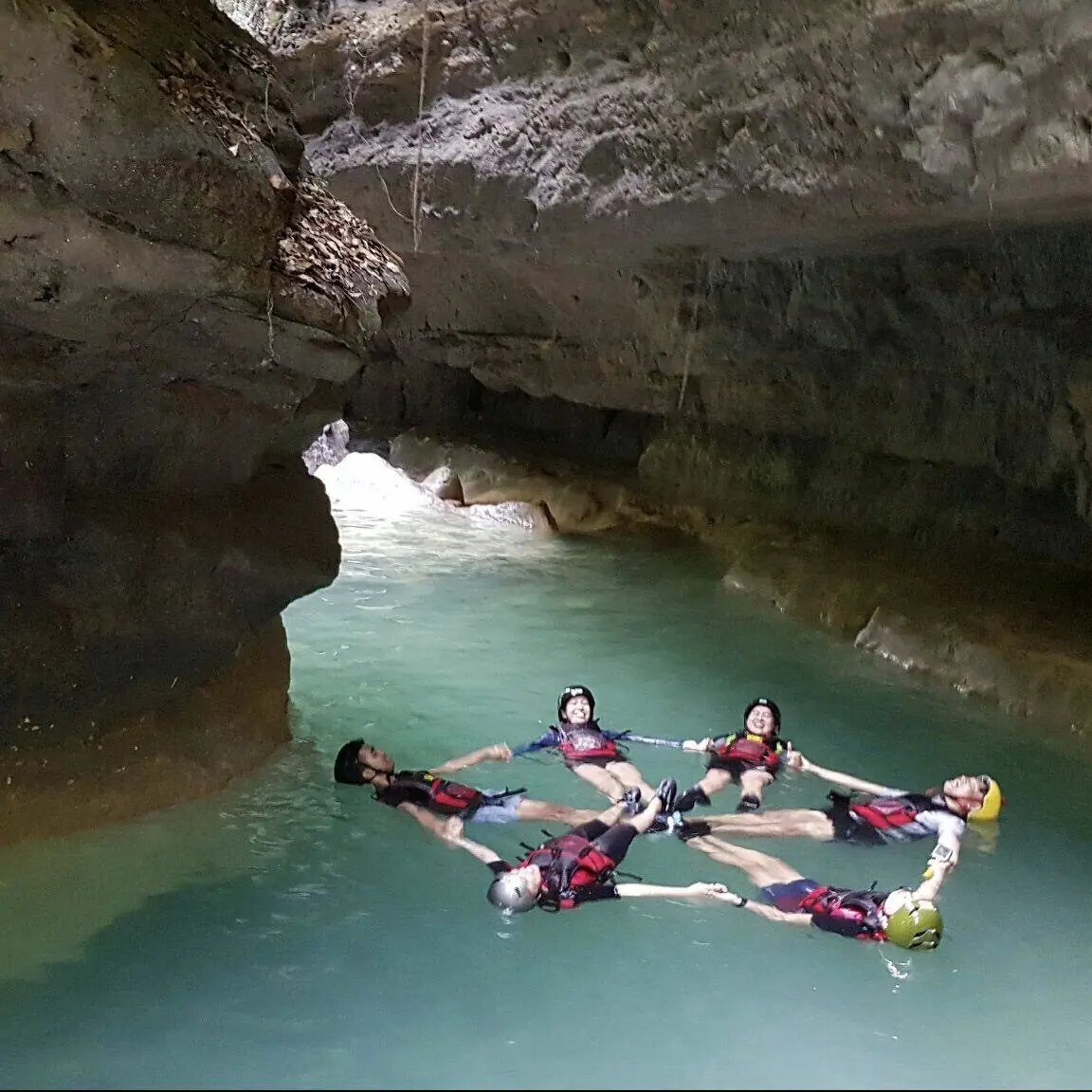
Multi-tiered turquoise waterfalls in the mountains of Badian municipality in southern Cebu, about 2.5 hours from the city. The falls have become extremely popular and crowded; visiting early in the morning or on weekdays reduces congestion. Canyoneering tours from Matutinao village combine river hiking with cliff jumping to reach the falls.
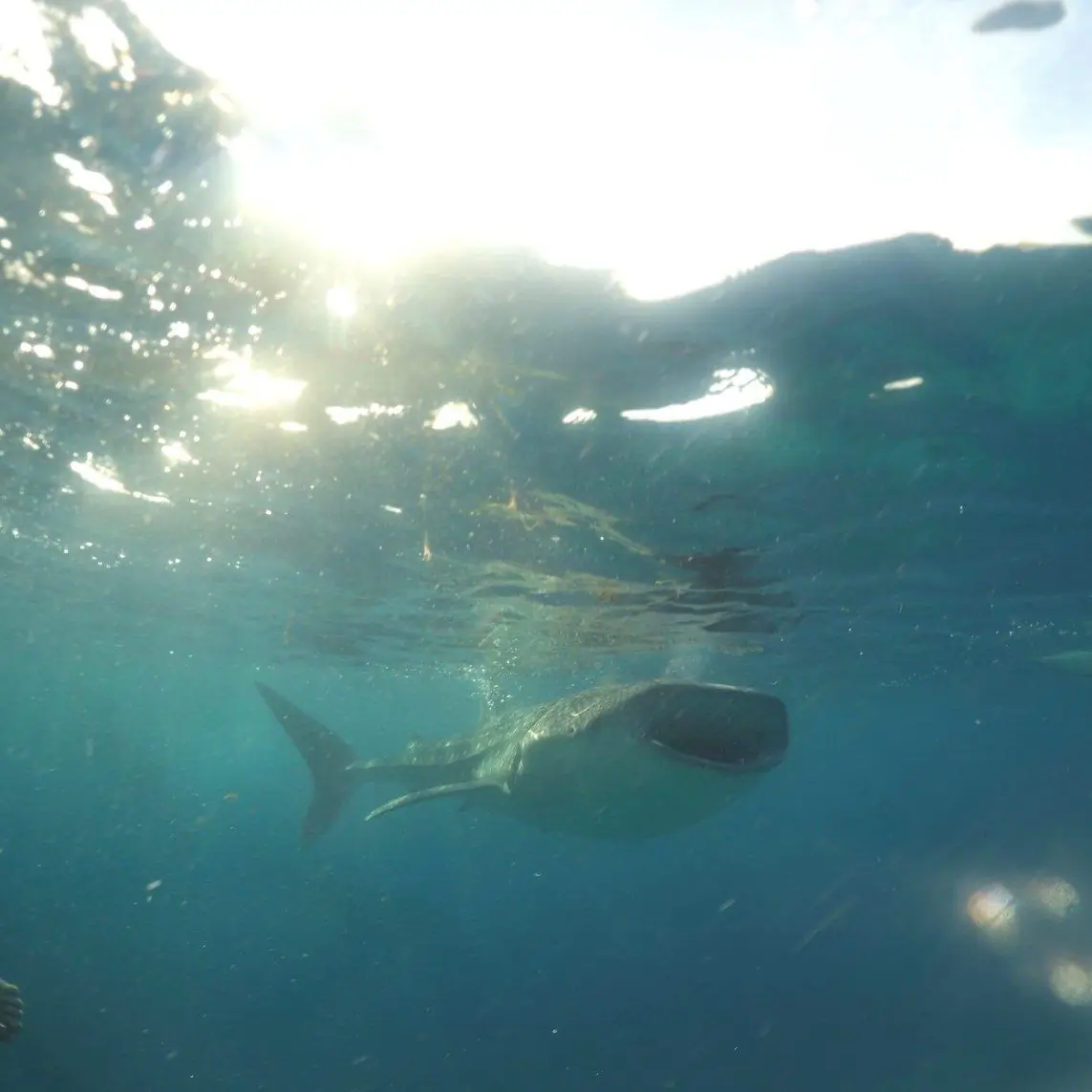
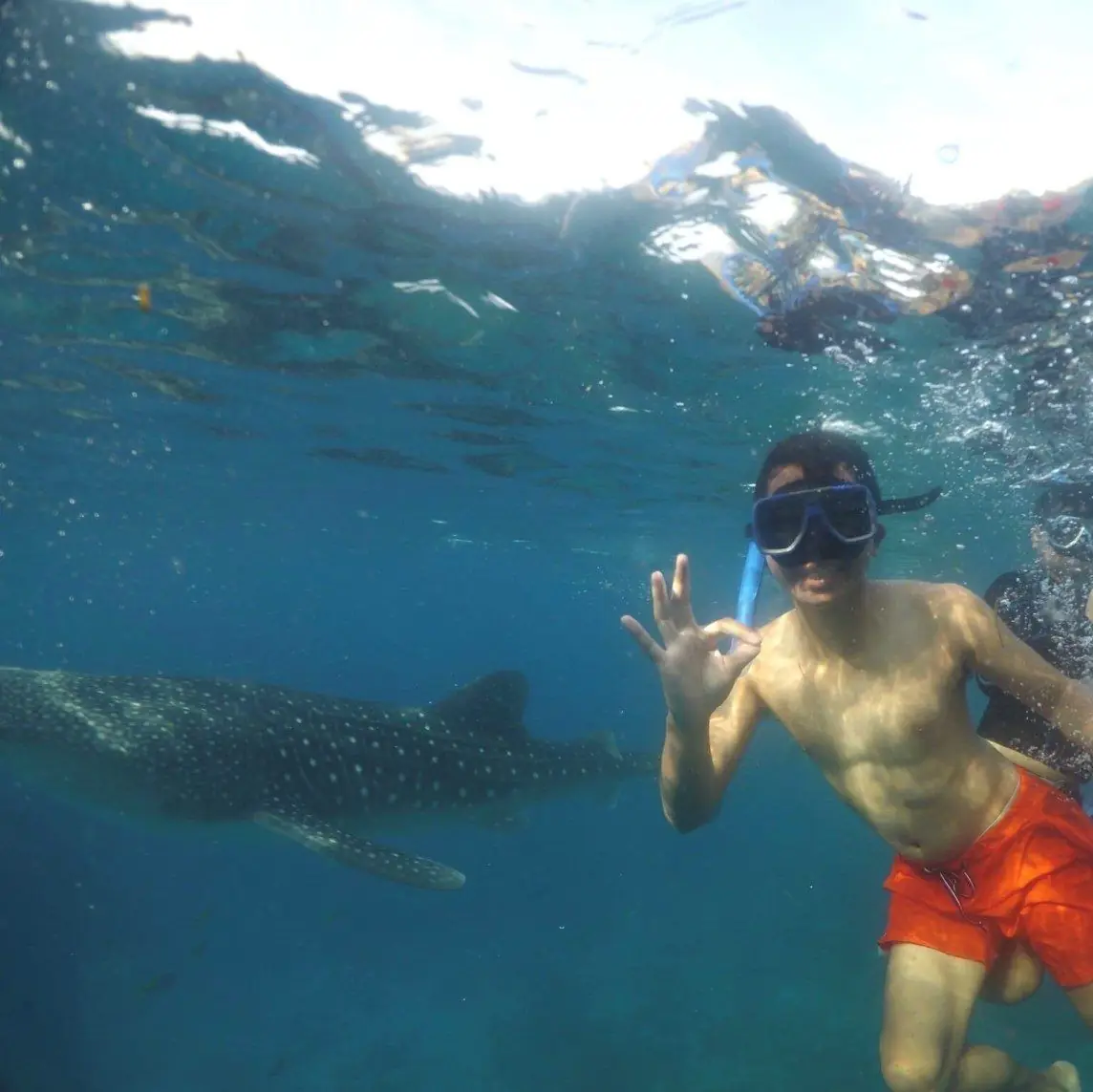
Whale Shark Watching, Oslob
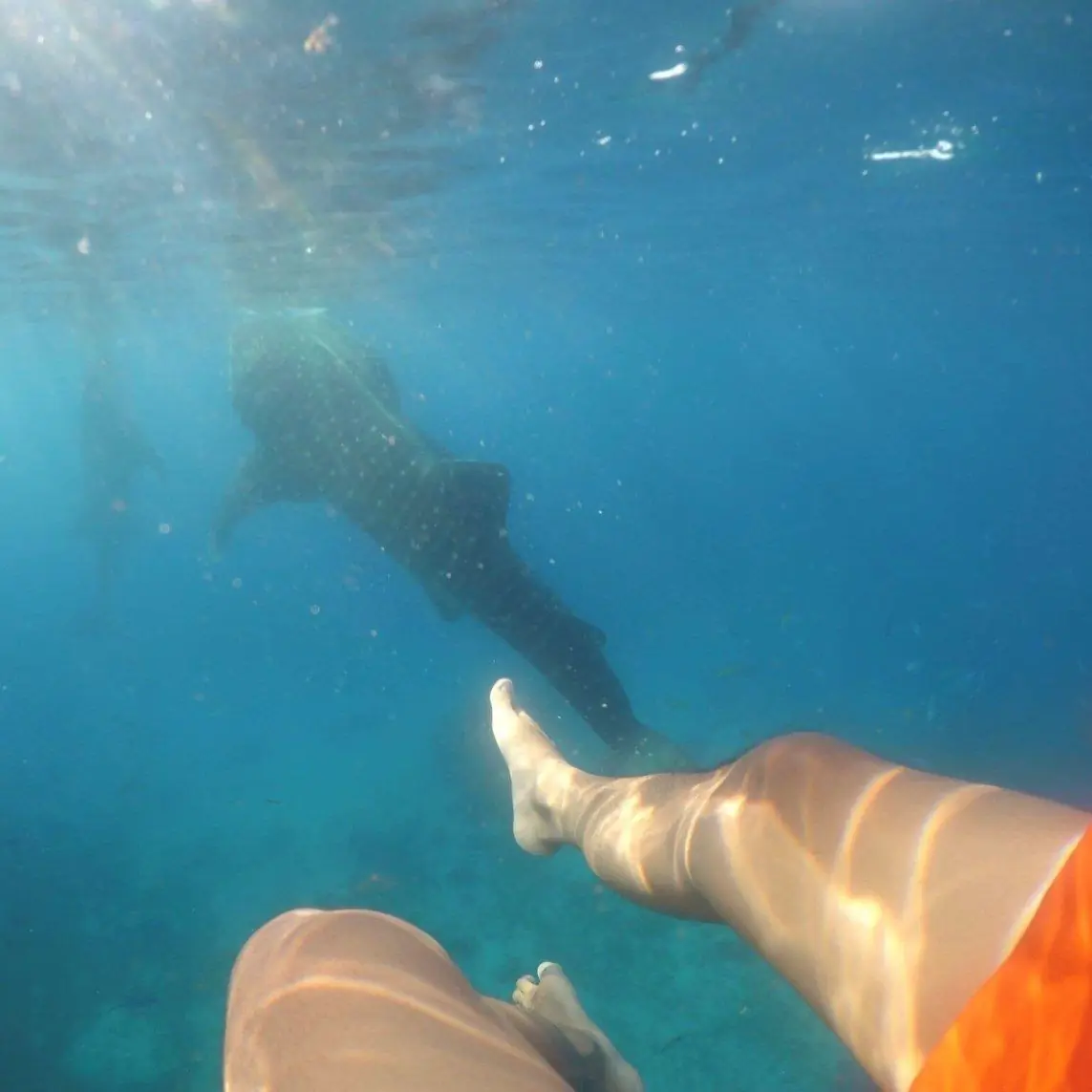
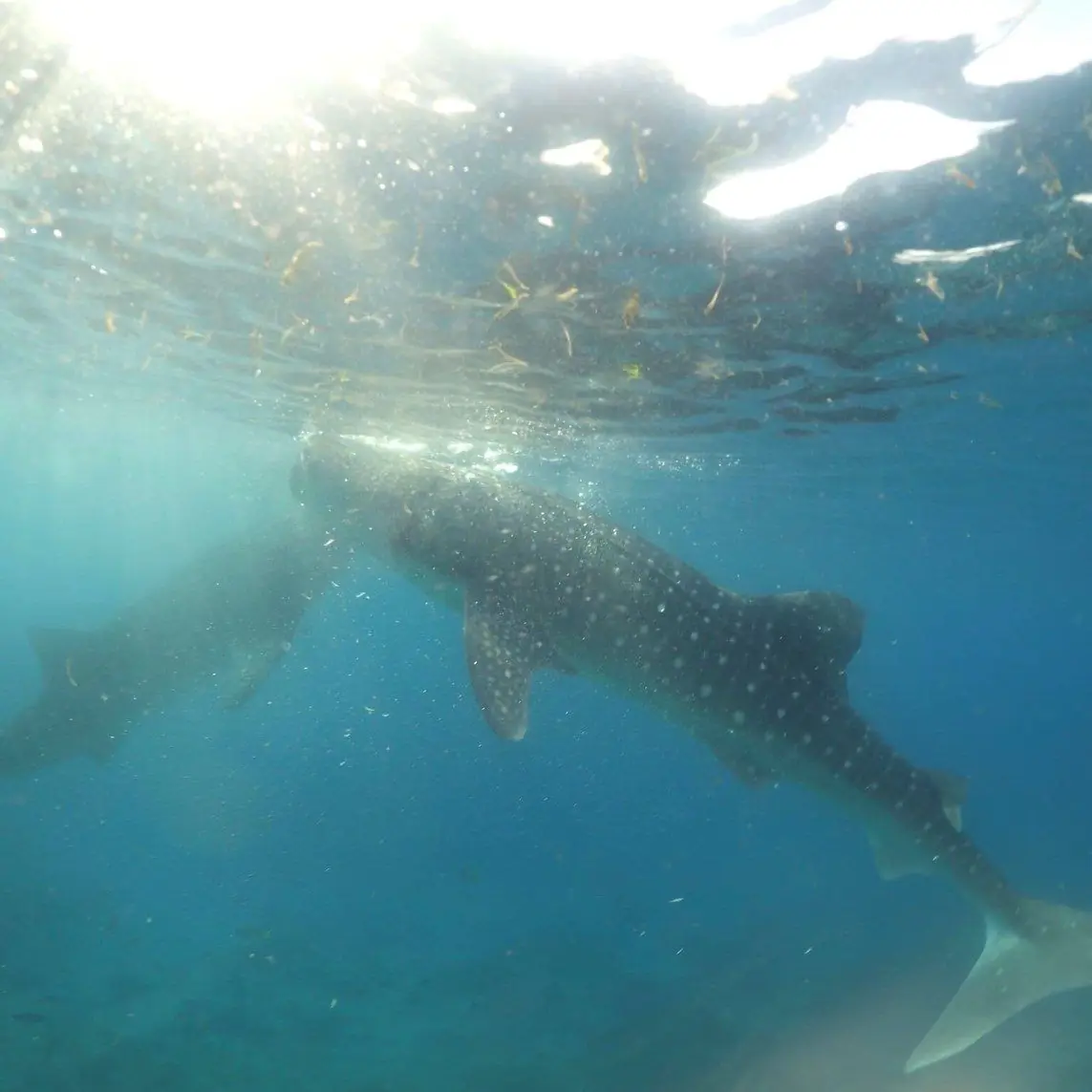
The town of Oslob in southern Cebu is known for feeding whale sharks, which allows tourists to swim with them at close range. The practice is ethically controversial — conservationists argue that feeding habituates the sharks and disrupts their natural behavior. Visitors should research the debate before deciding to participate.
Carcar Heritage City
A city in southern Cebu with a well-preserved heritage zone of 19th-century Spanish and American period stone houses. The Carcar public market is also famous for lechon — roasted pig sold by the kilo from stalls that open in the morning and sell out by midday. Carcar chicharron (pork cracklings) is another local specialty.
The Cross and the Waters
Magellan planted his cross near the shore in April 1521 and was dead in the water at Mactan six weeks later. The events of those six weeks compressed several centuries of Philippine history into a single set of decisions: the alliance with Humabon, the baptism that brought thousands of Cebuanos into the Christian fold, the attack on Mactan that Magellan's captains had advised against, and the battle in the shallows where the Portuguese explorer who had circled almost the entire globe ran out of room to retreat.
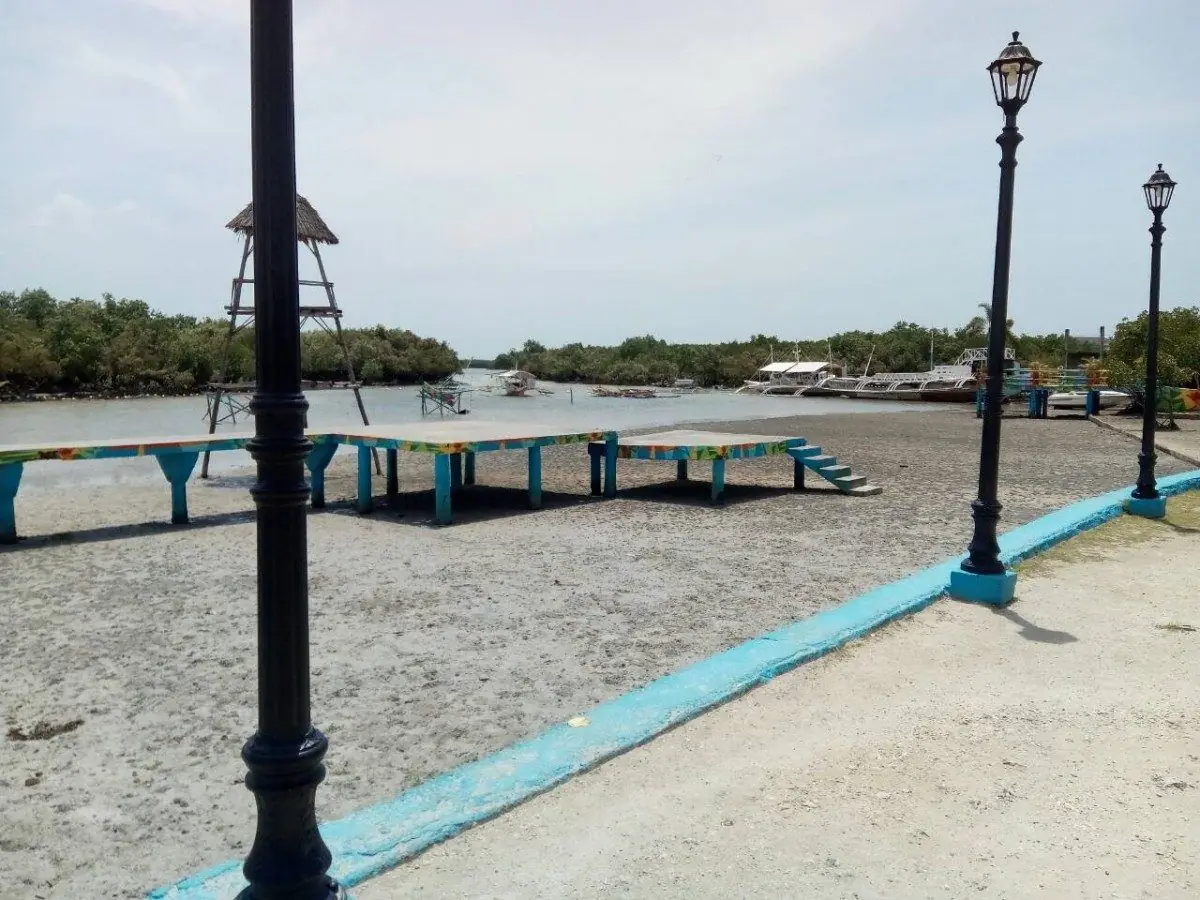
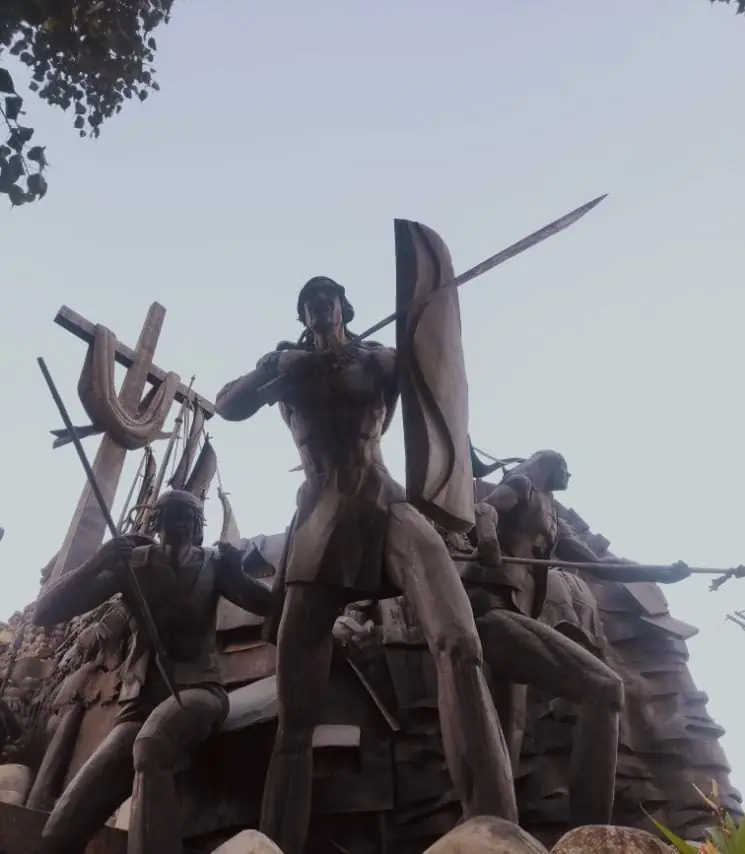
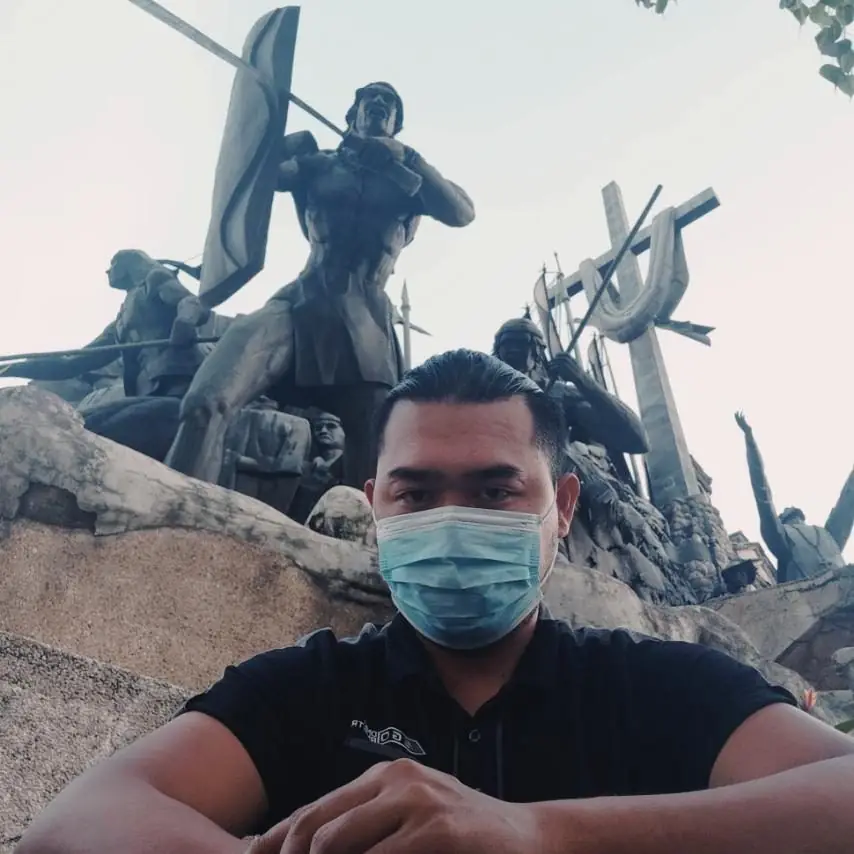
What Lapu-Lapu was defending is sometimes framed as Filipino sovereignty, though the concept did not exist in 1521 and his quarrel was primarily with Humabon. What matters is that a local ruler with a local grievance held his ground against a European expedition, and the outcome — whatever its original stakes — became the founding myth of Filipino resistance. The monument on Mactan shows a muscular Lapu-Lapu in a posture of defiance. Magellan's marker, 500 meters away, records his death more quietly.
Every January the streets of Cebu fill for Sinulog, and the Santo Niño image — the one Magellan brought, the one Legazpi's men found in a burning house 44 years later — is carried through the city. The movement at the heart of the festival is forward two steps and back one step, which is what sinulog means: like the current of the river. It moves forward and it does not entirely leave what is behind it.