Map

Davao del Sur

Davao Region
Mindanao
Capital Digos City
Population 680,473
Area 3,861 km²
Municipalities 13
Cities 1
Island Group Mindanao
Languages Cebuano, Ilocano, B'laan, Bagobo

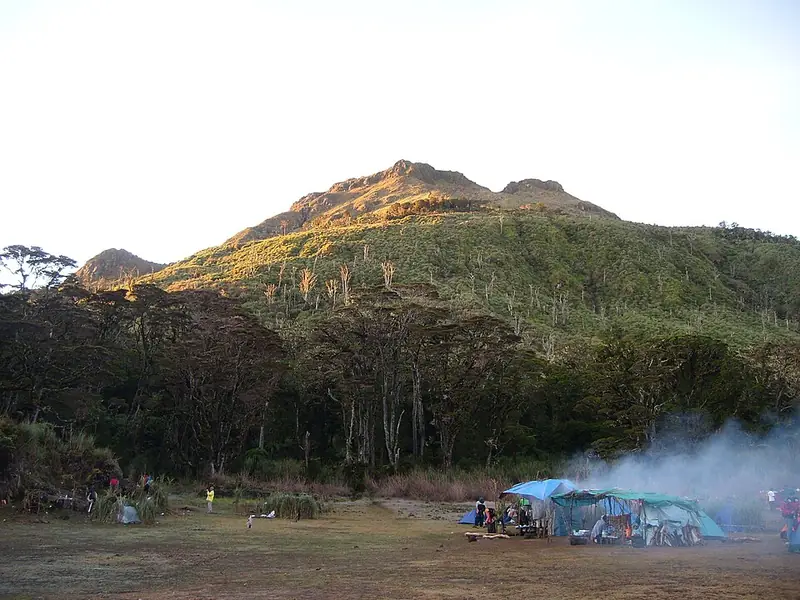
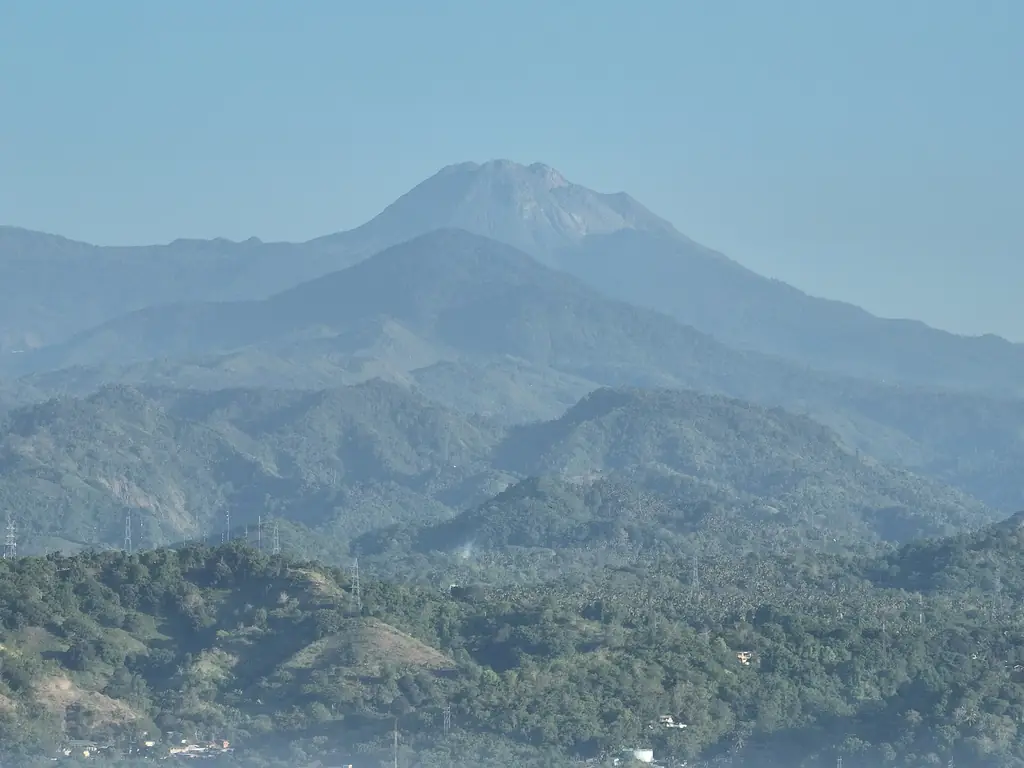
Davao del Sur occupies the southern portion of the Davao Gulf coast on Mindanao's eastern face. It is the province where the Philippines reaches its highest point: Mount Apo, at 2,954 meters, rises from the western interior and dominates the landscape in every sense — geographically, spiritually, and ecologically.

Digos CityCapital
3,861 km²Area
13Municipalities
MindanaoIsland Group

Digos City handles the administrative and commercial work of the province, sitting on the coastal plain between the gulf and the mountain. The city is surrounded by agricultural land — banana plantations, coconut groves, and smallholder rice farms that feed the regional economy.

Highest Peak in the Philippines

Mount Apo stands at 2,954 meters — the tallest mountain in the Philippines. It is an active stratovolcano and the ancestral domain of the Manobo and Bagobo peoples, who consider it sacred. Climbing Apo requires permits from the indigenous communities, a requirement that is also a statement of sovereignty.

The B'laan and Bagobo peoples have inhabited this province long before it bore its Spanish-assigned name. Their communities persist in the upland barangays surrounding Apo, maintaining traditions of weaving, ritual, and land-based agriculture despite sustained pressure from migration, logging, and plantation development.

The territory now called Davao del Sur was part of the vast, loosely administered expanse that Spanish authorities grouped under the Davao district in the nineteenth century. It was never fully pacified under colonial rule — the mountain interior remained outside effective Spanish reach, and the indigenous communities of the highlands maintained their own governance.

1850s

Spanish Davao District Established

Spain formally organized Davao as a military district to assert colonial presence on Mindanao. Settlement was largely coastal and shallow, with the mountain interior remaining under indigenous control.

1900s

American Period and Agricultural Expansion

Under American administration, large-scale agricultural concessions were granted in the Davao region. Japanese entrepreneurs established abaca plantations before World War II, and migration from the Visayas brought new settlers into what had been indigenous land.

1967

Province Created from Davao

Davao del Sur was carved from the original province of Davao, which was subdivided into three provinces: Davao del Norte, Davao del Sur, and Davao Oriental. Digos became the provincial capital.

2001

Digos Cityhood

Digos was converted into an independent component city, separating its administration from the province while remaining the provincial capital.

The latter decades of the twentieth century saw Davao del Sur drawn into the conflict between the Armed Forces of the Philippines and the New People's Army, which maintained a presence in the upland areas. The indigenous communities of the Apo slopes often found themselves caught between competing claims on their land and labor.

The cultural life of Davao del Sur is divided between the lowland Christian majority, whose roots lie in Visayan and Ilocano migration, and the indigenous upland communities — the Bagobo, B'laan, and Manobo peoples — who predate the province by centuries.

The Bagobo and B'laan

The Bagobo Tagabawa, one of several Bagobo subgroups, are concentrated around the slopes of Mount Apo. They produce elaborate woven textiles using abaca fiber, dyed with natural pigments in geometric patterns that encode social identity and spiritual meaning. Beadwork and brass ornaments are central to ceremonial dress.

The B'laan people, whose name means 'people of the blade,' occupy the southern portions of the province. They are known for their funerary practices, their t'nalak-style weaving, and the making of ritual objects from wood and metal. Their oral literature includes elaborate creation narratives centered on the deity Melu.

Mount Apo as Sacred Ground

For the Manobo and Bagobo, Mount Apo is not simply a mountain but the home of Apo Sandawa, a spirit guardian. Rituals are performed before any ascent, and certain areas of the mountain are restricted entirely. The 1936 establishment of Mount Apo as a national park did not extinguish these claims — it simply overlaid them with a different administrative framework.

Festivals

Digos City holds the Dawakan Festival each July, a celebration centered on indigenous cultural performance — dance, music, and the display of traditional costume. The festival was designed partly as a tourism draw, but the indigenous communities who participate have used it as a platform to maintain visibility and press land rights claims.

The food of Davao del Sur reflects its agricultural abundance and its mixed population. Banana in every form — fresh, cooked, dried, fermented — appears alongside rice, pork, and the seafood of the Davao Gulf.

Tinolang Manok sa Saging

Chicken tinola made with green banana instead of papaya — a Mindanao adaptation that gives the broth a slightly starchier body. Ginger and malunggay leaves finish the dish. Widely eaten across the Davao provinces.

Durian-Based Sweets

Davao's proximity to Davao City means durian is available in abundance. Durian jam, durian candy, and durian ice cream are common in the provincial markets, produced by small cottage processors throughout the province.

Sinuglaw

Davao Region
20 minutesPrep
0 minutes (cured, not cooked)Cook
4Serves
Ingredients
  • 300gpork belly, grilled and sliced thin
  • 300gfresh tuna or tanigue, cubed
  • ½ cupcane vinegar
  • 3 tbspcalamansi juice
  • 1 mediumred onion, sliced thin
  • 2 tbspginger, julienned
  • 2 pieceschili, chopped
  • to tastesalt
Method
  1. Grill the pork belly over charcoal until cooked through and slightly charred. Slice thin and set aside.
  2. Cure the raw fish in vinegar and calamansi for 10 minutes until the flesh turns opaque.
  3. Drain excess liquid from the fish.
  4. Combine grilled pork and cured fish in a bowl.
  5. Add red onion, ginger, and chili. Toss to combine.
  6. Season with salt. Serve immediately.
Cook's note

Sinuglaw is a portmanteau of sinugba (grilled) and kinilaw (cured in acid). The combination of cooked pork and acid-cured raw fish is the defining feature. Do not let it sit too long after combining — the vinegar continues to work on both proteins.

Market Finding

The Digos City public market has a reliable fish section supplied from the Davao Gulf. Early morning is the best time — vendors from the coastal barangays arrive with catch from the previous night.

Cebuano is the dominant language of Davao del Sur, brought by Visayan settlers who arrived in large numbers throughout the twentieth century. It functions as the everyday language of the markets, streets, and schools of Digos City and the coastal municipalities.

CebuanoPrimary Language
Bagobo, B'laan, ManoboIndigenous Languages
AustronesianLanguage Family
Latin (Roman)Script

The Bagobo Tagabawa language belongs to the Austronesian family and is spoken by roughly 50,000 people, primarily in the upland barangays of the municipalities surrounding Mount Apo. It is distinct from Cebuano and from Tagalog, and carries a significant oral literature transmitted through ritual specialists.

B'laan, spoken in the southern municipalities, is a separate language with its own phonology and grammar. Linguists classify it within the South Mindanao language subgroup. Like most Philippine minority languages, it faces pressure as younger generations shift to Cebuano for economic reasons.

Language and Identity

Among the Bagobo and B'laan, language is inseparable from ritual practice. Certain ceremonial forms — prayers, invocations, song cycles — exist only in the indigenous language and have no functional Cebuano equivalent. Loss of language in these communities therefore means loss of access to specific forms of spiritual and cultural life.

Davao del Sur is most often reached from Davao City, which serves as the regional hub. The province sits directly south along the coast, making it accessible by road in under two hours from the city center.

~60 km to DigosDistance from Davao City
1–1.5 hours by busTravel Time
Davao–General Santos HighwayMain Route
Francisco Bangoy International, Davao CityNearest Airport

Mount Apo Natural Park

The highest peak in the Philippines, Mount Apo requires a multi-day climb with permits coordinated through the indigenous communities and the DENR. The mountain offers multiple trail approaches, the most popular starting from Kidapawan City in Cotabato — but trails from the Davao del Sur side through Barangay Ilomavis are quieter and pass through indigenous territory.

Lake Agco

A crater lake on the slopes of Mount Apo, Lake Agco sits within a geothermal zone. Sulfurous vents, boiling mud pools, and hot springs surround the lake. It is a staging point for Apo climbers and a destination in its own right for those who want a geothermal landscape without the summit push.

Digos City Public Market

The market is the economic and social center of the province. Stalls carry the agricultural produce of the hinterland — root crops, banana varieties, upland vegetables — alongside the catch of the Davao Gulf coast. It is the best single location for understanding what the province produces and eats.

Climbing Mount Apo

Do not attempt Mount Apo without coordinating with the local indigenous community organizations. The Climbers' Association in Barangay Ilomavis, Bansalan, manages one of the main trail entrances. Fees go directly to community guides and maintenance. Guided multi-day packages can be arranged in Davao City through licensed operators.

There is a moment that climbers describe when they reach the summit of Mount Apo on a clear morning: the Pacific Ocean visible to the east, the Celebes Sea to the south, Mindanao spread below in its entirety. For a few seconds, you understand the island in a way that no map makes possible.

The Bagobo Tagabawa have been reaching that summit — or approaching it in ritual intent — for far longer than any recorded history. Their relationship to the mountain is not recreational. Apo Sandawa, the spirit of the mountain, is consulted through ritual specialists called bagani. Before any significant community action — planting, warfare in the old days, now perhaps a court case or a political negotiation — the mountain is addressed. The protocol has changed in form over centuries of contact with Christianity and the lowland state, but the basic orientation toward the peak persists.

In 1992, a geothermal power plant was developed on the slopes of Apo, piping steam from the volcanic field around Lake Agco. Indigenous groups protested — the plant sat inside their ancestral domain and had been approved without their consent. The dispute ran through the courts for years. In 2010, after sustained legal pressure under the Indigenous Peoples Rights Act, some accommodations were reached, though the plant continued operating. The Bagobo had established a legal precedent, if not a complete victory. The mountain remained contested ground, which is perhaps the only honest description of sacred places in a modern state.