Map

Eastern Samar

Eastern Visayas
Visayas
Capital Borongan City
Population 486,666
Area 4,660 km²
Municipalities 23
Cities 1
Island Group Visayas
Languages Waray, Cebuano

Eastern Samar faces the Pacific Ocean directly, its coastline exposed to weather systems that build across thousands of kilometers of open water before making landfall here. It is one of the most typhoon-prone provinces in the Philippines — a fact that has shaped its architecture, its agriculture, and the psychological endurance of its people.

Borongan CityCapital
4,660 km²Area
23Municipalities
VisayasIsland Group

Borongan City is the provincial capital, a city of modest size on the eastern coast. It serves as the administrative center and the main commercial hub, connected to Tacloban and the rest of Leyte by a highway that was rebuilt after Typhoon Yolanda destroyed large sections of it in 2013.

First Philippine Landfall of Typhoon Yolanda

Super Typhoon Yolanda (international name: Haiyan) made its first Philippine landfall near Guiuan, Eastern Samar on November 8, 2013. With sustained winds exceeding 310 km/h and storm surges reaching 7 meters in some areas, it was among the strongest tropical cyclones ever recorded. More than 6,000 people died across the Visayas, and Eastern Samar was among the hardest-hit provinces.

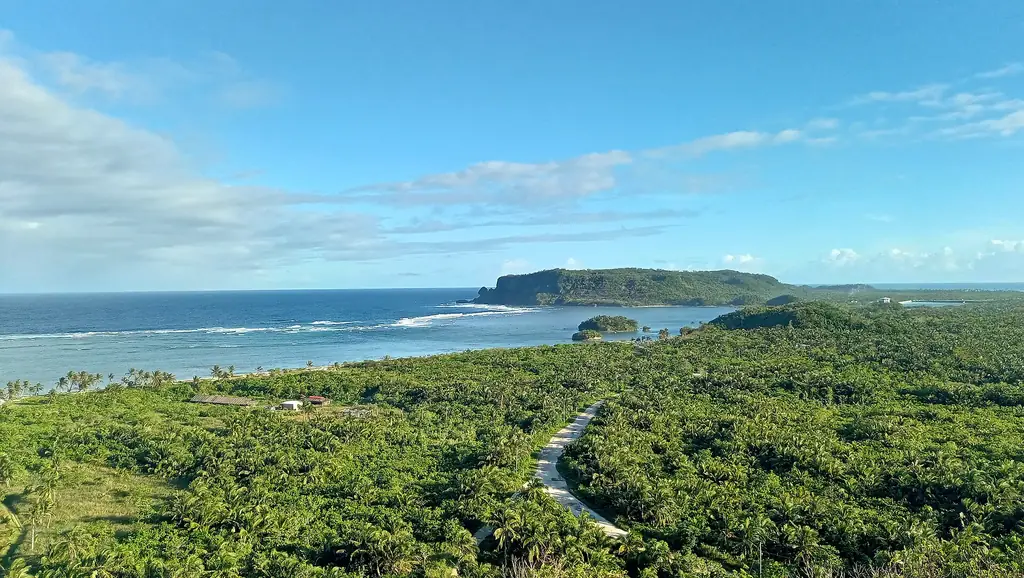
The province is a place of considerable natural beauty — surf beaches, coral reefs, river systems descending from forested mountains — that exists alongside the material reality of recurring disaster and incomplete recovery.

Eastern Samar's recorded history begins with Spanish contact in the sixteenth century. The island of Samar was one of the first areas encountered by Magellan's expedition in 1521, and the eastern coast was a frontier zone for the colonial administration — nominally controlled, but difficult to garrison and regularly contested.

1521

Magellan's Expedition

Ferdinand Magellan's fleet made its first landfall in the Philippines at Homonhon Island, located off the coast of what is now Eastern Samar. The contact was peaceful and brief — the expedition moved on to Cebu, where Magellan died in battle.

1599

Jesuit Mission Established

Jesuit missionaries established missions along the Samar coast, beginning the process of converting the coastal populations to Christianity. The interior remained largely outside mission reach throughout the colonial period.

1901

Balangiga Massacre and Reprisal

In September 1901, Filipino revolutionaries in the town of Balangiga, Eastern Samar, attacked and killed 48 American soldiers of Company C, 9th Infantry — the most significant American combat loss in the Philippine-American War. The American reprisal was devastating: General Jacob Smith ordered Samar reduced to a 'howling wilderness,' and the surrounding countryside was depopulated. The Balangiga church bells were taken to the United States as war trophies.

1965

Eastern Samar Province Established

The province of Eastern Samar was created from the eastern municipalities of Samar province, with Borongan designated as the capital.

November 8, 2013

Typhoon Yolanda (Haiyan)

Super Typhoon Yolanda made its first Philippine landfall near Guiuan, Eastern Samar. Storm surges, winds exceeding 310 km/h, and flooding devastated coastal communities across the province. The scale of destruction in Eastern Samar was largely overshadowed in international coverage by the Leyte casualties, but the province suffered grievously.

2018

Balangiga Bells Returned

The three bells taken from Balangiga after the 1901 massacre were returned to the Philippines by the United States after more than 117 years. Their return was the result of decades of advocacy by veterans' groups, politicians, and the local community. The bells were reinstalled in the Balangiga church.

Eastern Samar's cultural life is Waray — a term that names both the language and a broader identity shared with the people of Leyte and Western Samar. Waray culture is known for directness, a particular kind of pride in endurance, and a folk tradition that celebrates resistance to hardship.

The Balangiga church and its bells are the central symbol of Eastern Samar's historical consciousness. The attack of 1901 and the American reprisal that followed were formative events — the kind that get absorbed into local identity and retold across generations. The return of the bells in 2018 was experienced as a partial redemption of a very long grievance.

Waray Identity

The word 'Waray' comes from the phrase 'waray-waray,' meaning 'nothing' or 'without.' It was originally a term used to describe the people's supposed indifference to hardship — 'those who have nothing to fear.' The Waray have adopted this characterization as a badge of cultural resilience, particularly in the context of surviving repeated typhoons and historical trauma.

Traditional Waray music includes the komposo — narrative songs composed to mark specific events, including disasters, political conflicts, and acts of heroism. After Typhoon Yolanda, komposo artists composed pieces documenting the storm, the deaths, and the recovery. This is a living form of oral history.

Waray food is built on rice, fish, and coconut. The Pacific coast provides an abundance of seafood, including large yellowfin tuna that pass through the Eastern Visayas. Inland, root crops and vegetables supplement the diet. The food is not elaborate — it is practical, sustaining, and shaped by what is available.

Binagol

Taro grated and cooked with coconut milk and sugar, molded into coconut shells and wrapped in banana leaves. Binagol is specific to the Samar-Leyte region and is one of the most recognized products of Eastern Samar. It is sold as a pasalubong throughout the Visayas.

Tinola Waray

The Waray version of chicken tinola, notable for using green papaya in abundance and finishing with a generous amount of malunggay leaves. The broth is lighter than the Tagalog version and relies more heavily on ginger for flavor.

Kinakulob na Manok

Eastern Samar / Waray
15 minutesPrep
45 minutesCook
4Serves
Ingredients
  • 1 kgnative chicken, cut into pieces
  • 6 clovesgarlic, crushed
  • 1 large thumbginger, sliced
  • ½ cupcoconut vinegar
  • 3 tbspsoy sauce
  • 3 piecesbay leaves
  • 1 tspblack peppercorns
  • 1 cupwater
Method
  1. Combine all ingredients in a heavy pot with a tight-fitting lid.
  2. Bring to a boil over medium heat.
  3. Reduce heat to low, cover tightly, and cook for 35–40 minutes.
  4. Do not lift the lid during cooking — the steam does the work.
  5. After 35 minutes, check that chicken is cooked through and sauce has reduced.
  6. If sauce is too thin, uncover and increase heat for 5 minutes.
  7. Serve with steamed rice.
Cook's note

Kinakulob means 'covered' or 'sealed.' The technique is a steam-braise — the chicken cooks in its own moisture plus the vinegar and small amount of water. Native chicken (free-range) holds up better to this cooking method than broiler chicken, which can become dry. Increase liquid slightly if using broiler.

Waray — also called Waray-Waray or Samareño — is the language of Eastern Samar and is shared with Leyte and Western Samar. It is spoken by roughly 3 million people across the Eastern Visayas region and is the fourth or fifth most widely spoken language in the Philippines.

Waray (Waray-Waray)Primary Language
~3 million (Eastern Visayas)Speakers
Austronesian / BisayanLanguage Family
Eastern Visayas (Region VIII)Region

Waray is distinct from Cebuano, Hiligaynon, and Tagalog, though all belong to the Austronesian family. It has a well-developed oral literature including epics, riddles (tigmo), and the komposo narrative song tradition. The language is taught in Eastern Samar schools as part of the Mother Tongue-Based Multilingual Education program.

Filipino Martial Art Connection

The Samar-Leyte region is associated with a particular style of Arnis (Filipino martial arts) known for its focus on live-hand techniques and fluid footwork. The Waray-Waray fighting style has influenced modern Arnis practice, and the region's martial culture is reflected in the directness with which combat forms are taught and practiced.

Eastern Samar is reached from Tacloban in Leyte, which has the nearest major airport. A highway connects Tacloban to Borongan via Calbayog or through the interior. The road through the eastern Samar coast is scenic but long.

~130 km to BoronganDistance from Tacloban
3–4 hours by busTravel Time
Daniel Z. Romualdez Airport, TaclobanNearest Airport
Cebu–Guiuan route (select operators)Ferry Option

Guiuan

A municipality at the southern tip of Eastern Samar and the first Philippine town struck by Typhoon Yolanda. Guiuan has a historic Spanish-era church, a sheltered bay popular for diving, and Homonhon Island offshore — the first point of Magellan's landfall in the Philippines in 1521. The town has rebuilt significantly since 2013.

Calicoan Island

A surfing destination connected to Guiuan by a short bridge. Calicoan faces the Pacific and receives consistent swells that make it one of the more reliable surf spots in the Visayas. The ABCD Beach on the island's eastern shore is the main break. Accommodation is simple — board and lodging guesthouses operated by local families.

Balangiga

The town of Balangiga is significant for its church, which houses the bells returned from the United States in 2018 after 117 years. The Balangiga Bell Memorial and the church itself are the primary sites. The story of the 1901 attack and its aftermath is told in the municipal hall's display room.

Typhoon Season

Eastern Samar is in the direct path of Pacific typhoons. The highest risk period is October through December, with the province historically among the most frequently struck in the Philippines. Travel from July onward carries typhoon risk. Monitor PAGASA bulletins closely and have contingency plans for any visit during the second half of the year.

On the morning of November 8, 2013, the barometric pressure in Guiuan dropped to 895 millibars — among the lowest ever recorded. People who have described what came next use the same word: darkness. Not the darkness of cloud cover but a wall of wind and water that removed visibility entirely and with it any sense of direction, scale, or safety.

The storm surge in some coastal barangays of Eastern Samar reached seven meters. Houses — concrete block construction built to survive storms — were scoured to the foundation. People who had survived previous typhoons by sheltering in strong buildings discovered that their calculus of safety was wrong. Yolanda was not a stronger version of the storms they knew. It was a different category of event.

In the weeks after, reporters and aid workers arrived in large numbers. The coverage focused heavily on Tacloban across the water in Leyte, which had a larger casualty count and was more accessible. Eastern Samar's suffering was real and extensive but slower to reach international attention. Communities in the interior of the province waited weeks for relief that reached the coast first.

Recovery was uneven and in some places remains incomplete a decade later. But the province had rebuilt before — after other storms, after the depopulation of the American period, after every historical disruption that preceding generations had endured. The komposo singers documented Yolanda in song. The Balangiga bells came home five years later. Guiuan rebuilt its waterfront. The coast reopened for diving. This is not resilience as a comfort — it is resilience as bare fact.