Map

Lanao del Sur

BARMM
Mindanao
Capital Marawi City
Population 1,045,429
Area 3,872 km²
Municipalities 39
Cities 1
Island Group Mindanao
Languages Maranao, Filipino

Lanao del Sur is the heartland of the Maranao people and one of the provinces of the Bangsamoro Autonomous Region in Muslim Mindanao (BARMM). Its capital, Marawi City, sits at the northeastern edge of Lake Lanao and holds the distinction of being the only Islamic city in the Philippines. The province is defined by the lake — the second-largest in the country — and by the cultural traditions that have developed along its shores over centuries.

Marawi CityCapital
3,872 km²Area
39Municipalities
MindanaoIsland Group
BARMMRegion

The province is predominantly Muslim, with Islam having taken hold in the Lake Lanao region by the sixteenth century. The Maranao social structure is organized around the concept of the sultanate, and the province today contains multiple royal houses whose political influence remains active in local governance.

Marawi: The Islamic City of the Philippines

Marawi City is the only city in the Philippines officially designated as an Islamic city. The city's mosques, madrassas, and Islamic courts operate alongside the national government system and reflect the Maranao community's distinct legal and religious traditions.

Lanao del Sur occupies the southern and eastern shores of Lake Lanao, with mountain ranges forming much of its border with Bukidnon and North Cotabato. Most of the province's 39 municipalities cluster around the lakeshore or lie in the surrounding highlands.

Islam arrived at Lake Lanao by the mid-1500s, carried by traders and Islamic teachers from the Maguindanao and Sulu sultanates. The Maranao organized their political life around a confederation of four royal houses — the Pat a Pangampong ko Ranao — that coordinated resistance against outside powers for centuries.

c. 1521–1550

Islam Arrives at Lake Lanao

Islamic missionaries and traders bring the faith to the lake region. Maranao datus convert, and the political and social structure begins to align with Islamic governance.

1639–1895

Spanish Campaigns Repelled

Multiple Spanish military expeditions attempt to subdue the Lake Lanao region. All fail to establish permanent control. The Maranao sultanates maintain independence throughout the Spanish colonial period.

1903

American Moro Province Formed

The United States creates the Moro Province, incorporating Lanao. Unlike the Spanish, the Americans establish a military presence at the lake through construction of Camp Keithley (later Camp Ranao), near present-day Marawi.

1959

Province Divided

Lanao Province is split into Lanao del Norte and Lanao del Sur. Dansalan, the colonial-era capital, is renamed Marawi City and becomes the seat of Lanao del Sur.

2017

Siege of Marawi

In May 2017, Islamic State-affiliated Maute Group fighters seize portions of Marawi City. The AFP conducts a five-month urban battle to retake the city. The battle kills over a thousand people and displaces 350,000 residents. Large sections of the city are destroyed. Reconstruction continues years afterward.

The 2017 siege left Marawi's Grand Mosque, historic sultan's residences, and dense residential districts in rubble. Rebuilding has been slow, complicated by land disputes, funding shortfalls, and the scale of the destruction. The city that existed before the siege — its street markets, its fabric traders, its lakeside life — has not fully returned.

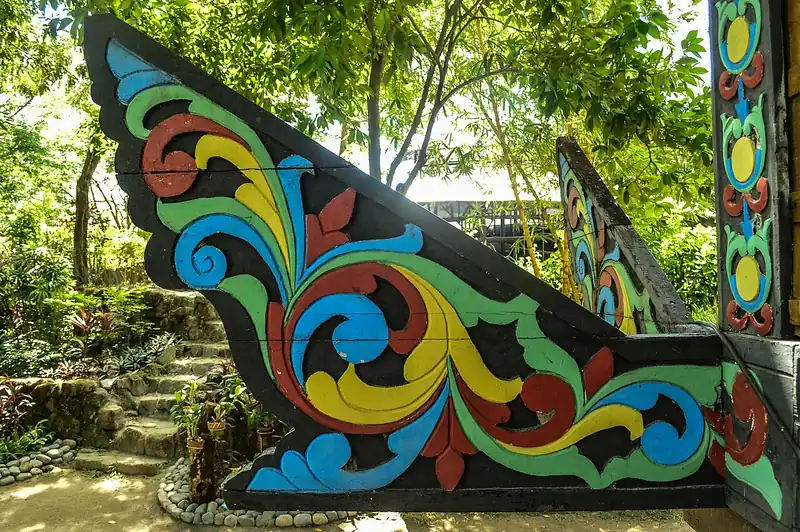
The Maranao are known throughout the Philippines for okir — a geometric and flowing design tradition applied to carved wood, woven cloth (malong and langkit), brasswork, and architecture. Okir is not decoration alone; each motif carries meaning, and the craft is tied to social rank and identity. The most recognizable motif is the naga (serpent) and the pako rabong (unfurling fern), rendered in deep reds, golds, and blacks.

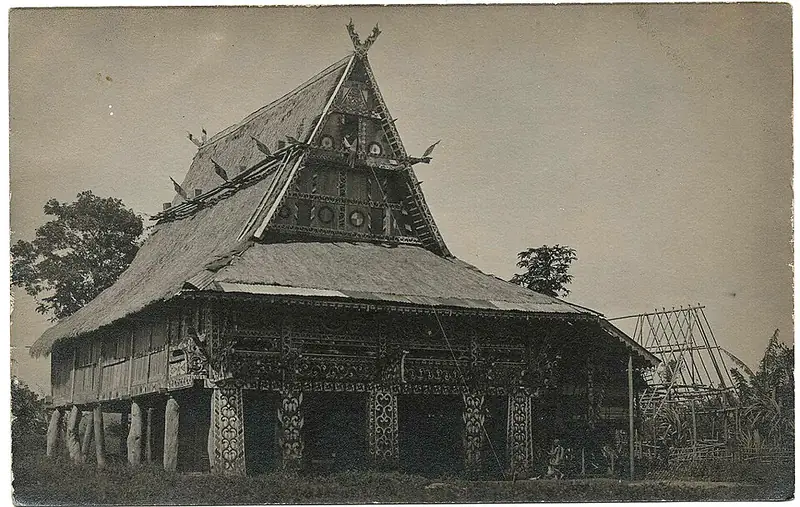
The Torogan

The torogan is the traditional house of Maranao royalty — a single large structure set on massive wooden posts, with elaborately carved panolong (beam ends) extending from the eaves. Torogans are among the finest examples of indigenous Philippine architecture. Several remain standing in lakeshore municipalities, though many were damaged or destroyed in the 2017 siege and its aftermath.

The Darangen Epic

The Darangen is the Maranao oral epic — a cycle of 17 books recounting the adventures of heroes and the cosmological order of the Maranao world. It predates the arrival of Islam and was proclaimed a UNESCO Masterpiece of Oral and Intangible Heritage in 2005. Master chanters (bayok) can recite passages for hours, often at weddings and other major social events.

Kulintang music — an ensemble of gong-chime instruments — is central to Maranao ceremonial life. The instruments range from the large agung gongs to the smaller kulintang row. Skilled players improvise within set melodic modes, and performance is a social and ritual event as much as a musical one.

TK

Princess Tarhata Kiram

Maranao and Moro political figurec. 1899–1979

A Moro royal educated in the United States, Tarhata Kiram became one of the most prominent Muslim women in Philippine public life. Her negotiations between Moro leaders and the Philippine government in the mid-twentieth century helped shape the terms of Muslim political representation in Mindanao.

Maranao cuisine is built around the lake's freshwater fish, highland vegetables, coconut milk, and the pungent spice blend called palapa. The food is sharper and more aromatic than most Philippine regional cooking — less sweet, more layered with heat and sour notes. Pork is absent; the province is halal by default.

Piaparan na Manok

Chicken simmered in coconut milk with palapa — a foundational Maranao preparation. The palapa base (toasted coconut, sakurab, ginger, chili) breaks down into the broth, creating a thick, golden sauce with significant heat. Served with rice.

Rendang sa Lanao

A dry-cooked beef dish related to the Southeast Asian rendang family, cooked in spiced coconut milk until the liquid evaporates and the meat absorbs the concentrated flavors. The Maranao version uses palapa spices rather than the lemongrass-heavy profile of Malay rendang.

Inandaran (Maranao Tuna Kinilaw)

Maranao / Lanao del Sur
20 minutesPrep
0 minutes (no cooking)Cook
4Serves
Ingredients
  • 500g, cut into small cubesFresh tuna or lake fish fillet
  • 1/2 cupWhite cane vinegar
  • 1/2 cupCoconut cream
  • 4 stalks, sliced thinSakurab (native scallion)
  • 2 tbsp, mincedFresh ginger
  • 5–8, slicedBird's eye chili
  • 1 tspSalt
Method
  1. Place fish cubes in a bowl. Pour vinegar over and toss. Rest for 10 minutes until fish surface turns opaque.
  2. Drain excess vinegar.
  3. Add coconut cream, sakurab, ginger, and chili. Toss gently.
  4. Season with salt. Serve immediately, chilled if possible.
Cook's note

Use the freshest fish available. The vinegar 'cooks' the surface of the fish — the interior should remain tender. This is eaten immediately after preparation, not stored.

Maranao is the primary language of Lanao del Sur. An Austronesian language closely related to Iranun and Maguindanao, it is spoken by nearly the entire population of the province. Maranao has its own literary tradition written in Arabic script (Jawi) as well as a romanized orthography adopted during the American period.

Arabic in Daily Life

Arabic holds a central place in religious practice and education in Lanao del Sur. Madrassas (Islamic schools) teach Quranic Arabic alongside the national curriculum. Many common Maranao words, particularly those related to religion, law, and formal address, derive directly from Arabic.

Philippine Languages and Islam

Maranao and Maguindanao share a common ancestor language and have influenced each other for centuries. The adoption of Islam reinforced this connection through shared religious vocabulary and literary traditions based on Arabic-script literacy.

Filipino and English are the official languages of instruction in public schools, but Maranao is the language of the home, the market, the mosque, and public life in most of the province. After the 2017 siege, community members displaced to other parts of Mindanao and Manila formed Maranao-speaking enclaves, maintaining the language in diaspora.

Travel to Marawi City and Lanao del Sur requires checking current security conditions before departure. The city was largely destroyed in 2017 and rebuilding has been ongoing; many former landmarks no longer exist. Despite this, Lake Lanao itself and the surrounding lakeshore municipalities remain places of significant beauty and cultural interest.

Laguindingan Airport (CDO), ~140 kmNearest Airport
~40 km, 1 hour by roadFrom Iligan City
Check current advisoriesTravel Note
Iligan City then southEntry Point

Lake Lanao

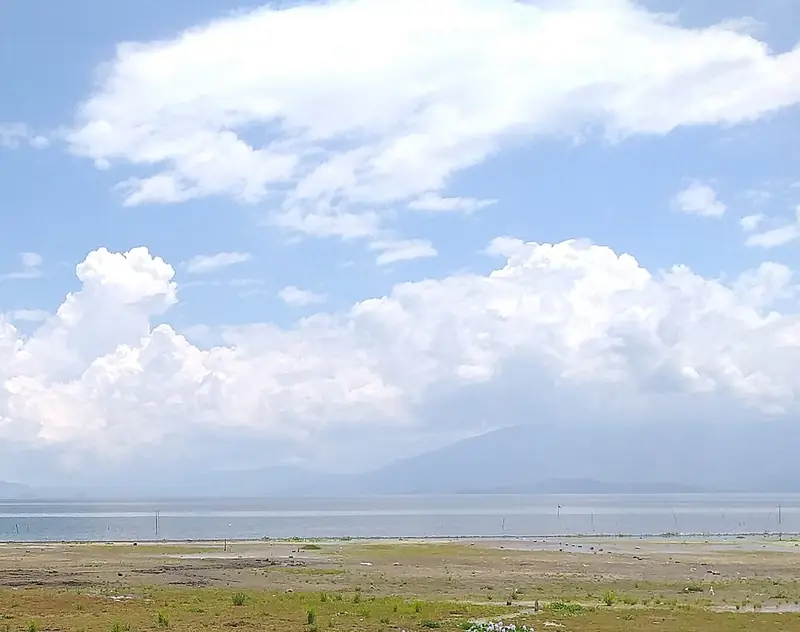
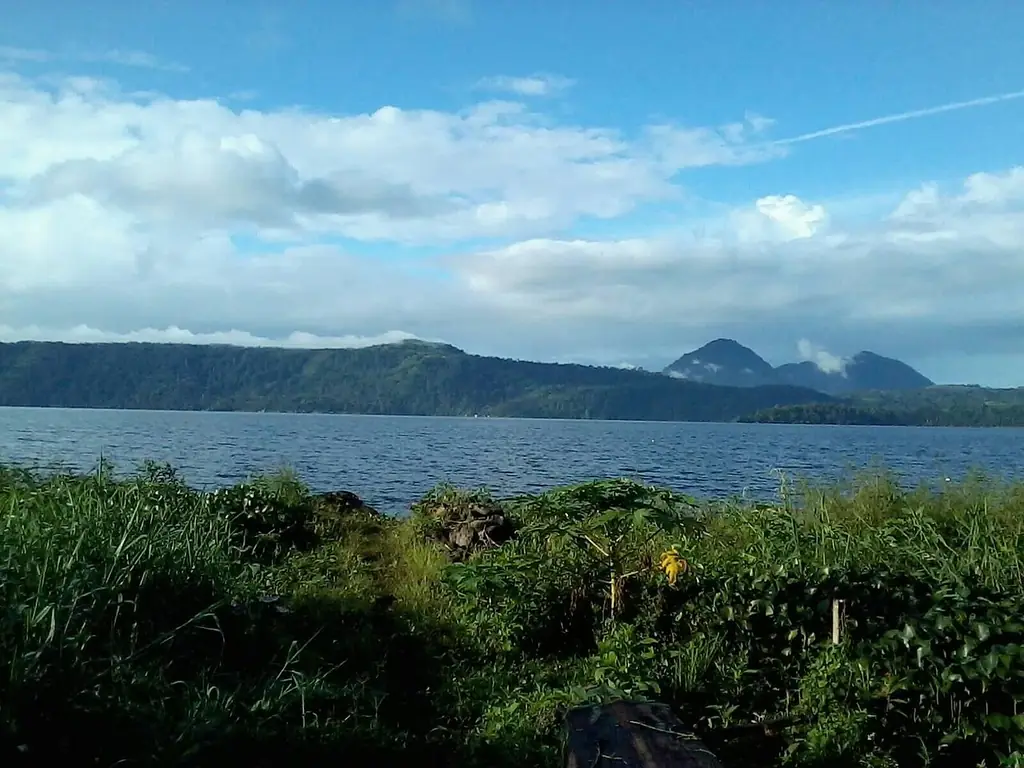
At 347 square kilometers and 702 meters above sea level, Lake Lanao is the second-largest lake in the Philippines. Dawn on the lake — mist on the water, mosques on the shore — is one of the more remarkable sights in Mindanao. Boat access is from several lakeshore municipalities.

Marawi City

The Islamic City of the Philippines is in active reconstruction following the 2017 siege. The Grand Mosque has been rebuilt. The city's fabric and brasswork markets, though diminished, continue to operate. The experience of visiting Marawi now includes confronting the scale of wartime destruction and ongoing recovery.

Torogan Houses of the Lakeshore Municipalities

Several municipalities around Lake Lanao retain traditional Maranao royal houses (torogan). These structures — massive, intricately carved, set on large posts — are among the finest surviving examples of indigenous Philippine architecture. Visiting requires local contacts and community permission.

Travel Advisory

The Philippine government and several foreign governments maintain travel advisories for Lanao del Sur. The security situation has improved substantially since 2017 but remains sensitive. Always consult the most recent official advisories and coordinate with local guides before travel.

What Remained of Marawi

In October 2017, five months after Maute Group fighters first occupied sections of Marawi City, the Philippine military declared the battle over. By then, the ground battle — the longest urban combat operation in Philippine history — had leveled most of the old city center. Mosques, schools, market stalls, ancestral homes: the destruction was nearly total in the affected zone.

More than 350,000 people had fled. They went to evacuation centers in Iligan and Cagayan de Oro, to relatives' homes across Mindanao, to urban apartments in Manila. The city's fabric merchants, its silversmiths, its teachers at MSU-Marawi — all displaced. A city of roughly 200,000 people had been hollowed out in five months.

Years later, the return has been partial. Some residents came back to find their land under a government redevelopment zone; the compensation offers were disputed. Others returned to find their homes still standing but their neighborhoods unrecognizable — the streets remapped, the buildings replaced by unfamiliar structures, the community that gave the place its character scattered. Marawi is being rebuilt. Whether what rises is Marawi is a question the Maranao people continue to argue over.