Map

Leyte

Eastern Visayas
Visayas
Capital Tacloban City
Population 2,045,588
Area 5,713 km²
Municipalities 40
Cities 3
Island Group Visayas
Languages Waray, Cebuano

Leyte is a large island province in the Eastern Visayas region, divided into the provinces of Leyte and Southern Leyte. The province occupies most of the island's northern and central portions, with Tacloban City as its capital and regional center. Leyte is known in Philippine and American military history as the site of MacArthur's return landing at Palo Beach in 1944, and more recently as the province hardest hit by Typhoon Yolanda (Hainan) in November 2013.

Tacloban CityCapital
5,713 km²Area
40Municipalities
3 (Tacloban, Ormoc, Baybay)Cities
VisayasIsland Group
Eastern Visayas (VIII)Region

The province faces the San Juanico Strait to the east, separating it from Samar island. The San Juanico Bridge, one of the longest in the Philippines, connects Leyte and Samar. The western coast faces the Camotes Sea and Visayan Sea. The interior is mountainous, with coastal plains around Tacloban and Ormoc supporting dense populations.

Leyte Gulf: Largest Naval Battle in History

The Battle of Leyte Gulf in October 1944 involved over 200,000 naval personnel and nearly 400 ships, making it the largest naval battle in recorded history. MacArthur's ground forces waded ashore at Palo Beach on October 20, fulfilling the promise he made when he left the Philippines two years earlier.

Waray is the main language of Leyte, and the province's cultural identity is closely tied to the broader Waray-Waray tradition that spans Leyte and Samar. The economy is primarily agricultural — coconut, rice, and corn — with fishing significant along the coasts. Tacloban City functions as the commercial hub for the entire Eastern Visayas region.

Leyte was among the earliest Visayan islands encountered by European explorers. Ferdinand Magellan's expedition reached Leyte waters in 1521, and the island was absorbed into the Spanish colonial system by the late 16th century. The province participated in the 1898 Philippine Revolution and then endured American pacification campaigns in the early 1900s.

1521

Magellan's Expedition Sights Leyte

The Magellan-Elcano expedition passes through the Leyte-Samar area during their exploration of the Visayas, though the main events of that voyage occur on Cebu and Mactan.

1596

Diocese of Cebu Extended to Leyte

Catholic missionaries establish missions throughout Leyte. Augustinian and Jesuit orders build churches in the major coastal towns.

October 20, 1944

MacArthur Returns

General Douglas MacArthur wades ashore at Palo Beach, Leyte, accompanied by Philippine President Sergio Osmeña and other officials. His radio address — 'People of the Philippines, I have returned' — is broadcast to the islands. The liberation of the Philippines begins here.

October 23–26, 1944

Battle of Leyte Gulf

The largest naval battle in history takes place in the waters surrounding Leyte. The Japanese Navy deploys three separate forces in an attempt to destroy the American landing. All are repulsed. Japanese naval power is effectively broken.

November 8, 2013

Typhoon Yolanda (Hainan) Strikes

The most powerful tropical cyclone ever recorded at landfall makes direct hits across Leyte. Tacloban City suffers catastrophic storm surge. Over 6,000 people are killed in the province, and more than 4 million are displaced. The storm causes destruction on a scale that overwhelms local and national response capacity.

The recovery from Yolanda took years. Tacloban's coastal districts, flattened by the storm surge, were rebuilt — some in the same locations, some relocated inland per government resettlement plans. The city today shows the mix of new construction, repaired structures, and still-vacant lots that characterizes disaster recovery at this scale.

The Waray people of Leyte and Samar have a reputation throughout the Philippines as fierce, proud, and fiercely loyal to their own. The word 'waray-waray,' meaning 'nothing-nothing' in Waray, is sometimes used to describe a devil-may-care attitude — someone who fears nothing. This self-image was tested and reinforced by Yolanda's devastation and the community's rebuilding.

The Pintados

Spanish colonizers called the Visayan peoples 'Pintados' — the painted ones — for the extensive tattoo traditions they observed. Leyte's pre-colonial inhabitants tattooed their bodies as markers of status, courage, and spiritual protection. The tradition faded under Spanish colonial rule, but it has been studied by historians and is a source of cultural pride in the Eastern Visayas.

Imelda Marcos was from Tacloban

Imelda Romualdez was born in Manila but raised in Tacloban, Leyte, where her father was a politician. She became Imelda Marcos after marrying Ferdinand Marcos in 1954. She has cited her Waray roots throughout her life as a source of her resilience and political identity.

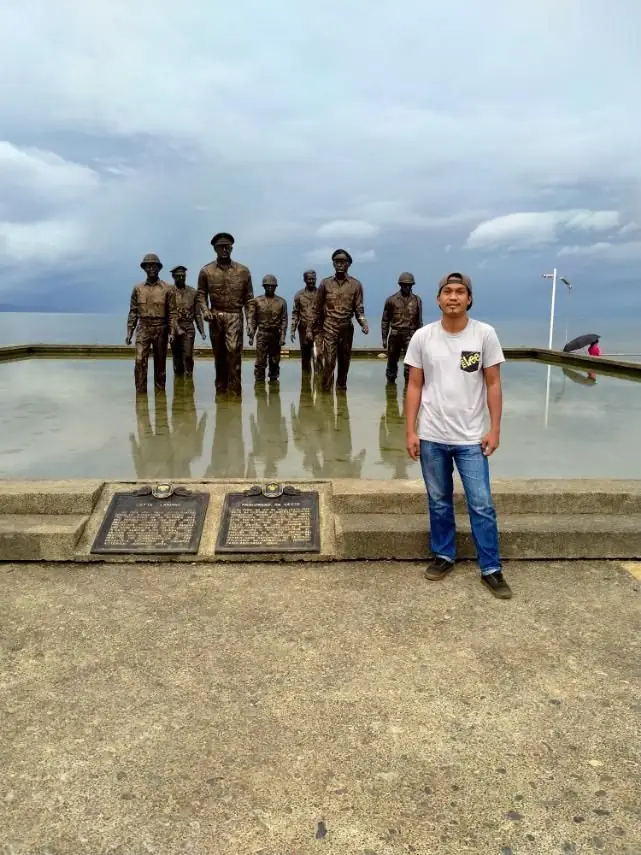
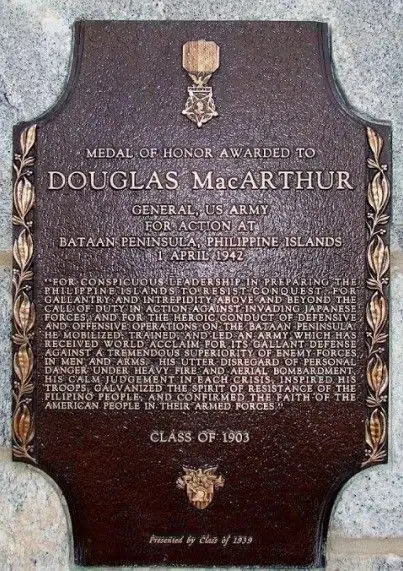
The MacArthur Landing Memorial in Palo is a central site of historical memory in Leyte. Bronze statues of MacArthur and the officers who waded ashore with him mark the beach. Each year on October 20, commemorations bring veterans (while any survived), officials, and community members to the site. The landing is woven into Leyte's civic identity.

Leyte's food reflects Visayan coastal cooking with Eastern influences from Samar and the Pacific-facing shores. Coconut is ubiquitous — in curries, stews, desserts, and vinegar. Fish from the Visayan Sea, Leyte Gulf, and inland fishponds are the protein staple. Waray cooking tends toward stronger flavors and larger portions compared to Cebuano cooking.

Binagol

A Leyte specialty — a sweet pastry made from gabi (taro) mixed with coconut milk, sugar, and eggs, packed into half a coconut shell and baked. The result is dense, sweet, and slightly smoky. Binagol is a popular pasalubong (take-home gift) from Leyte, particularly from the municipality of Dagami.

Moron

A Leyte rice cake made from sticky rice (malagkit) with cacao filling, wrapped in banana leaves and boiled. Similar to suman in technique but distinct in its chocolate filling. Moron is sold at bus terminals and markets throughout the province as a morning snack.

Tinola na Isda (Waray Style)

Leyte / Eastern Visayas
10 minutesPrep
25 minutesCook
4Serves
Ingredients
  • 1 kg, cleaned and cut into piecesWhole fish (lapu-lapu or tilapia)
  • 2-inch piece, sliced thinGinger
  • 1 medium, slicedOnion
  • 2 medium, quarteredTomato
  • 1/2 small, cubedGreen papaya
  • 1 cupChili leaves or malunggay
  • 2 tbspFish sauce
  • 4 cupsWater
  • 2 stalks, bruisedLemongrass
Method
  1. Bring water to a boil. Add ginger, onion, tomato, and lemongrass. Simmer 5 minutes.
  2. Add papaya and cook for 5 minutes until slightly tender.
  3. Add fish pieces. Season with fish sauce. Cook for 8–10 minutes until fish is cooked through.
  4. Add chili leaves or malunggay in the last 2 minutes.
  5. Taste and adjust seasoning. Serve hot.
Cook's note

The Waray version of fish tinola uses lemongrass and is lighter than the chicken version. The broth should be clear and clean-tasting. Do not overcook the fish.

Waray (also called Waray-Waray or Lineyte-Samarnon) is the primary language of Leyte and Samar. It is an Austronesian language in the Bisayan branch, related to Cebuano and Hiligaynon but distinct enough that speakers of those languages require separate learning. Waray is the fifth most widely spoken language in the Philippines.

In Tacloban City and in municipalities near Cebu-facing coasts, Cebuano is also spoken, and there is a degree of Cebuano influence on Tacloban-area Waray. Filipino and English are used in education, government, and commerce throughout the province.

Waray Literature

Waray has a notable tradition of poetry and folk literature. The ambahanon (verse narrative) and other oral forms were documented by Spanish missionaries and remain part of Eastern Visayas cultural memory. Contemporary Waray writers have produced fiction and poetry in the language, though it lacks the institutional support of Filipino and English.

The disaster of Yolanda generated a large literature in English and Filipino about the experience of Tacloban and Leyte — journalism, memoir, poetry. Some of the most powerful accounts of the storm and its aftermath were written by Waray journalists and community writers who lived through it.

Tacloban City is served by a domestic airport with regular flights from Manila and Cebu. The city is also connected by RoRo ferry to other Visayan islands. Land connections via the San Juanico Bridge link Leyte to Samar and northward to the rest of Luzon's road network, though the journey is long.

Daniel Z. Romualdez Airport, TaclobanAirport
~1.5 hoursFlight from Manila
~45 minutesFlight from Cebu
March to October (drier)Best Season

MacArthur Landing Memorial, Palo

Bronze statues of General MacArthur and his party mark the exact beach where the liberation of the Philippines began on October 20, 1944. The site is maintained as a national shrine. The beach at Red Beach is quiet and accessible; the monument is one of the most historically significant landmarks in the Philippines.

Tacloban City

The capital city and regional center of Eastern Visayas. The city has been substantially rebuilt since Yolanda in 2013. The central market, the old colonial district, the Leyte Park waterfront, and the Santo Niño Church are the main points of interest. The Yolanda experience is documented at several community memorials.

San Juanico Bridge

The longest bridge in the Philippines at 2.162 kilometers, spanning the San Juanico Strait between Leyte and Samar. Built during the Marcos administration. The views from the bridge across the strait — narrow, swift-flowing, lined with mangroves — are among the best in the Eastern Visayas.

Lake Danao, Ormoc

A crater lake in the interior of Leyte, about 1,000 meters above sea level, surrounded by forest. A protected area with endemic bird species. The trekking route from the nearest barangay takes several hours. Rarely visited compared to the coastal sites.

The Surge

The people of Tacloban had been through storms before. They knew the drill: secure the roof, stock water, wait it out. Typhoon Yolanda arrived the morning of November 8, 2013, with winds officially recorded at 315 kilometers per hour. What most people were not prepared for was the storm surge — a wall of seawater, in some areas five to six meters high, that moved inland from the coast in minutes.

In the coastal barangays nearest to the sea, residents who had stayed in their homes because they had survived every previous storm did not survive this one. The surge moved faster than people could run. It carried houses off their foundations and deposited them blocks inland. It stripped the bark off trees. The death toll in Tacloban alone exceeded 2,000 people. Across Leyte, the number climbed past 6,000.

The relief effort — slow in the first days, then overwhelming — brought the world's attention to the Eastern Visayas for months. Foreign military ships docked at Tacloban. International NGOs set up field kitchens in the ruins. Philippine reporters filed from their own destroyed neighborhoods. The word that became associated with Tacloban and Leyte in the aftermath was not devastation. It was bangon — rise. The Waray word for getting back up.