Map

Marinduque

MIMAROPA
Luzon
Capital Boac
Population 234,590
Area 959 km²
Municipalities 6
Cities 0
Island Group Luzon
Languages Tagalog, Marinduqueño

Marinduque is a small island province in the MIMAROPA region, lying in the Sibuyan Sea between the Bondoc Peninsula of Quezon and Romblon. It is frequently described as heart-shaped — an outline visible on the map that the province has embraced as an identity marker. With only six municipalities and no cities, Marinduque is one of the least populous provinces in Luzon. It is best known for the Moriones Festival, a Holy Week ritual unique in the Philippines.

BoacCapital
959 km²Area
6Municipalities
Luzon (MIMAROPA)Island Group
MIMAROPA (IV-B)Region
The Heart-Shaped Island

Marinduque's roughly heart-shaped coastline has become central to its tourism identity. The province markets itself as the 'Heart of the Philippines,' and the shape appears on provincial seals, promotional materials, and local souvenirs. The resemblance is approximate but recognizable on a map.

The island's interior is hilly, with no major river systems and limited flat agricultural land. Coconut, rice, and root crops are the main produce. Fishing supplements the diet of coastal communities. The population is small enough that nearly everyone is connected by family or community ties within a few degrees.

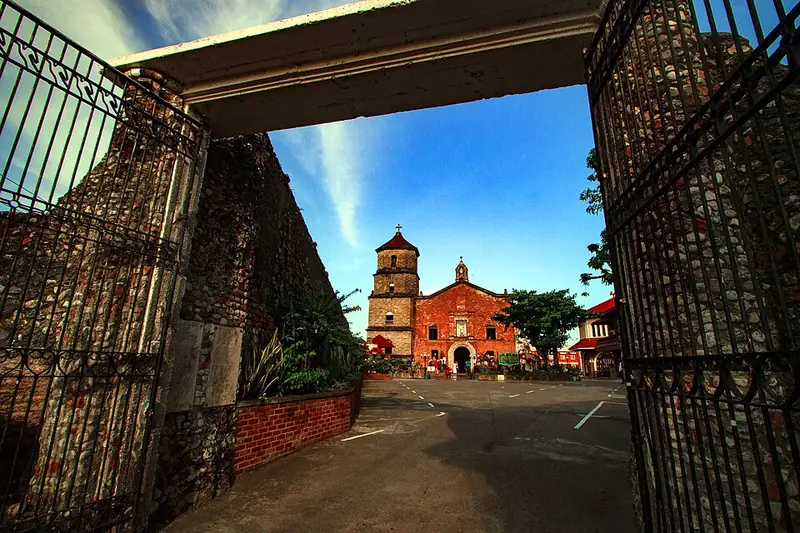
Boac, the capital, sits on the western coast and is the main town. The Boac Cathedral, built by Augustinian missionaries in the 17th century, dominates the town center and serves as the spiritual focus of the island's Holy Week observances.

Marinduque was settled by Tagalog and proto-Visayan groups before Spanish contact. The island was incorporated into the Spanish colonial system in the late 16th century. Its small size, limited resources, and distance from Manila made it a relatively minor administrative concern for the colonial government, which paradoxically preserved its local culture.

1570s

Spanish Contact and Mission Established

Augustinian missionaries arrive at Marinduque and establish the first Catholic missions. The island is incorporated under the jurisdiction of Laguna Province.

1636

Marinduque Made a Separate Province

The island is constituted as a separate province under the Spanish colonial system, with Boac as the capital.

1900

American Period Begins

The Americans reorganize Marinduque under civil government. The island's small size and distance from major centers mean relatively limited American administrative intervention compared to larger provinces.

1996

Marcopper Mining Disaster

A drainage tunnel at the Marcopper mine collapses, releasing approximately 3 million cubic meters of mine tailings into the Boac River. The river is killed ecologically. It remains one of the worst mining disasters in Philippine history. The company eventually abandoned operations and left without completing cleanup.

The Marcopper disaster reshaped Marinduque's relationship to mining and environmental protection. The province has been cautious about large-scale extractive industries since, and the devastated Boac River is a constant reminder of what can go wrong when industrial operations are not properly managed.

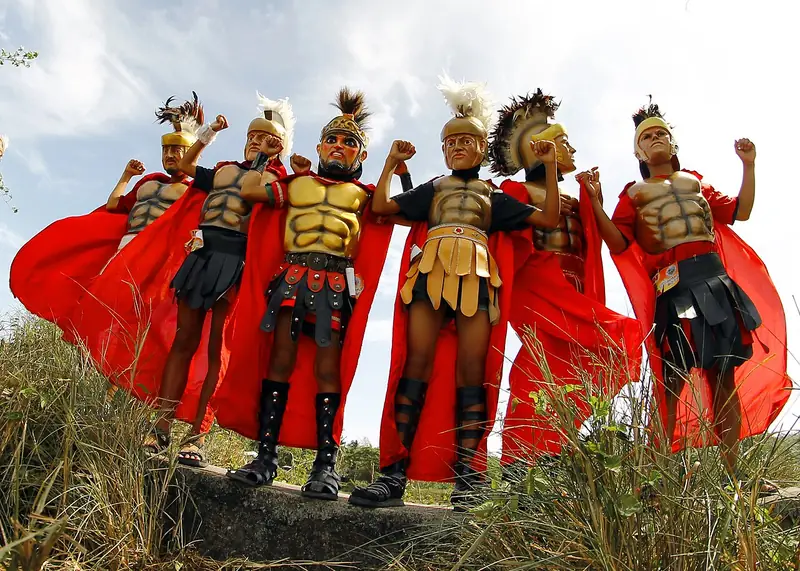
The Moriones Festival is Marinduque's defining cultural event. Held during Holy Week, it involves participants dressing as Roman centurions in elaborate costumes complete with painted wooden masks, breastplates, helmets, and spears. The centurions are called Moriones (from 'morion,' the crested Roman helmet) and spend the week parading through the streets, ambushing each other, and dramatizing scenes from the Passion narrative.

The Story of Longinus

The central story of the Moriones Festival is that of the Roman soldier Longinus, who was said to have been blind in one eye. When he pierced the side of the crucified Christ with his lance and blood fell on his blind eye, his sight was restored. He converted to Christianity and was later martyred. The Moriones dramatize this story throughout Holy Week, culminating on Easter Sunday with a public 'capture' and mock execution of the Longinus character.

Moriones: Pre-Lenten Origins

The Moriones tradition is believed to have developed in the 18th or 19th century, combining Catholic Passion narrative with older folk ritual practices. The elaborate masks and costumes are made locally, often passed down within families. The festival has been recognized as a National Cultural Treasure.

Beyond the Moriones, Marinduque maintains the slow rhythms of a small island community. The Boac Cathedral's Palm Sunday and Good Friday processions draw the entire island population. The preparation of costumes is a year-round occupation for some artisans. The festival is both devout religious expression and theatrical performance.

Marinduque's food is close to the Tagalog kitchen of Quezon and the Calabarzon region — coconut-based soups, grilled fish, rice dishes, and fresh produce from the island's farms. The island's isolation means that imported ingredients are less common; cooking relies on what is grown and caught locally.

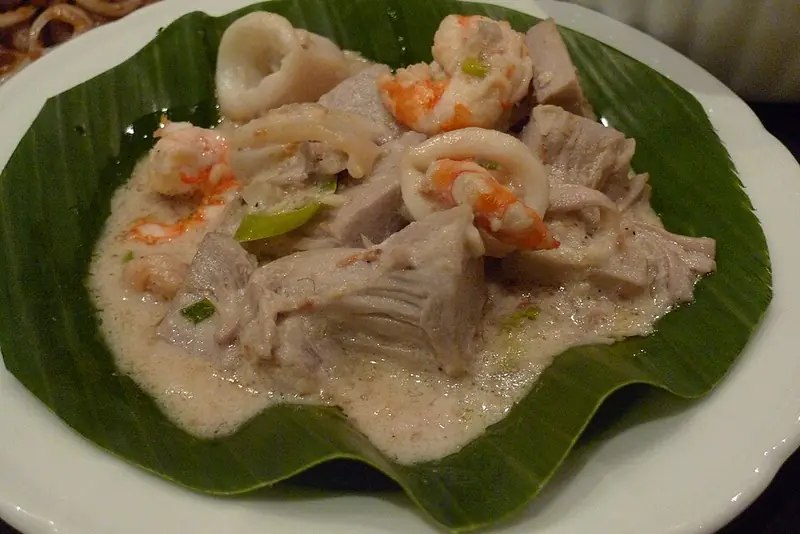
Ginataang Langka

Unripe jackfruit cooked in coconut milk with shrimp, garlic, onion, and ginger. A Tagalog staple found across southern Luzon, it is particularly common in Marinduque where coconut is abundant. The texture of the cooked jackfruit resembles pulled meat.

Nilupak na Kamoteng Kahoy

Boiled cassava pounded until smooth, mixed with coconut cream and sugar, and shaped into rounds. A simple sweet eaten as merienda (snack) throughout the island. Grated fresh coconut is pressed on top before serving.

Tinolang Manok (Marinduque Style)

Marinduque / Tagalog
10 minutesPrep
35 minutesCook
4–6Serves
Ingredients
  • 1 kgChicken, cut into serving pieces
  • 2-inch piece, poundedGinger
  • 1 medium, quarteredOnion
  • 4 cloves, crushedGarlic
  • 2 tbspFish sauce
  • 1 small, cut into wedgesGreen papaya
  • 2 cups, loosely packedChili leaves (dahon ng sili)
  • 5 cupsWater
  • 2 tbspCooking oil
Method
  1. Heat oil in a pot over medium heat. Sauté ginger, garlic, and onion until fragrant.
  2. Add chicken pieces. Cook, turning occasionally, until lightly browned on all sides.
  3. Season with fish sauce. Add water and bring to a boil.
  4. Reduce heat and simmer for 20 minutes until chicken is tender.
  5. Add papaya and cook for 5 minutes.
  6. Add chili leaves and cook for 1 more minute. Serve hot.
Cook's note

The key to tinola is the ginger — use enough that the broth has a warming heat. Chili leaves (not chili peppers) give the soup a mild aromatic quality. Malunggay (moringa leaves) can substitute.

Tagalog is the primary language of Marinduque, a branch of Tagalog sometimes called Marinduqueño Tagalog that retains certain archaic features and local vocabulary not found in the Metro Manila standard. This island dialect has been studied by linguists as a window into older Tagalog forms.

Marinduqueño Tagalog

Linguists have documented that Marinduque Tagalog preserves certain phonological and grammatical features that have been lost in the Manila-based standard Tagalog. The island's relative isolation from the Philippine mainstream allowed these archaic features to survive. It is considered a distinct dialect within the Tagalog language family.

Because Marinduque's Tagalog is mutually intelligible with standard Filipino, the linguistic distinctiveness is more of scholarly than practical significance. Residents speak what they describe simply as Tagalog, and communication with visitors from Manila or the national media presents no difficulty.

English is used in schools and government. The island has a small enough population that media consumption draws heavily from Manila-based television and radio, which means younger generations are more exposed to Metro Manila Tagalog than to distinctly local speech patterns.

Marinduque is reached by ferry from Lucena City in Quezon Province (via the port of Dalahican or Cawit) or from Pinamalayan in Oriental Mindoro. The crossing from Lucena takes approximately three hours. There is also a small airport in Gasan municipality with limited service.

~3 hours, multiple dailyFerry from Lucena
Masibay Airport, Gasan (limited flights)Airport
Holy Week for Moriones; March–May otherwiseBest Time
~~3–4 hours by roadIsland Circuit

Boac Cathedral

The Cathedral of St. Joseph the Worker in Boac, a massive stone Augustinian church built in the 17th century. It sits on a hill above the Boac River and dominates the town skyline. The church is the site of the central Holy Week observances and the main venue for Moriones Festival events.

Tres Reyes Islands

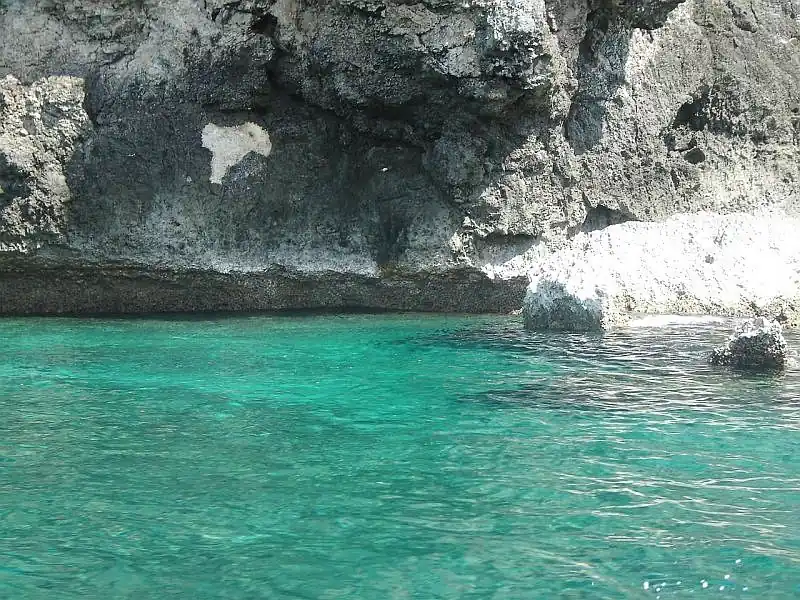
Three small islands off the eastern coast of Marinduque — Gaspar, Melchor, and Baltazar (named for the Three Kings). The surrounding waters are clear with good coral and marine life. Day trips by outrigger boat from Buenavista or Torrijos are the standard approach.

Malbog Sulfur Springs

Natural hot sulfur springs in the interior of the island, near Buenavista municipality. The warm mineral water pools are used for bathing and are believed to have therapeutic properties. A quiet alternative to the coastal attractions.

Holy Week Timing

If visiting for Moriones, book accommodation months in advance. The island fills during Holy Week. Moriones activities run from Palm Sunday through Easter Sunday, with the climax — the capture and mock execution of Longinus — occurring on Easter Sunday morning.

The Centurion Behind the Mask

He has been making masks for twenty-three years. The workshop is in a room off the back of the house — tools on a rough table, half-finished forms hanging from the walls, the smell of wood shavings and paint. He starts with a block of soft light wood, and by the time he finishes, the face of a Roman soldier looks back at you: painted cheeks, mustache, fierce eyes, the open mouth sometimes showing teeth.

Each mask takes between one and three weeks depending on complexity. Some families have the same masks for decades, repainted each year. Some masks have names. His own Moriones costume — helmet, breastplate, cape, sandals — took him two years to assemble in the form he wanted. He wears it every Holy Week, from Palm Sunday through Easter, walking in the heat in forty kilograms of costume and mask, anonymous behind the painted face.

He is a fisherman the other fifty-one weeks of the year. He does not see the Moriones as a performance or a tourist event. He sees it as a religious obligation that happens to have theatrical form. The mask, he says, is not a disguise. It is a face you wear when you are doing something serious. You put it on and you become the role. This, he says, is how it has always worked. The mask is older than the man behind it.