Mountain Province sits at the heart of the Cordillera Administrative Region in northern Luzon. Its capital, Bontoc, is the traditional home of the Bontoc Igorot — one of the highland peoples whose warrior culture and distinctive cultural practices became known to the outside world during the American colonial period. The province is also the location of rice terraces complementary to the more famous Banaue terraces of Ifugao, and the Chico River carves its way through the highland valleys.
BontocCapital
2,095 km²Area
10Municipalities
LuzonIsland Group
Cordillera Administrative Region (CAR)Region
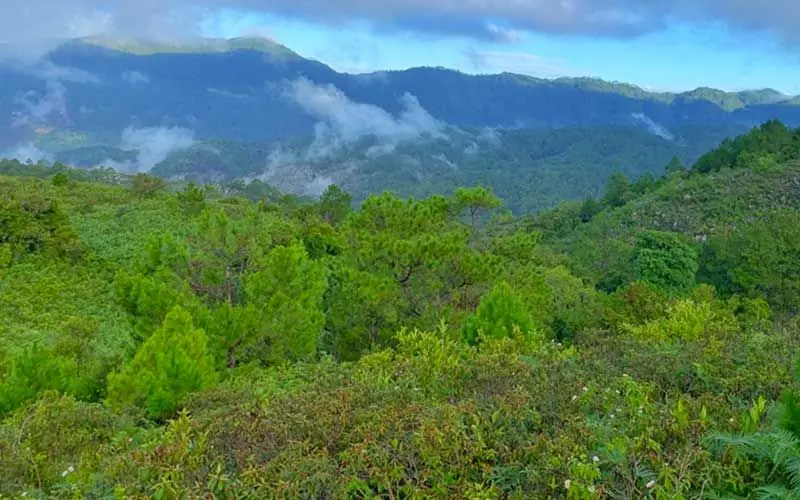
The province is predominantly upland terrain, with the Cordillera mountain ranges creating valleys, gorges, and isolated agricultural terraces. Elevations range from low river valleys to peaks above 2,000 meters. The climate is cooler than the Philippine lowland average, with cold nights and frequent mist in the upper elevations.
★
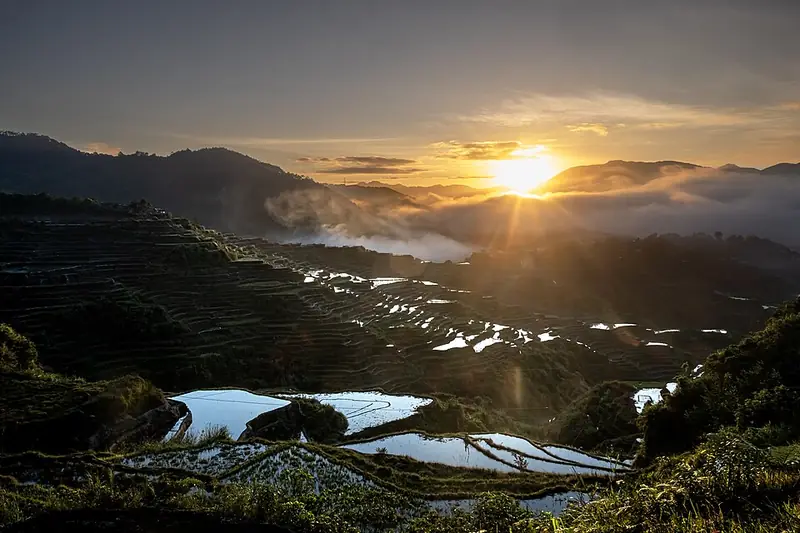
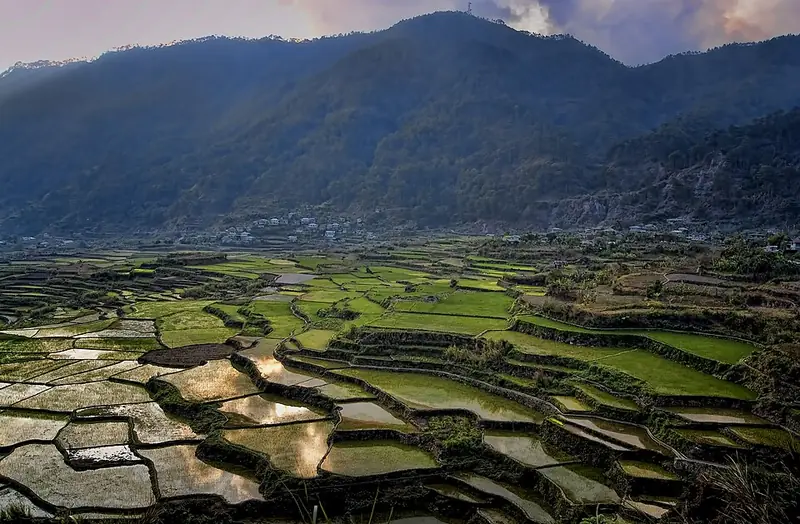
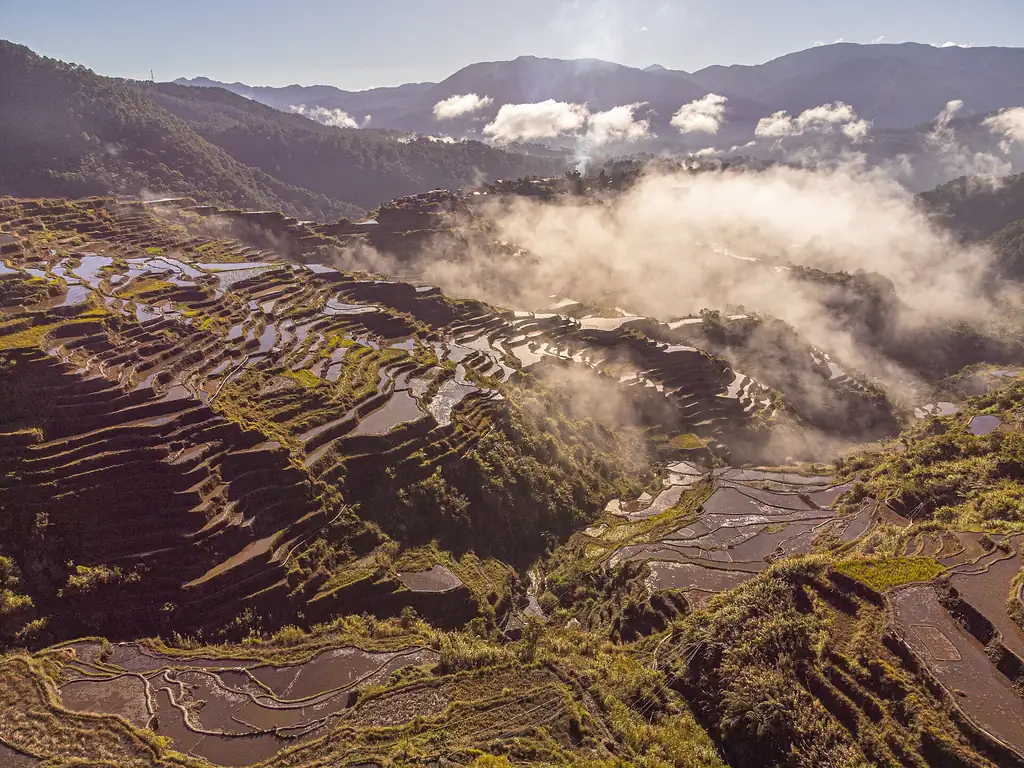
Rice Terraces of the Philippine CordillerasThe rice terraces of the Cordillera — including those in Mountain Province — are part of a UNESCO World Heritage Site first inscribed in 1995. The terraces in Maligcong, Bontoc, and other municipalities of Mountain Province are among the oldest continuously farmed terraced landscapes in the world, some estimated at 2,000 years old.
The Chico River runs through the province from its headwaters in Kalinga to the north, passing through Bontoc before continuing south. The river and its tributaries are the lifelines of the highland communities along its banks. An attempted dam project on the Chico River in the 1970s became one of the most significant indigenous peoples' resistance movements in Philippine history.
The peoples of Mountain Province — Bontoc, Kankana-ey, Ifugao, and others — resisted Spanish colonization for more than three centuries. The Cordillera mountains provided natural defense, and the highland peoples' military capability made conquest too costly for the Spanish to pursue effectively. The interior of the Cordillera remained effectively independent until the American period.
Pre-colonialRice Terraces Constructed
Bontoc and neighboring highland communities construct rice terraces on steep mountain slopes, developing sophisticated irrigation systems using stone walls (dap-ay construction) and gravity-fed water channels. The oldest terraces are estimated to be approximately 2,000 years old.
1903American Mountain Province Established
The United States creates Mountain Province as a special administrative territory, grouping the highland peoples under a single governing structure. The Americans conduct ethnographic studies of the Bontoc and other groups, producing influential — and often distorted — records of their cultures.
1904St. Louis World's Fair
Bontoc Igorot people are brought to the 1904 St. Louis World's Fair as part of the Philippine Exposition, displayed as examples of 'primitive' peoples in a deeply exploitative colonial exhibition. The episode remains a source of pain and reflection in Bontoc cultural memory.
1971–1980Chico River Dam Resistance
The Marcos government proposes building four large dams on the Chico River that would flood Bontoc and Kalinga communities. Led by Macli-ing Dulag of Kalinga, highland communities mount sustained resistance. Dulag is assassinated in 1980. The project is eventually abandoned.
1995UNESCO World Heritage Inscription
The Rice Terraces of the Philippine Cordilleras are inscribed as a UNESCO World Heritage Site, bringing international attention to the cultural landscape of the Cordillera highlands.
The Bontoc Igorot were known to the Spanish — who never conquered them — and to the Americans — who studied them extensively — as fierce warriors. Headhunting was practiced as part of the traditional justice and social order system until the early 20th century. The warrior tradition has transitioned into a cultural identity expressed through dance, tattoo practice (called chaklag), and the maintenance of the ato (men's house) as a community institution.
The Ato
The ato is the traditional institution of Bontoc community governance — a communal space where male community members gather for decision-making, dispute resolution, and social bonding. Each village has an ato, and political affairs are handled through discussion and consensus at the ato rather than through formal elected positions alone. The ato system continues to operate alongside the national government structure.
Macli-ing Dulag
Kalinga chieftain and resistance leaderc. 1920–1980Though from neighboring Kalinga rather than Mountain Province proper, Macli-ing Dulag is the defining figure of the Chico River Dam resistance that involved both provinces. His statement — 'Land is life; land is not for sale' — became a rallying call for indigenous land rights movements across the Philippines. He was assassinated by military agents in 1980.
★
Bontoc at the 1904 World's FairApproximately 1,100 Filipinos, including Bontoc Igorot, were brought to the St. Louis World's Fair of 1904 as part of the Philippines Reservation exhibit. The display was intended to justify American colonialism by showing Filipino peoples as needing 'civilization.' Several of the exhibitors died during the fair. The families and communities that sent them have sought acknowledgment and repatriation of remains for more than a century.
Mountain Province food reflects highland agriculture and the cool climate. Root crops — sweet potato (camote), taro (gabi), and cassava — are staples alongside rice. Vegetables grown in the mountain garden plots are diverse: cabbage, sayote (chayote), beans, and various highland greens. Pork and dog meat have traditional roles in ceremonial contexts. Freshwater fish from the Chico River supplement the diet.
Pinikpikan
A Cordillera ritual dish made from chicken that has been beaten with a stick before slaughtering — a practice with roots in Igorot sacrificial ritual. The bruising changes the texture and flavor of the meat. The chicken is then singed over fire and boiled with etag (smoked salted pork) and chili. Pinikpikan is a ceremonial food now also served to tourists; the ritual context varies.
Etag
Igorot preserved pork — meat salted and smoked over wood, sometimes for extended periods. The resulting etag is intensely salty, smoky, and pungent. It is used as a flavoring agent in soups and stews rather than eaten on its own. The production of etag is tied to pig sacrifice at rituals and life events.
5 minutesPrep
10 minutesCook
2Serves
Ingredients
- 30g, freshly ground medium-coarseArabica coffee beans (Benguet or Sagada)
- 400mlWater
- to tasteBrown sugar (optional)
Method
- Bring water to just below boiling (about 92°C).
- Place ground coffee in a clean cloth filter or pour-over dripper.
- Pour water slowly over the grounds, allowing it to bloom for 30 seconds on the first pour.
- Continue pouring in slow circles until all water has passed through.
- Serve black or with a small amount of brown sugar. No milk is traditional.
Cook's noteCordillera Arabica coffee — grown in Benguet, Sagada, and Mountain Province — is among the finest Philippine coffee. It is earthy and clean with mild acidity. The high-altitude cultivation (above 1,200 meters) produces a bean that rewards simple preparation. Use it fresh; Cordillera coffee loses its character quickly after roasting.
Bontoc (also called Central Bontoc) is the primary language of the provincial capital area. Kankana-ey is spoken in the western municipalities of Mountain Province and shares speakers with Benguet province to the south. Both are Austronesian languages in the northern Cordilleran branch, distinct from the lowland Philippine languages.
The linguistic diversity of the Cordillera is significant: the mountain ranges separated communities enough that distinct languages developed across relatively small geographic areas. Bontoc and Kankana-ey are not mutually intelligible, and communication across language communities typically uses Ilocano — the regional lingua franca of northern Luzon — or Filipino.
★
Ilocano as a Cordillera Lingua FrancaIlocano serves as the common language across much of the Cordillera Administrative Region despite not being native to the highland peoples. Its spread reflects the long economic and social relationship between highland and lowland communities in northern Luzon, with Ilocano lowlanders being the primary outside contact for most Cordillera groups.
English has high prestige in Mountain Province, partly because the American colonial administration focused educational investment in the Cordillera and partly because the region's tourism and NGO presence created demand for English communication. Many community leaders in Bontoc speak English more fluently than Filipino.
Bontoc is accessible from Baguio City via the Halsema Highway — the highest national road in the Philippines. The drive from Baguio takes approximately 4 to 5 hours along a mountain road that climbs above 2,200 meters. The road passes through Sagada municipality, a common stopping point. The route is spectacular but requires careful driving.
~4–5 hours via Halsema HighwayFrom Baguio
~8–9 hours by road (via Baguio)From Manila
~850 metersElevation (Bontoc)
March to May (clearest skies)Best Season
Bontoc Museum
One of the most important ethnographic museums in the Cordillera, the Bontoc Museum documents Bontoc and Cordillera highland culture through photographs, artifacts, ritual objects, and textile collections. The museum is managed by the Episcopal Church. The collection of historic photographs from the American period is historically significant.
Maligcong Rice Terraces
A short jeepney ride from Bontoc town, the Maligcong terraces are among the most accessible and visually impressive rice terraces in Mountain Province. Unlike the more touristed Banaue terraces in Ifugao, Maligcong receives relatively few visitors and retains the working landscape character of a living farming community.
Sagada
A municipality within Mountain Province that has become a major tourist destination on its own merits — hanging coffins, cave burials, trekking, and coffee. Sagada sits about an hour from Bontoc on the highway and is most travelers' first stop in the province.
Chico River
The river that flows through Bontoc town and the length of the province. Swimming spots, riverside trails, and the visual drama of the river in its mountain gorge make it a natural draw. The river's history — the dam resistance of the 1970s — gives it political and cultural weight beyond its scenic value.
The Dam That Was Not Built
In the early 1970s, engineers from the National Power Corporation walked the Chico River and saw what they needed: a river with good gradient, reliable volume, a narrow gorge suitable for a dam wall. The plans that came back proposed four dams. The largest would create a reservoir that would submerge hundreds of Kalinga and Bontoc villages — including ancestral rice terraces, burial grounds, and the ato where community life was centered. The government did not consult the communities whose lands would be flooded.
What happened next was one of the more unusual resistance movements in Philippine history. The Kalinga and Bontoc peoples organized not as a political party or an NGO but through their traditional structures. Warriors threatened engineers; survey markers were pulled from the ground. Macli-ing Dulag of Kalinga became the public voice of the resistance — a chieftain who spoke clearly about what land meant to his people and why it could not be transacted away by a government in Manila.
Dulag was shot dead in his home in 1980. The military denied involvement. The dam project continued for a time, then stalled, then was quietly abandoned. The Marcos government had other crises to manage. The Chico River still flows through Bontoc. The terraces are still farmed. The dam was never built. Dulag did not live to see it, but the land is still there, which is what he said mattered.