Negros Oriental occupies the eastern half of Negros Island, facing the Bohol Sea across the narrow channel that separates it from Bohol and Cebu. Its capital, Dumaguete City, carries a reputation unusual for a Philippine city: earned, not manufactured. It is called the City of Gentle People, and those who have spent time there tend to agree.
Dumaguete CityCapital
5,402 km²Area
20 + 6 citiesMunicipalities
VisayasIsland Group
The province runs from the flat coastal municipalities of the north to the rugged mountain terrain of the south, where the forests of twin lakes Balinsasayao and Danao have been protected since the 1990s. The Cuernos de Negros — the mountain peaks visible from Dumaguete — provide a constant backdrop to city life.
★
A University TownSilliman University, established in 1901 by American Presbyterian missionaries, was the first Protestant university in Asia. Its forested campus in central Dumaguete sets the character of the city — bookish, open, slightly unhurried — in a way that few institutions shape a Philippine city.
Before the Spanish
The Visayan communities of eastern Negros traded with Cebu and Bohol long before Spanish arrival. The coastal settlements were part of the broader Visayan world — connected by sea, sharing language and custom, without centralised political authority of the kind the Spanish would later impose.
1565Spanish Colonisation of Negros
Spanish forces from Cebu began establishing control over Negros in 1565, following the broader pacification of the Visayas. The eastern coastal settlements were Christianised gradually, with Dumaguete emerging as the administrative centre of the province.
1901Silliman University Founded
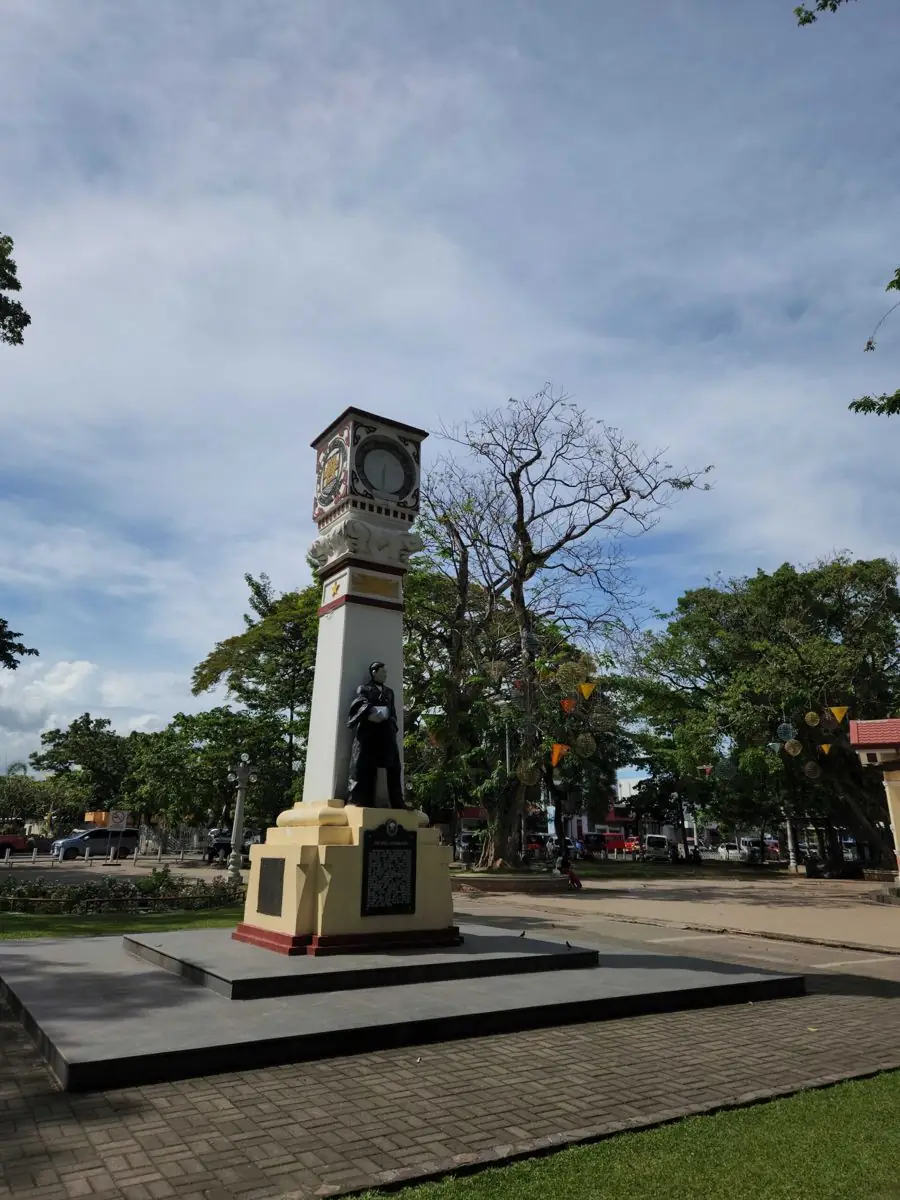
American Presbyterian missionaries David and Laura Hibbard established Silliman Institute in Dumaguete — the first American school in the Philippines outside Manila. It grew into a full university, shaping Dumaguete's identity as an educational centre that drew students from across the Visayas and Mindanao.
1972Division of Negros Island
Negros Occidental and Negros Oriental had functioned as separate provinces since the American period, but the Marcos-era reorganisation formalised their distinct administrative identities. The economic contrast between the sugar-dominated west and the more mixed economy of the east became more pronounced in subsequent decades.
David Sutherland Hibbard
Founder, Silliman University1868 — 1929Hibbard arrived in Dumaguete in 1901 and spent the rest of his life building an institution that would outlast the colonial period that created it. Silliman University today enrols tens of thousands of students and remains one of the most respected universities in the Philippines — the longest-lasting consequence of American educational policy in the Visayas.
Dumaguete's character is shaped by its universities — Silliman, Negros Oriental State University, and several others create a population that is unusually youthful, literate, and transient. The city has produced an exceptional number of Filipino writers, poets, and academics relative to its size.
The Sillimanians
The alumni network of Silliman University stretches across every profession in the Philippines. To be a Sillimanian is to carry a particular identity — shaped by the campus's American Protestant heritage, its emphasis on liberal arts, and its tradition of student activism and environmental advocacy.
Buglasan Festival
Held every October, the Buglasan Festival is the province-wide celebration of Negros Oriental — a week of street dancing, cultural presentations, and competitions that bring all municipalities together. The name comes from a local plant. The event is Dumaguete's largest annual gathering.
★
The Writers of DumagueteThe Silliman National Writers Workshop — held annually since 1962 — is the oldest and most prestigious literary workshop in the Philippines. It has produced many of the country's most significant writers in English and Filipino. Dumaguete's coffee shops and plazas have hosted more literary conversations per square metre than almost any other Philippine city.
Negros Oriental's cuisine shares the Cebuano and Visayan tradition but carries local inflections — the coastal municipalities provide abundant seafood, the interior produces vegetables and root crops, and Dumaguete's student population has generated a cafe and restaurant culture unusual for a city of its size.
Budbud Kabog
A traditional Negros Oriental rice cake made from millet (kabog) wrapped in banana leaves and steamed. Served with hot chocolate, it is the standard breakfast of the highland municipalities and a distinctly local preparation — kabog millet is grown in the interior barangays and rarely found elsewhere.
Sans Rival
Dumaguete's most famous pastry: layers of dacquoise meringue, buttercream, and cashews. The name is French — 'without rival.' Several bakeries in the city have been making it for generations, and the debate over whose version is best is an active local controversy. Sylvia's and Sans Rival Cakes and Pastries are the two main contenders.
✦
Oslob Whale SharksWhale shark watching at Oslob — on the southern tip of Cebu, easily reached from Dumaguete by ferry — begins before dawn. The interaction has been controversial among marine biologists. Visit the research station to understand the ongoing debate before deciding whether to swim.
Piaya and Barquillos
Flatbread filled with muscovado sugar (piaya) and thin rolled wafer cookies (barquillos) are the standard pasalubong from Negros Oriental and the broader Negros island. Both are made with the muscovado sugar produced from the sugarcane fields of the island's western side.
Cebuano is the primary language of Negros Oriental, shared with most of the central and eastern Visayas. It is the language of the market, the school, the church, and everyday life across all municipalities. Dumaguete's university population adds a strong English presence to the city's linguistic mix.
Cebuano in Negros Oriental
The Cebuano spoken in Negros Oriental carries some local vocabulary and intonation patterns that mark it as distinct from the Cebuano of Cebu City — Negrense, as speakers call it. The differences are subtle but real, and a Cebuano speaker from Cebu can identify a Negrense speaker from a few sentences.
★
Hiligaynon in the WestWhile Negros Oriental is predominantly Cebuano-speaking, communities near the border with Negros Occidental use Hiligaynon (Ilonggo) as their daily language. The division of Negros Island into two provinces roughly follows the language boundary — Cebuano to the east, Hiligaynon to the west.
Dumaguete is one of the more pleasant Philippine cities to arrive in — small enough to walk, large enough to have excellent food and accommodation, and well-connected by fast ferry to Cebu and Bohol. It functions as the gateway to the entire southern Visayas.
1.5 hrs (air) or overnight ferryFrom Manila
4 hrs (fast ferry)From Cebu City
Sibulan AirportAirport
Nov–MayBest season
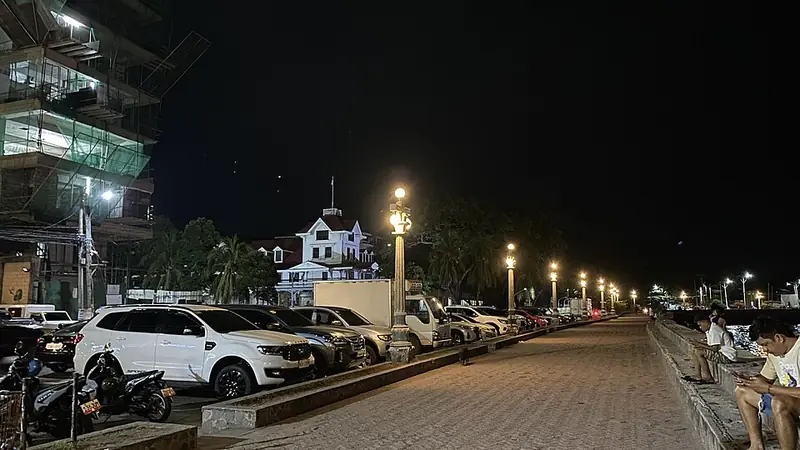
Rizal Boulevard, Dumaguete
The seafront boulevard running along Dumaguete's coast is the social centre of the city — a wide promenade of benches, food stalls, and university students at most hours of the day. In the late afternoon, when the sun sets over the Bohol Sea and the mountains of Cebu rise in silhouette, it is one of the more beautiful urban waterfronts in the Visayas.
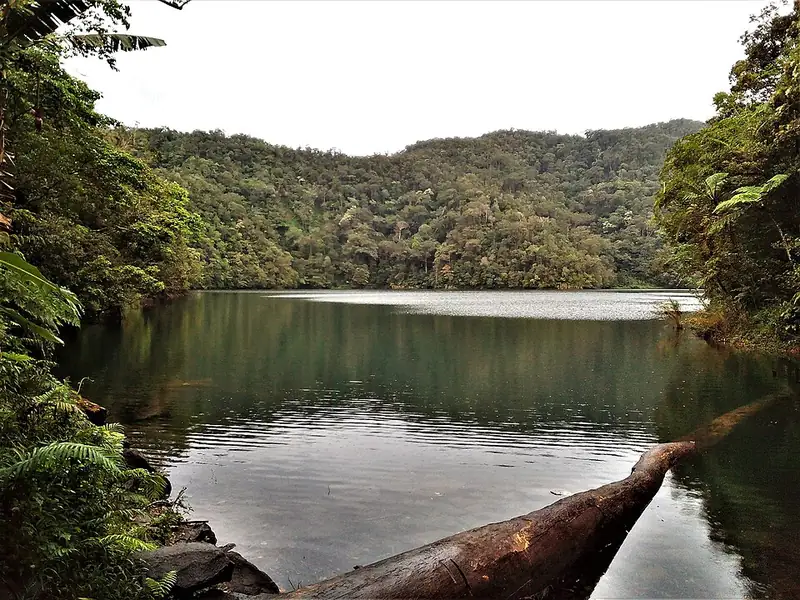
Twin Lakes — Balinsasayao and Danao
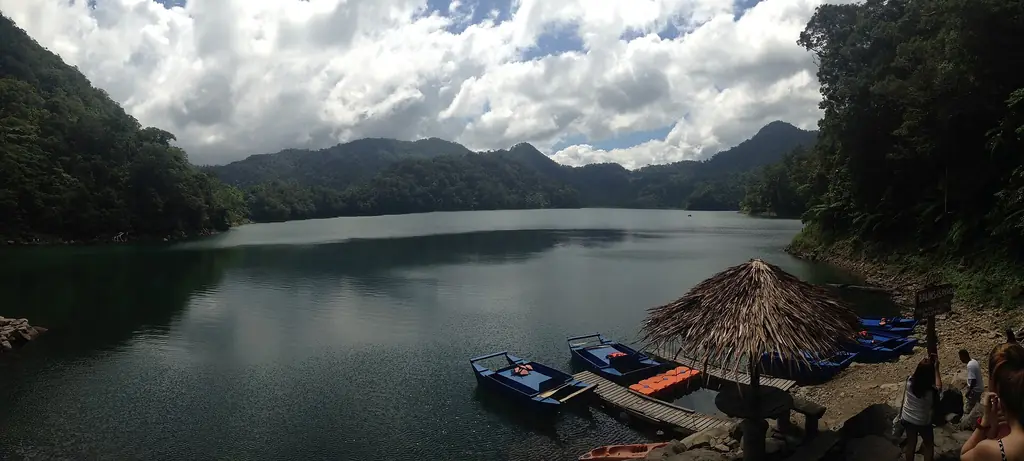
Two crater lakes in the mountains above Dumaguete, reachable in about 45 minutes by habal-habal. The protected watershed forest around them is among the best-preserved in Negros Oriental. Boat hire on Balinsasayao, a short trek to Danao, and the silence of a mountain forest that has not been logged — it is worth the ascent.
Apo Island
A small island 30 minutes by boat from Malatapay, Apo Island has one of the most successful community-managed marine reserves in the Philippines. The reef has recovered dramatically since the 1980s — sea turtles feed in the shallows, and the visibility in the water is exceptional. The island community manages its own tourism and limits daily visitor numbers.
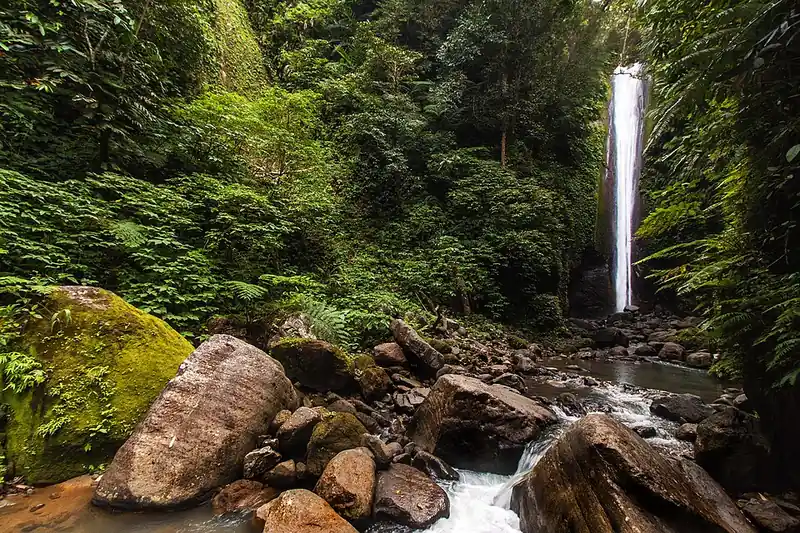
Casaroro Falls
A tall, narrow waterfall in the Valencia mountains above Dumaguete — 30 minutes from the city by road, then a descent of 340 steps to the base. The falls drop into a canyon of dark stone. Cold, clear pool at the bottom. The approach is wet and slippery in places. Arrive early.
✦
Silliman University CampusThe Silliman campus is open to visitors. Walk through the American-era buildings, the anthropology museum, and the forest park at the heart of the campus. The Silliman University Anthropological Museum holds the most significant collection of Visayan ethnographic material in the region.
The City That Reads
There is a story that circulates among Philippine writers about Dumaguete. It is said that on any given afternoon, in the cafes and boarding houses around Silliman University, you will find more writers per square metre than anywhere else in the country. The story is not quite provable, but it is not quite wrong either.
The Silliman National Writers Workshop has been running since 1962. Every year, emerging Filipino writers in English and in Filipino languages are selected as fellows and brought to Dumaguete for intensive critique sessions led by established writers. The workshops have shaped generations of Philippine literature — novelists, poets, essayists who passed through Dumaguete and carried something of the city's pace and seriousness back to Manila, Cebu, and wherever else they went.
The city is not precious about this reputation. The boulevard vendors sell barbecue beside the university gate. The overnight bus to Manila fills with students going home for the holidays. Dumaguete is gentle in the way that a city is gentle when it has not been through the worst of things — not untouched, but not hardened. The reading and writing happen alongside everything else.