Northern Samar occupies the northern portion of Samar Island in Eastern Visayas. It is a province of dense forest, rough coastline, and a people—the Waray—known for tenacity. Its capital, Catarman, sits on a coastal plain facing the Philippine Sea. The province remains one of the least developed in the Visayas, which has preserved much of its natural character.
CatarmanCapital
3,500 km²Area
24Municipalities
VisayasIsland Group
Eastern Visayas (VIII)Region
Land and Water
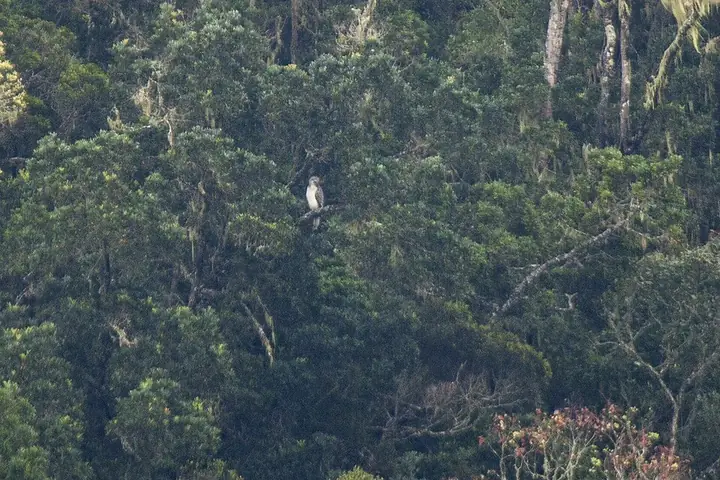
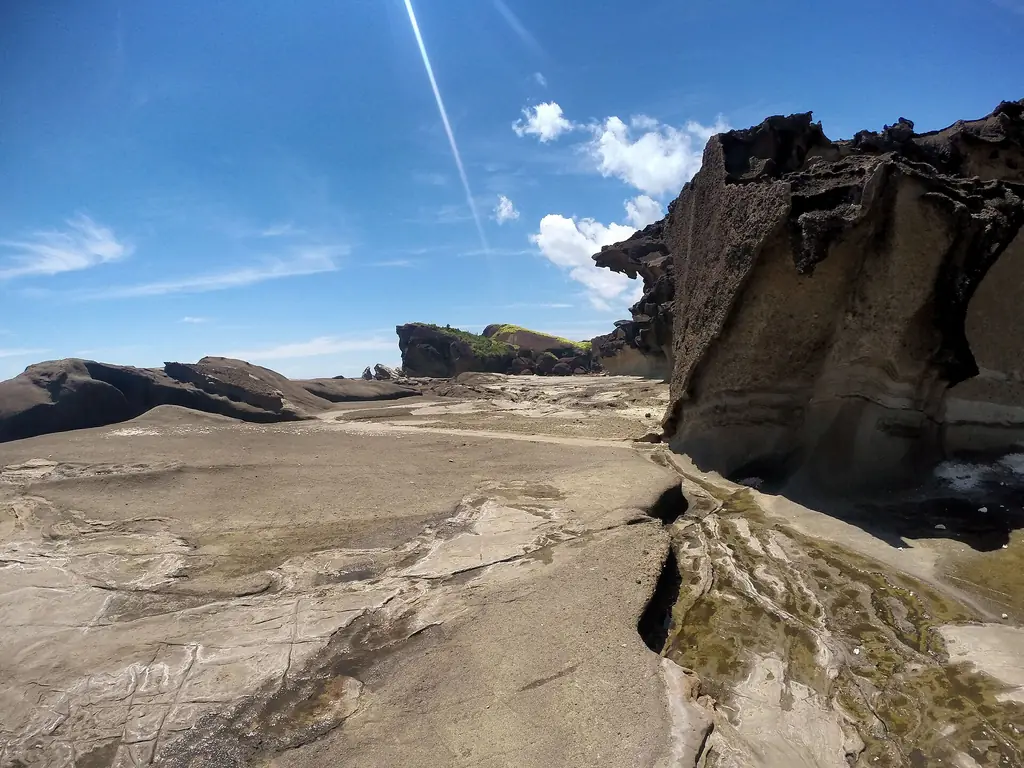
The province is largely mountainous interior ringed by coastal lowlands. The Samar Island Natural Park, one of the largest protected rainforests in the Philippines, spreads across the island's interior and into Northern Samar. The Biri-Larosa Protected Landscape and Seascape at the northern tip contains rock formations sculpted by the Pacific over millennia—some of the most dramatic coastal geology in Southeast Asia.
★
The Biri Rock FormationsThe rock formations on Biri Island—locally called the Magasang, Mabilis, and others—were shaped by typhoon waves over thousands of years. They include sea caves, channels, and eroded basalt that stand several stories high.
The Pacific coastline is exposed to some of the strongest typhoons in the world. Northern Samar has been struck repeatedly by major storms, including Typhoon Ruby (Hagupit) in 2014. Communities here have developed an ingrained resilience that is not metaphor—it is practical knowledge passed down through generations.
Samar was among the first islands encountered by Magellan's fleet in 1521. The northern portion of the island remained a frontier zone throughout the Spanish colonial period, with the Waray population resisting reduccion—the forced relocation into centralized towns—longer than most groups in the Visayas.
1521Magellan's Fleet Sights Samar
On March 16, 1521, the expedition sighted Samar (believed to be the island of Homonhon at the southern tip), marking the first Spanish contact with Philippine soil. The northern part of the island was more remote and less immediately affected.
1768Catarman Established
The town of Catarman was formally established under the Augustinian Recollects, consolidating Spanish administrative presence in northern Samar.
1898–1902Philippine-American War in Northern Samar
Northern Samar saw prolonged guerrilla resistance against American forces. The terrain—thick forest and difficult river crossings—favored Filipino fighters who held out long after formal resistance collapsed elsewhere.
1965Northern Samar Becomes a Separate Province
Northern Samar was formally separated from Samar province, creating three distinct provinces from the island: Northern Samar, Samar (Western Samar), and Eastern Samar.
★
The Balangiga Ambush, 1901While the Balangiga Massacre occurred in Eastern Samar, its aftermath swept across the whole island. U.S. General Jacob Smith's order to turn the island into a 'howling wilderness' affected communities throughout Samar, including the north.
The Waray people of Northern Samar share a cultural identity with their counterparts across Eastern Visayas—defined by their language, Waray-Waray, and a reputation for directness and physical courage. The phrase 'Waray-waray'—meaning 'nothing' or 'never mind'—has been adopted as a symbol of resilience rather than indifference.
Festivals and Traditions
The Sarakiki Festival in Catarman celebrates the province's heritage each June. Communities along the coast maintain boat-building traditions tied to fishing—bancas are still built by hand in several coastal barangays. Indigenous Waray weaving practices, particularly the production of buntal hats, persist in some interior communities.
★
Waray Literary TraditionWaray is one of the eight major languages of the Philippines and has its own body of folk literature—riddles, epic poetry, and songs that predate Spanish contact. The Sugidanon, an oral epic tradition, was documented by researchers in the 20th century.
Fishing is central to coastal life. Families in communities facing the Pacific and San Bernardino Strait organize their calendars around fish runs and typhoon seasons. The banca remains the primary vessel, and knowledge of currents and weather patterns is passed down practically, not academically.
Waray cooking is characterized by sour, salty flavors and minimal ornamentation. The most common souring agents are tamarind, kamias (bilimbi), and vinegar. Fish dominates the diet—fresh, dried, and fermented—alongside root crops and leafy vegetables gathered from forests and gardens.
Binagol
A sweet made from gabi (taro) root mixed with coconut milk and sugar, packed into half a coconut shell and baked or steamed. It is a traditional pasalubong from the Eastern Visayas, particularly associated with Tolosa in Leyte but made throughout the region.
Tinola na Isda
A broth-based fish soup with ginger, green papaya or sayote, and malunggay leaves. Simple and practical, it is the everyday meal of coastal households. The fish varies by season and catch—lapu-lapu, tanigue, or whatever comes in.
15 minutesPrep
1 hourCook
4–6Serves
Ingredients
- 1 kg, cut into chunkspork belly
- 2 cupscoconut milk
- 1 thumb, slicedginger
- 1 medium, slicedonion
- 4 cloves, crushedgarlic
- 2 tbspfish sauce
- 1 tsp, crackedblack pepper
- 1 cupwater
Method
- Sauté garlic, onion, and ginger in a heavy pot until softened.
- Add pork and brown on all sides.
- Pour in water and bring to a boil. Skim foam.
- Reduce heat and simmer 30 minutes until pork is tender.
- Add coconut milk and fish sauce. Simmer 20 more minutes until sauce thickens.
- Season with cracked pepper. Serve with steamed rice.
Cook's noteWaray cooking does not sweeten this dish. If the coconut milk is rich enough, the fat from the pork will render into the sauce and create enough body without added sugar.
Waray-Waray (also called Waray or Lineyte-Samarnon) is the primary language of Northern Samar. It is spoken by approximately 3.6 million people across Eastern Visayas—Northern Samar, Samar, Eastern Samar, and Leyte. It belongs to the Visayan language family and is mutually intelligible in part with Cebuano, though distinct in phonology and vocabulary.
Key Phrases
Maupay nga adlawHello
SalamatThank you
Kumusta ka?How are you?
Taga-diin ka?Where are you from?
MaupayDelicious
★
The Word 'Waray'The word 'waray' means 'nothing' or 'none' in the language. The repetition 'waray-waray' became a colloquial expression of indifference or resilience—'it's nothing'—which outsiders turned into a label for the people themselves.
Waray has a rich oral tradition of bugtong (riddles), ambahanon (folk songs), and the longer sugidanon narrative poems. While Filipino and English are used in schools and government, Waray remains the language of home, fishing, and community throughout the province.
The Stones of Biri
The fishermen of Biri Island know the rock formations by name the way other people know their neighbors. Magasang. Mabilis. Macadlaw. Each formation has its character—the channel that fills at high tide, the overhang that shelters a small boat, the pool where octopus hide after storms. The formations are not tourist attractions to the people who live among them. They are landmarks, navigation aids, places where children play and old men sit.
When geologists first surveyed Biri's coastline, they estimated the formations had been shaped over at least ten thousand years by Pacific swells. Each typhoon that passes north of Samar adds incrementally to the work. The basalt breaks along crystal planes and the water finds the cracks. It is slow and steady destruction that produces, in the short term, something that looks like creation.
A barangay captain on Biri once said that the best time to see the rocks is not during calm weather but just after a storm, when the swell is still running and the water pushes up through the channels in white columns. Visitors who come for the postcard photograph arrive in flat water and see one thing. Those who come after a typhoon—if they can get a boat—see something else entirely. The island's real character, he said, only shows when the sea is not cooperative.