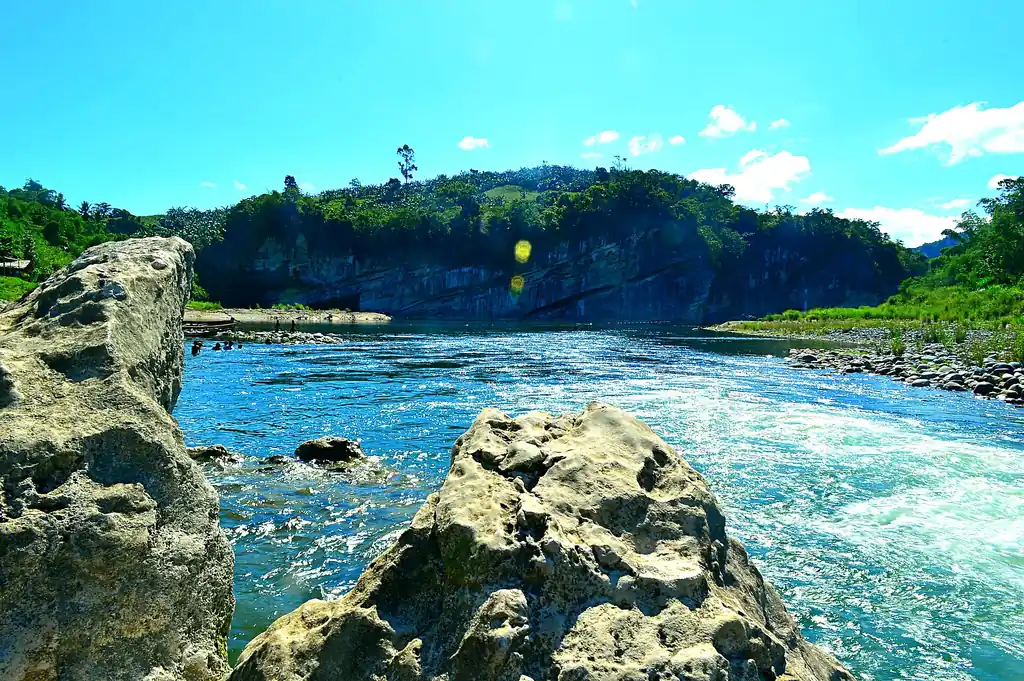
Quirino is one of the smallest and least populated provinces in Luzon, tucked between the Sierra Madre and the Cagayan Valley lowlands. It has six municipalities and no cities, and a population of about 211,000 people (2024 census) spread across forested mountains and river valleys. The Agta—nomadic hunter-gatherers who have lived in the Sierra Madre for thousands of years—maintain communities in Quirino's interior. The Cagayan River and its tributaries run through the province, providing the rapids that have made Maddela and Diffun known for white water activities.
CabarroguisCapital
2,323 km²Area
6Municipalities
LuzonIsland Group
Cagayan Valley (II)Region
The Quiet Province
Quirino became a sub-province of Nueva Vizcaya in 1966 and a separate province in 1971. Its low population density—among the lowest in Luzon—is the combined result of its mountainous terrain, limited agricultural land, and late formal organization. The Quirino Protected Landscape covers a large part of the province's Sierra Madre forests, the upper watershed of the Cagayan River.
★
Named for a President
Quirino province is named after Elpidio Quirino, the sixth President of the Philippines (1948–1953), who was born in Vigan, Ilocos Sur. He had died in 1956, ten years before the sub-province was created, and the name honored the Ilocano settlers who made up much of its population.
The territory of Quirino was historically inhabited by Agta hunter-gatherers and later by Ilongot (Bugkalot) slash-and-burn farmers who moved through the Sierra Madre. Spanish missionaries made limited contact with interior communities but never substantially reduced or taxed these populations. The area was administered from Nueva Vizcaya until Quirino became a sub-province in 1966 and a full province in 1971.
Pre-colonial
Agta and Ilongot Presence
The Sierra Madre forests of present-day Quirino were home to Agta (Dumagat) nomadic hunter-gatherers and Ilongot (Bugkalot) shifting cultivators. These groups maintained distinct territories and social systems largely outside Spanish colonial reach.
1960s–1970s
Ilongot Studies
The anthropologists Michelle and Renato Rosaldo lived and worked among the Ilongot (Bugkalot) of northern Luzon in 1967–1969 and again in 1974, producing some of the best-known studies of highland Luzon society.
1966
Sub-province of Quirino
Republic Act No. 4734 of 18 June 1966 grouped the Nueva Vizcaya towns of Diffun, Saguday, Aglipay and Maddela into a new sub-province named after the late President Elpidio Quirino. Cabarroguis, now the capital, was created in 1969.
1971
Quirino Becomes a Province
Republic Act No. 6394 of 10 September 1971 separated Quirino from Nueva Vizcaya and made it a regular province.
1993
An Oriole Rediscovered
The Isabela oriole, feared extinct for decades, was rediscovered in December 1993 near Diffun, in Quirino.
2004
Quirino Protected Landscape
The Quirino Protected Landscape, covering the upper watershed of the Cagayan River in the Sierra Madre, was proclaimed under the NIPAS law on 3 February 2004.
Quirino's lowland population is predominantly Ilocano-speaking, the result of decades of migration from the Ilocos region and from neighboring Nueva Vizcaya. The Agta of the Sierra Madre live in small mobile communities and practice a way of life based on hunting, fishing, and gathering, augmented in recent decades by wage labor and market exchange. The Ilongot (Bugkalot), once feared as headhunters, now live in settled communities and have largely converted to Christianity.
The Ilongot Tradition
The Ilongot of the Sierra Madre were documented extensively by anthropologist Renato Rosaldo, whose work on grief and headhunting—particularly his essay 'Grief and the Headhunter's Rage'—brought attention to their culture beyond academic circles. Headhunting as a practice ended in the 1970s following Christian conversion and Philippine government pressure. Contemporary Ilongot communities are farmers and forest workers who maintain elements of their material culture in weaving and music.
★
Agta Bow Hunting
The Agta of the Sierra Madre are among the last communities in the Philippines who hunt with bow and arrow in the forest. They hunt wild pigs, deer, and monkey using longbows made from local hardwood. The practice continues among some communities, though reduced by forest loss and wildlife depletion.
Quirino's food is Ilocano in character—simple, vegetable-forward, using preserved and fermented fish as flavoring. River fish from the Cagayan tributaries supplement the diet. The Agta and Ilongot communities in the interior have distinct food traditions based on forest products and game, but these are not commercially available.
Pinakbet sa Bagoong Isda
The Quirino version of pinakbet uses fermented freshwater fish (bagoong isda) rather than the shrimp paste version common elsewhere. Vegetables—bitter melon, eggplant, okra, squash, tomato—are cooked with pork and the fish paste until just tender. The broth is minimal and intensely flavored.
Inabraw na Galunggong
Dried or fresh galunggong (round scad) simmered with vegetables in a light bagoong-flavored broth. An Ilocano comfort dish common in Quirino households—inexpensive, nutritious, and made from fish that survive the irregular supply chains of a remote province.
Nilaga na Baboy (Pork Bone Broth Soup)
Quirino / Cagayan Valley
15 minutesPrep
1.5 hoursCook
4–6Serves
Ingredients
1 kgpork ribs or backbone
3 medium, quarteredpotatoes
1/4 head, cut into wedgescabbage
1 bundlepechay (bok choy)
1 large, quarteredonion
1 tsp, wholeblack pepper
2 tbspfish sauce
8 cupswater
Method
Bring pork and water to a boil. Skim foam thoroughly.
Add onion and whole peppercorns. Reduce heat and simmer 1 hour.
Add potatoes and cook 15 minutes until tender.
Add cabbage and pechay. Cook 3–5 minutes until just wilted.
Season with fish sauce. Serve hot with rice and a dipping sauce of fish sauce and calamansi.
Cook's note
Nilaga is one of the cleanest Filipino soups—clear broth, minimal seasoning. The quality of the pork determines the quality of the broth. In Quirino, pork is often from backyard-raised pigs and the difference in flavor compared to commercial pork is noticeable.
Ilocano is the dominant language of Quirino's lowland and settled communities, reflecting the province's settler population. Ilongot (Bugkalot) is spoken by the highland communities in the Sierra Madre, and Agta (a Dumagat language) is spoken by the remaining nomadic and semi-nomadic communities in the forest interior. Filipino and English are used in schools and government.
IlocanoPrimary (lowland)
Ilongot (Bugkalot), Agta (Dumagat)Indigenous
Filipino, EnglishOfficial
★
Agta Language
The Agta languages of the Sierra Madre are a cluster of related but distinct languages (Casiguran Dumagat, Umiray Dumagat, and others). Most Agta communities are now bilingual in Agta and Ilocano or Tagalog. Several Agta languages have fewer than 1,000 fluent speakers and are considered endangered.
Ifugao is the other main language of the province, brought by settlers from the Cordillera. Smaller communities speak Pangasinan and Kankanaey, and a few older residents still speak Ibanag, the old trade language of the Cagayan Valley before Ilocano replaced it.
8–10 hours by bus via Bayombong, Nueva VizcayaFrom Manila
Bayombong to Cabarroguis (~1.5 hrs by van)Main access
November to AprilBest months
Roads can be impassable during heavy rainNote
Places to Visit
Diffun White Water Rafting
The Cagayan River tributaries near Diffun offer white water rafting on Class II–III rapids. Commercial operations are smaller and less developed than those in nearby Nueva Vizcaya, which means fewer crowds. The river passes through secondary forest and agricultural land.
Maddela Protected Landscape
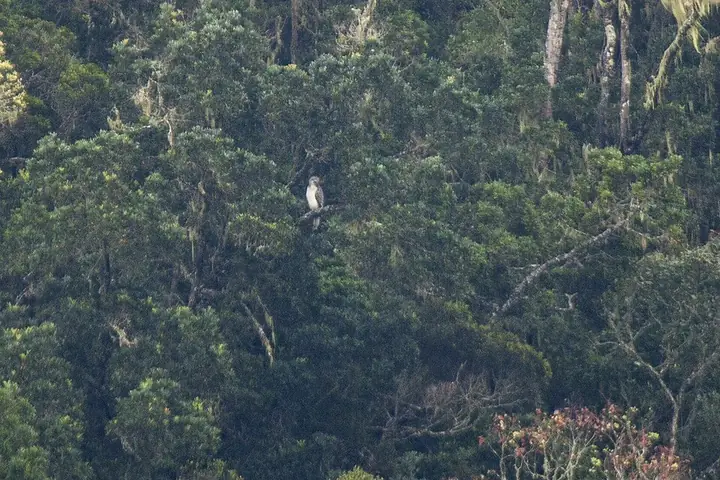
The protected area in Maddela municipality contains lowland dipterocarp forest that is increasingly rare in Luzon. Birdwatchers come specifically for the Philippine eagle, which has a known territory in the Sierra Madre here, along with other endemic species. Access requires permits and guides from the DENR office in Maddela.
Aglipay Caves
Near Aglipay municipality, a system of limestone caves contains formations and a river that runs underground for part of its length. The caves are less developed and less visited than more famous Philippine cave systems, which means guided exploration is more genuinely adventurous.
✦
Getting to Quirino
No direct buses from Manila go to Cabarroguis. Take a bus to Bayombong, Nueva Vizcaya (several operators from Cubao or Sampaloc), then transfer to a van or jeepney going to Cabarroguis. Total journey is 8–10 hours. Road conditions in the mountains can extend travel time significantly during rainy season.
The Quirino Protected Landscape protects the Sierra Madre rainforest at the headwaters of the Cagayan River. At least 41 threatened species have been recorded there, including the Philippine eagle, the Isabela oriole and Cantor's giant softshell turtle, and a gecko first described in 2007 is so far known only from this area. The Addalam River at Aglipay is a home of the prized ludong.
The national bird, found only in the Philippines. It is recorded in the Sierra Madre forests of the Quirino Protected Landscape.
Field note: Report sightings, and never disturb a nest. Killing a Philippine eagle carries a prison term under the Wildlife Act.
Isabela Oriole
Oriolus isabellae
Critically Endangered
A yellow-green oriole with a heavy gray bill, found only in the lowland forests of the northern Sierra Madre. Only about 50–250 adults may remain. It was rediscovered near Diffun in 1993 after decades without a sighting.
Field note: Report sightings to the protected area office. Forest clearing is its biggest threat.
The Agta of the Sierra Madre have been the subject of anthropological study since the early American colonial period. Researchers came to document what they believed was a disappearing way of life—nomadic bands moving through the forest, hunting with bows, trading forest products for rice at the forest edge. The Agta obliged by continuing to live in the forest, which the researchers found convenient and which the Agta found unremarkable.
What the researchers did not always appreciate was that the Agta were not unchanging. They adapted. They adopted iron tools when these became available. They traded with lowlanders. Some settled near missions. They learned Ilocano to deal with the settlers who came into their forest. They continued to hunt with bows because bows were effective for certain game and cost nothing to operate. The persistence of the bow was practical, not archaeological.
Quirino's forest today is smaller than it was. The Sierra Madre corridor holds, but the pressures are real—logging concessions, mining claims, and agricultural encroachment from the valley floor. The Agta communities that remain in the interior of Quirino navigate between the forest that is their resource base and the lowland economy that is increasingly their market. They are not a remnant of the past. They are a group of people solving the problem of how to live in a forest that the Philippine state keeps classifying as available for other purposes.
RA 4734 of 18 June 1966, Cabarroguis 1969 (RA 5554), RA 6394 of 10 Sept 1971, named after President Elpidio Quirino (sixth president), Quirino Protected Landscape 3 Feb 2004, languages (Ilocano, Ifugao, Bugkalot, Ibanag) — Wikipedia: Quirino (rev. 1375831045)