Map

Rizal

CALABARZON
Luzon
Capital Antipolo City
Population 3,330,143
Area 1,191 km²
Municipalities 13
Cities 1
Island Group Luzon
Languages Tagalog, Filipino

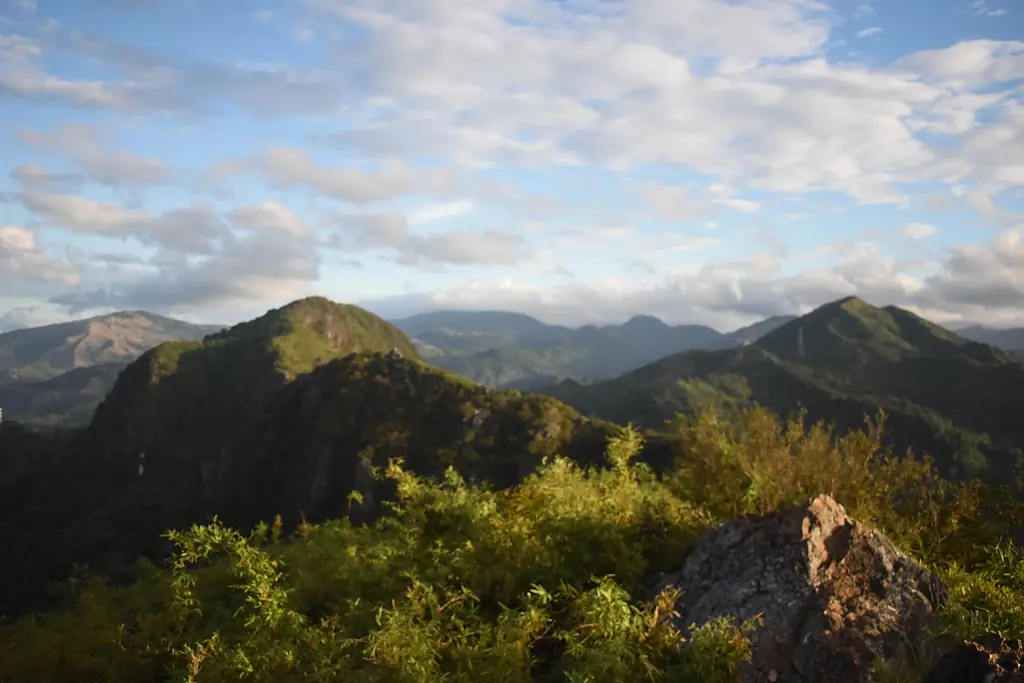
Rizal province sits directly east of Metro Manila, pressed against the western slope of the Sierra Madre. It is the smallest province in CALABARZON and one of the most densely populated in the Philippines, owing to decades of urban expansion from the capital. Despite its proximity to Manila, Rizal retains pockets of forest in the Sierra Madre mountains, a thriving arts community in Angono, and pilgrimage routes to Antipolo City—the capital and one of the most visited Marian shrines in the Philippines.

Antipolo CityCapital
1,191 km²Area
13 municipalities, 1 city (Antipolo)Municipalities
LuzonIsland Group
CALABARZON (IV-A)Region

Named After the Hero

Rizal province is named after José Rizal, the national hero. Calamba, where Rizal was born, is in Laguna—not Rizal province—but the province bearing his name serves as a symbolic geographic marker. The province functions increasingly as an extended Metro Manila suburb, with Antipolo City and Cainta among the fastest-growing cities in the Philippines. But the Marikina River, the Sierra Madre ridgeline, and the Laguna de Bay shoreline also define it.

Our Lady of Peace and Good Voyage

The image of Our Lady of Peace and Good Voyage in Antipolo City is one of the most revered Marian images in the Philippines. It was brought from Mexico in 1626. Antipolo is the destination of the Antipolo Pilgrimage during Holy Week and May, when hundreds of thousands of devotees make the climb to the shrine.

The territory of Rizal province was historically inhabited by Tagalog communities. The town of Antipolo was established in the 17th century by the Jesuits, who brought the image of Our Lady of Peace from Mexico. The image became a focal point for devotion across Luzon, and Antipolo developed as a pilgrimage town. The province was formally organized in 1901 by American colonial administrators and named in honor of José Rizal, executed five years earlier.

1626

Image of Our Lady Arrives in Antipolo

The Jesuit image of Our Lady of Peace and Good Voyage was brought from Acapulco, Mexico, aboard the Manila Galleon trade route. It was installed in Antipolo Church, beginning a tradition of Marian devotion that continues today.

1901

Rizal Province Created

American colonial authorities constituted Rizal province from Tagalog communities east of Manila. It was named after José Rizal, who had been executed by the Spanish in 1896.

1975

Manila's Expansion into Rizal

Metro Manila was formally constituted under Ferdinand Marcos, incorporating some Rizal municipalities. The remaining Rizal municipalities outside Metro Manila began experiencing rapid urbanization as Manila's population pushed outward.

2004–present

Urbanization and Sierra Madre Pressure

Antipolo City and surrounding municipalities became among the fastest-growing areas in the Philippines. The Sierra Madre mountains within Rizal face ongoing pressure from informal settlements, quarrying, and development encroachment.

Rizal has developed a reputation as the arts province of the Philippines, centered on the town of Angono—which claims more National Artists per capita than any other municipality in the country. Carlos 'Botong' Francisco and Lucio San Pedro are among the artists born or raised in Angono. The town's walls, plazas, and public spaces are decorated with murals.

Pilgrimage and the Antipolo Shrine

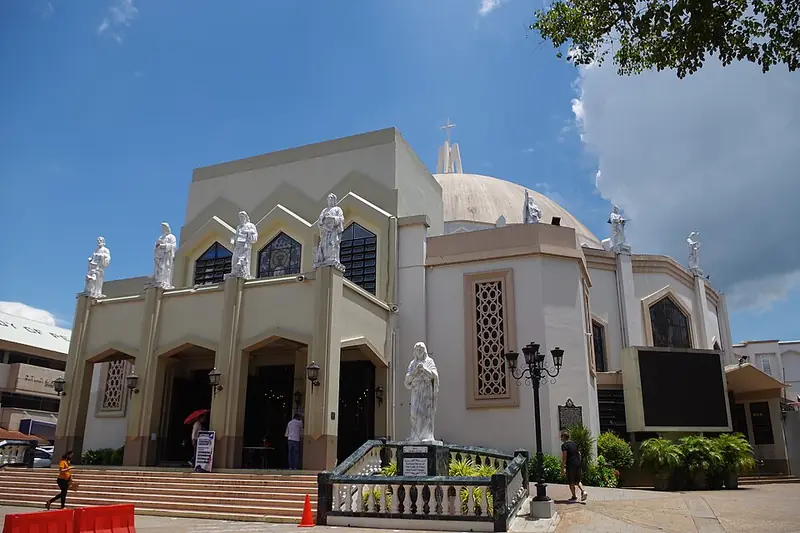
The annual Antipolo Pilgrimage during Holy Week and May draws hundreds of thousands of devotees who climb the road to the shrine—some on their knees for portions of the route. The pilgrimage is one of the largest in Southeast Asia. The Simbahan ng Nuestra Señora de la Paz y Buen Viaje (Our Lady of Peace and Good Voyage) is the destination, and the surrounding Antipolo City has developed a commercial ecosystem around the pilgrimage.

Angono Petroglyphs

In 1965, Carlos 'Botong' Francisco discovered petroglyphs carved into a limestone rock shelter in Angono. The Angono-Binangonan Petroglyphs date to approximately 3,000 years ago and depict 127 human and animal figures. They are the oldest known artwork in the Philippines and are a National Cultural Treasure.

The Higantes Festival in Angono, held every November 22–23, features giant papier-mache figures (higantes) up to 12 feet tall paraded through the streets. The tradition originated as a mockery of a colonial-era landlord and evolved into a civic celebration. The festival draws crowds from Metro Manila and is one of Rizal province's most distinctive cultural events.

Rizal's food culture is Tagalog suburban—shaped by proximity to Manila's restaurant scene and by the resources of the Sierra Madre foothills and Laguna de Bay. Antipolo is known for its suman (rice cake) and casoy (cashew) products. The Marikina River valley and Laguna de Bay shoreline provide fresh fish. The province has a developed restaurant scene, particularly in Antipolo, oriented toward Manila day-trippers.

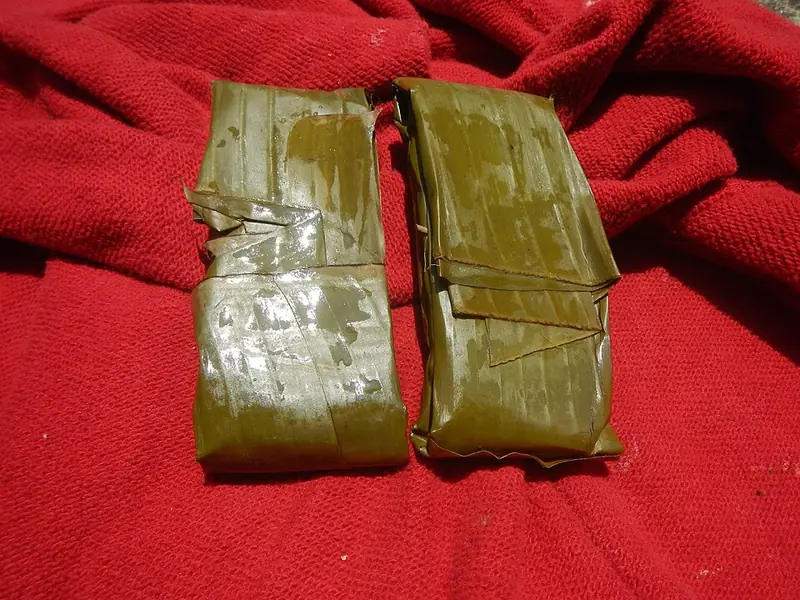
Suman sa Lihiya

Glutinous rice cooked with lye water (lihiya), wrapped in banana leaves, and steamed. The lye gives the rice a characteristic yellow color and slightly alkaline flavor. Served with brown sugar, coconut jam (matamis na bao), or ripe mango. A staple Antipolo pasalubong sold at roadside stalls along the pilgrimage route.

Casoy (Cashew) Products

Antipolo and surrounding areas have historically grown cashew trees. Locally produced cashew products—roasted and salted cashews, cashew brittle (praline), and cashew wine—are sold at souvenir shops along the route to the shrine. The cashew trees are less common now as urbanization has converted agricultural land, but the products remain symbolic of the area.

Suman sa Lihiya

Antipolo, Rizal
20 minutes (plus 4 hours soaking)Prep
1.5 hoursCook
8–10 piecesServes
Ingredients
  • 2 cups, soaked 4 hoursglutinous rice (malagkit)
  • 1.5 tsplye water (lihiya)
  • 1/2 tspsalt
  • softened over flame, cut into piecesbanana leaves
  • for servingcoconut jam (matamis na bao)
Method
  1. Drain soaked rice. Mix with lye water and salt until well combined. The rice will turn slightly yellow.
  2. Place 3–4 tablespoons of rice mixture on a banana leaf piece.
  3. Fold the leaf into a rectangular package, pressing the rice compact. Tie or fold closed.
  4. Arrange suman in a steamer. Steam for 1.5 hours over medium heat.
  5. Allow to cool slightly before serving. Serve with coconut jam.
Cook's note

Lye water (lihiya) is sold in small bottles in Philippine markets. Use the exact amount—too much makes the suman taste soapy. Softening banana leaves over a gas flame prevents splitting when folding. The suman keeps for 2 days at room temperature.

Tagalog is the primary language of Rizal province. Given its position adjacent to Metro Manila, the Tagalog spoken here is close to the national standard. Filipino and English are dominant in education, business, and media. The province does not have a distinct regional dialect of note—its Tagalog is metropolitan rather than provincial in character.

Tagalog / FilipinoPrimary
Metro Manila-adjacent, standard pronunciationCharacter
English widely used in business and educationOther
José Rizal and Language

José Rizal, for whom the province is named, was fluent in more than 20 languages. His novels—Noli Me Tangere and El Filibusterismo—were written in Spanish, the prestige language of his era. He also wrote in Tagalog and was an advocate for indigenous Philippine languages at a time when Spanish colonial education suppressed them.

45 min to 1.5 hours by car (Ortigas/C5 to Antipolo)From Manila
From Cubao or Crossing, Pasig to AntipoloBy jeepney
Holy Week, May (heaviest crowds)Pilgrimage season
Angono, any timeBest for arts

Places to Visit

Antipolo Shrine (Our Lady of Peace and Good Voyage)

The Shrine of Our Lady of Peace and Good Voyage dominates Antipolo's hilltop. The church itself dates from the colonial period with significant reconstruction. The image is displayed in a chapel above the main altar. The surrounding area has restaurants, souvenir stalls, and views across Metro Manila and Laguna de Bay from the hill's elevated position.

Angono Heritage Town

Angono's streets are decorated with murals and public art. The Blanco Family Museum, housed in the family compound of painter Jose Blanco, displays works by multiple generations of one of the Philippines' most prominent artistic families. The Angono-Binangonan Petroglyphs site, a short distance from town, contains the oldest known artwork in the Philippines.

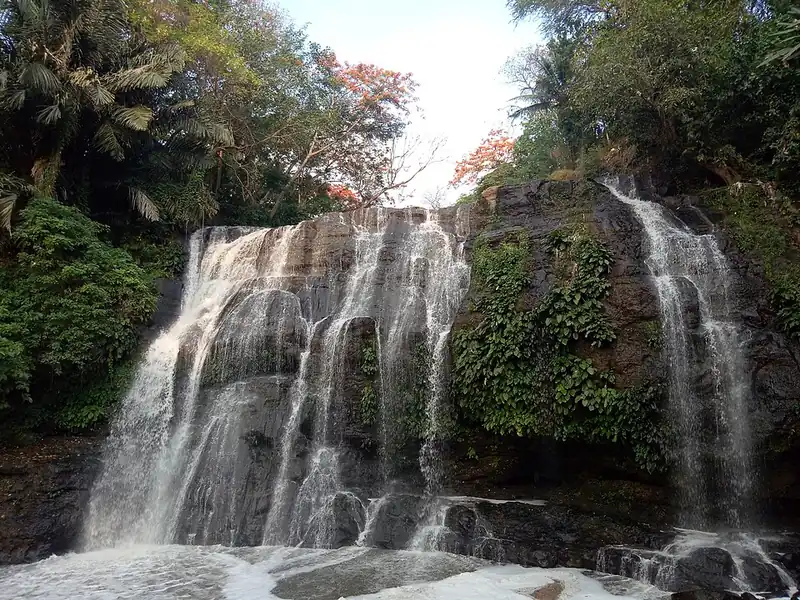
Hinulugang Taktak National Park

A waterfall and park in Antipolo City, historically a popular picnic destination for Manila residents. The waterfall flow has reduced significantly due to upstream development, but the park remains open and is used by local residents. The name means 'discarded and fallen' in Tagalog.

Avoiding Antipolo Traffic

Traffic from Manila to Antipolo during Holy Week and May pilgrimage season is extreme. Travel before 7 AM or after 9 PM if possible. The climb to the shrine is walkable from the Antipolo town center for the physically fit, which avoids vehicle congestion near the shrine.

The Image from Mexico

In 1626, a carved image of the Virgin Mary completed the last leg of the Manila Galleon trade route and arrived in Antipolo. The image, Our Lady of Peace and Good Voyage, had been commissioned in Mexico and was intended to protect the galleons crossing the Pacific—the Acapulco-Manila run, the longest regular ocean voyage of the colonial era, during which ships were lost to storms, pirates, and navigational failures.

The image was credited with protecting the galleons that carried it across the Pacific on seven occasions. Sailors who survived the crossing donated votive offerings to the shrine. The practice of pilgrimage to Antipolo, originally made by those who sailed the Pacific trade, eventually became the largest annual pilgrimage in the Philippines—hundreds of thousands of devotees climbing the road to the hilltop church each Holy Week and May. The specific maritime context that created the devotion is largely forgotten. What remains is the image and the road to it.

The hill on which Antipolo sits looks west toward Manila Bay. On clear nights, the lights of the city spread across the plain below. The devotees who make the climb come with particular needs—safe travel, healing, a difficult decision, a promise to keep. The shrine's specific function, protecting those who cross dangerous water, has generalized over four centuries into something that covers any crossing, any journey, any uncertainty. The image from Acapulco now watches over a city of 20 million people who have mostly never seen the Pacific.