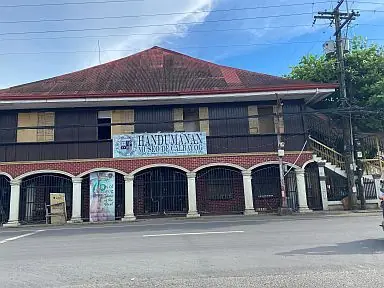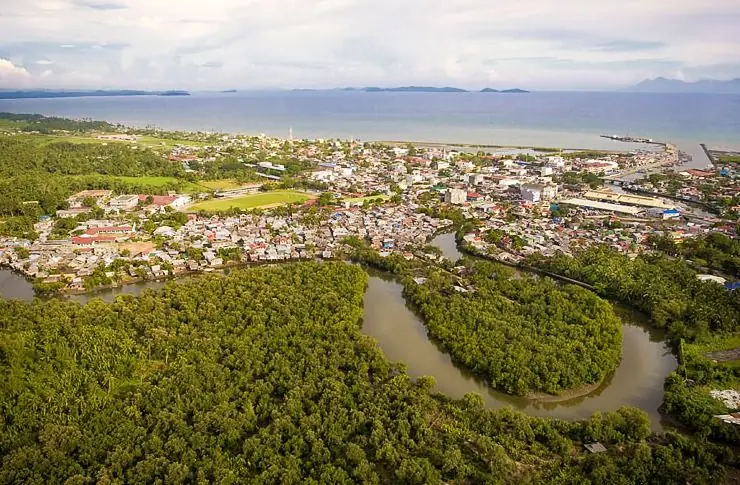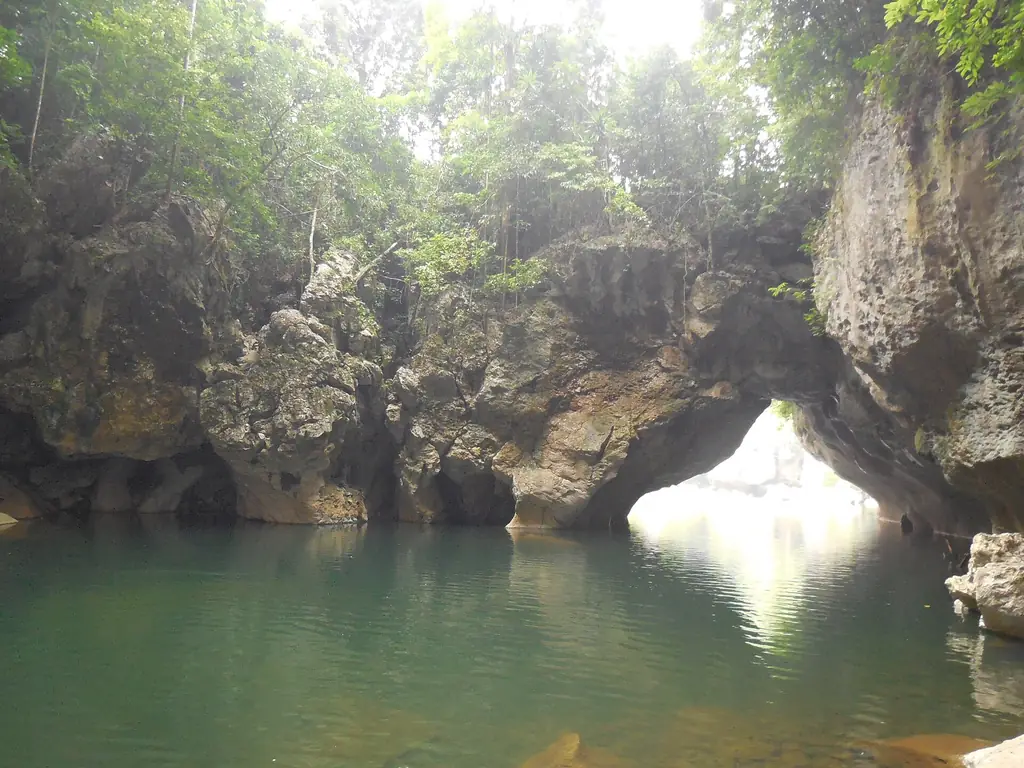
Samar—formally Western Samar, but known simply as Samar—occupies the western and central portions of Samar Island in Eastern Visayas. Its capital, Catbalogan City, is the largest city on the island and the commercial and administrative hub for the province. Samar is defined by its cave systems—particularly the Sohoton Natural Bridge and Caves—its dense forests, and its history as one of the most actively contested territories during the Philippine-American War and World War II.
Catbalogan CityCapital
5,591 km²Area
24 municipalities, 1 city (Catbalogan)Municipalities
VisayasIsland Group
Eastern Visayas (VIII)Region
The Cave Province
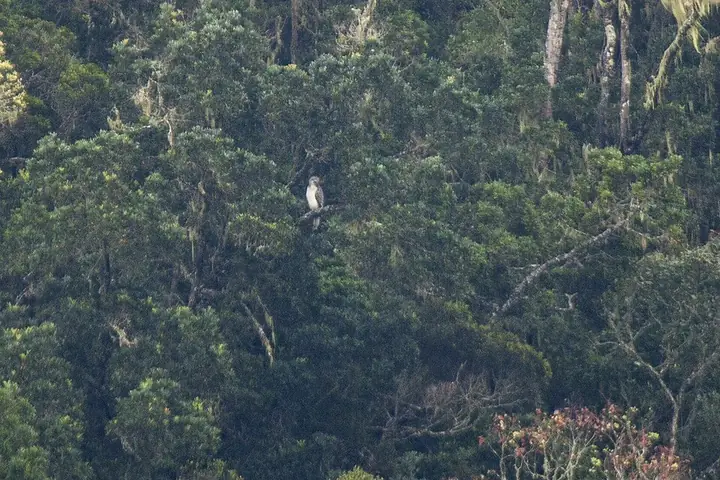
The Sohoton Natural Bridge and National Park in Basey municipality contains an extraordinary concentration of karst formations—natural bridges, cathedral-scale caves, and a river that flows through the rock. The formations were shaped by the same geological processes that created Palawan's underground river, but at a smaller and more accessible scale. Samar Island Natural Park, shared with Northern Samar and Eastern Samar, protects one of the largest remaining lowland and montane forests in the Visayas.
★
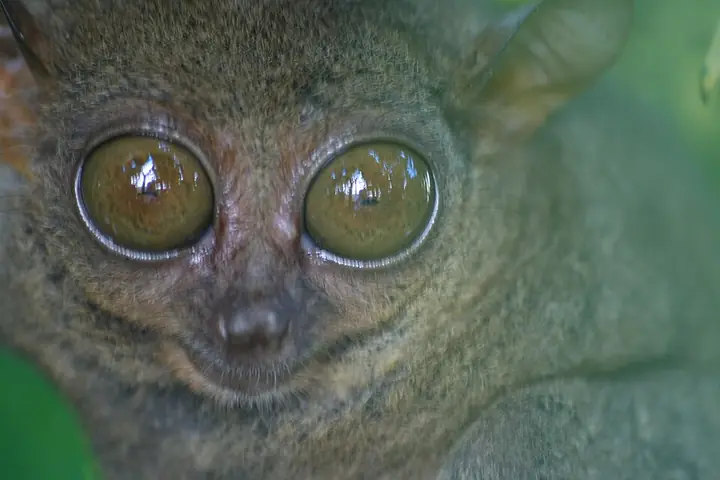
Sohoton Natural BridgeThe Sohoton Natural Bridge is a natural stone arch 50 meters above the Sohoton River, formed by the partial collapse of a cave ceiling. The park contains multiple cave systems, stingless bee colonies, and nocturnal cave fish. Access from Catbalogan or Tacloban is by river boat through narrow canyon passages.
Samar Island's colonial history is one of the most turbulent in the Philippines. The island was among the first contacted by Magellan's expedition but remained difficult to administer throughout the Spanish period. During the Philippine-American War, Samar became the site of events that shaped American public debate about the war—including the Balangiga Massacre of 1901 and the subsequent 'Howling Wilderness' campaign.
1521Magellan's Contact
The expedition of Ferdinand Magellan made landfall on Homonhon Island, at the southern tip of Samar, on March 16, 1521—the first European contact with Philippine soil.
1901Balangiga Massacre
On September 28, 1901, Filipino Waray fighters surprised American soldiers of Company C, 9th U.S. Infantry at Balangiga (in Eastern Samar), killing 48 Americans. The attack provoked General Jacob Smith's order to turn Samar into a 'howling wilderness.' American forces devastated the island's population and resources in retaliation.
1942–1945WWII Guerrilla Resistance
Samar, particularly the Calbayog area, was a center of Filipino guerrilla resistance against Japanese occupation. The dense forests provided cover for guerrilla units who harassed Japanese forces and maintained intelligence links with Allied command until liberation in 1944–45.
1965Samar Divided into Three Provinces
Samar Island was divided into three separate provinces: Western Samar (now simply Samar), Northern Samar, and Eastern Samar, creating the administrative boundaries that exist today.
General Jacob Smith
U.S. Army General (infamy)1840–1918Smith's order after Balangiga—'I want no prisoners. I wish you to kill and burn. The more you kill and burn, the better it will please me'—was reported in American newspapers and sparked a Senate inquiry. He was court-martialed and admonished, then retired. The debate in the American press about his orders was one of the first sustained public reckonings with the conduct of the Philippine-American War.
The Waray people of Samar share a cultural identity with Waray speakers across Eastern Visayas. Their reputation for toughness—earned through centuries of typhoons, colonial warfare, and economic marginalization—is a source of pride rather than complaint. The Waray cultural tradition includes oral poetry, folk music, and a weaving tradition that uses locally grown cotton and abaca.
Pintados and Tattoo Tradition
The pre-colonial Visayans were called 'Pintados' (painted people) by the Spanish, because of the extensive tattooing that covered their bodies. Tattoos indicated status, valor, and community identity. The tradition largely ended under Spanish colonialism, but the term has been recovered as a source of cultural pride. The Pintados-Kasadyaan Festival in Tacloban (Leyte) celebrates this heritage, and Samar communities have similar historical connections to the practice.
★
The Balangiga BellsAfter the Balangiga attack in 1901, American forces took the church bells of Balangiga as war trophies. Two bells ended up at F.E. Warren Air Force Base in Wyoming. After decades of Philippine requests for their return, the bells were repatriated to the Philippines in 2018. They are now displayed in Balangiga, Eastern Samar.
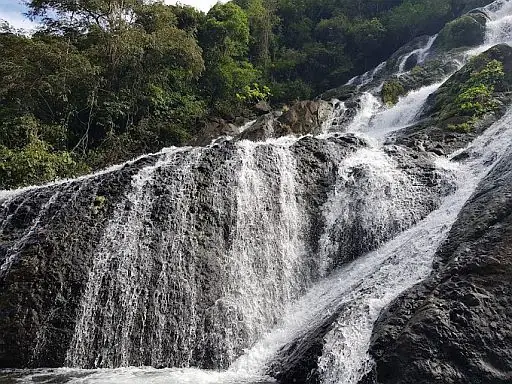
Calbayog City is the commercial center of northern Samar and the province's largest municipality by area. It has a distinct urban identity from Catbalogan and is known for its waterfalls—Bangon Falls and Malajog Beach are among its natural attractions. The city's history as a guerrilla base during WWII is marked by a memorial in the city center.
Samar's food tradition is Waray—defined by sour broths, abundant seafood, and root crops from the interior. The province's coastal communities eat fish in every preparation: fresh, dried, fermented, and smoked. River shrimp (pasayan) and freshwater crabs (alimasag) from the province's rivers supplement the marine diet.
Igado
A Waray pork dish made with liver, heart, and tenderloin braised in vinegar and soy sauce with bay leaf and pepper. It is similar to but distinct from the Ilocano igado, using different ratios and sometimes including reconstituted dried meat. A celebratory dish served at fiestas and family gatherings.
Binagol
Taro (gabi) root mixed with coconut milk and brown sugar, packed into a half coconut shell and baked or steamed until set. A traditional sweet made throughout Eastern Visayas, sold as pasalubong and eaten as dessert or snack. The half-shell presentation is distinctive and practical for transport.
10 minutesPrep
20 minutesCook
4Serves
Ingredients
- 1 kg, cleanedwhole fish (any firm white fish)
- 1/2 cupnative cane vinegar
- 1 thumb, sliced thinginger
- 5 cloves, crushedgarlic
- 1 medium, slicedonion
- 2 cupswater
- 1 tbspfish sauce
- 3 pieces, slitlong green chili
- 1/2 tsp, crackedblack pepper
Method
- Combine vinegar, water, ginger, garlic, onion, and pepper in a pot. Bring to a boil.
- Add fish and chili. Reduce heat to a gentle simmer.
- Cover and cook 12–15 minutes until fish is cooked through.
- Season with fish sauce. Do not stir—let fish remain intact.
- Serve directly from the pot with the broth.
Cook's noteUse good native cane vinegar, not commercial white vinegar. The Waray prefer a distinctly sour broth—this is not a timid dish. The fish should taste of vinegar and ginger. It is better eaten the day it is made.
Waray-Waray is the language of Samar, shared with Northern Samar, Eastern Samar, and the province of Leyte across the San Juanico Strait. It is the fourth most spoken language in the Philippines, with approximately 3.6 million speakers. Filipino and English are used in education and government.
Waray-WarayPrimary
~3.6 million across Eastern VisayasSpeakers (total)
Visayan language groupFamily
Filipino, English, some CebuanoAlso spoken
★
Waray LiteratureWaray has a documented body of pre-colonial oral literature, including the ambahan (lyric songs), sugidanon (epic poetry), and bugtong (riddles). Researchers at the Leyte Normal University and other institutions in Eastern Visayas have worked to document and preserve these traditions. Contemporary Waray writers also produce poetry and fiction in the language.
The Bells of Balangiga
The bells of the Balangiga church were taken by American soldiers in October 1901, a month after the attack on Company C. Two went to Wyoming; one went to South Korea with U.S. forces. They became the most discussed objects in the history of Philippine-American relations—symbols of the war's violence and of the contested memory of what the United States did in the Philippines during the first decade of American colonialism.
The Philippines asked for the bells' return periodically throughout the 20th century. American veterans' organizations and members of Congress consistently blocked repatriation, arguing the bells were war trophies earned by soldiers who died at Balangiga. Philippine officials argued the bells belonged to the community from which they were taken. The argument was about sovereignty and memory as much as about bronze.
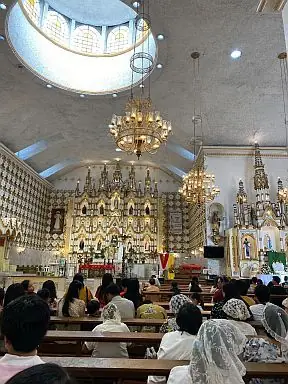
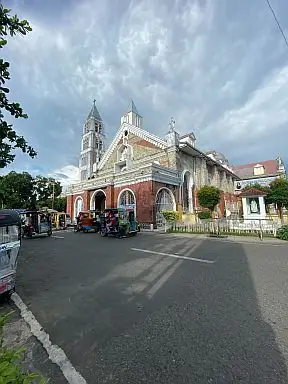
In December 2018, the U.S. military returned two of the bells to the Philippines. They are now in Balangiga, in the church where they once hung. The third bell, long held in South Korea, was also returned separately. The Philippine government received them with ceremony. In Balangiga, which is a small town in Eastern Samar, the bells ring again. What the ringing means depends on who is listening and what history they carry with them when they hear it.