An island province — the sea is the only neighbor. That isolation shaped everything here.
Siquijor is the smallest province in the Visayas — an island of 337 square kilometers sitting in the Bohol Sea between Cebu, Bohol, and Negros Oriental. For centuries it carried a reputation for sorcery and mystery that kept many Filipinos from visiting. That reputation has since become its selling point.
SiquijorCapital
337 km²Area
6Municipalities
VisayasIsland Group
The island glows at night. Fireflies — millions of them — inhabit the molave trees of Mount Bandilaan, the forested peak at the island's center. This phenomenon is probably the factual origin of Siquijor's historical name: Isla del Fuego — Island of Fire — given by Spanish sailors who saw the light from the sea.
★
Isla del Fuego
Spanish sailors named the island Isla del Fuego — Island of Fire — when they first saw the bioluminescent glow of its firefly-filled forests from the sea. The name 'Siquijor' comes from the Visayan word for the molave tree, whose old-growth stands on Mount Bandilaan host the firefly population.
Siquijor had 107,642 people in the 2024 census. It is the third-smallest province in the country by both land area and population, after Camiguin and Batanes, with 102 kilometers of coastline. Mount Bandilaan, at the center of the island, is its highest point. Its capital is the town of Siquijor.
The Spanish and the Sorcery Reputation
Siquijor's reputation for dark magic developed during the Spanish colonial period. The island's relative isolation, its firefly forests, and the practice of traditional healing using local plants and rituals gave it an atmosphere that colonisers and neighboring islanders found unsettling. The Spanish Augustinian missionaries who worked the island never fully displaced the indigenous spiritual practices.
1565
Isla del Fuego
Esteban Rodríguez of the Legazpi expedition led the first Spaniards to Siquijor in 1565. They called it Isla del Fuego, the "Island of Fire", for the glow of the fireflies that swarmed its molave trees. The island's ruler at the time, Datu Kihod, is named in Legazpi's records.
1783
First Town and Parish
Siquijor town was founded in 1783 under secular priests, the first municipality and parish on the island. The Augustinian Recollects arrived in 1794 and later founded the parishes of Larena, Lazi, San Juan and Maria.
1884–1891
Lazi Church and Convent
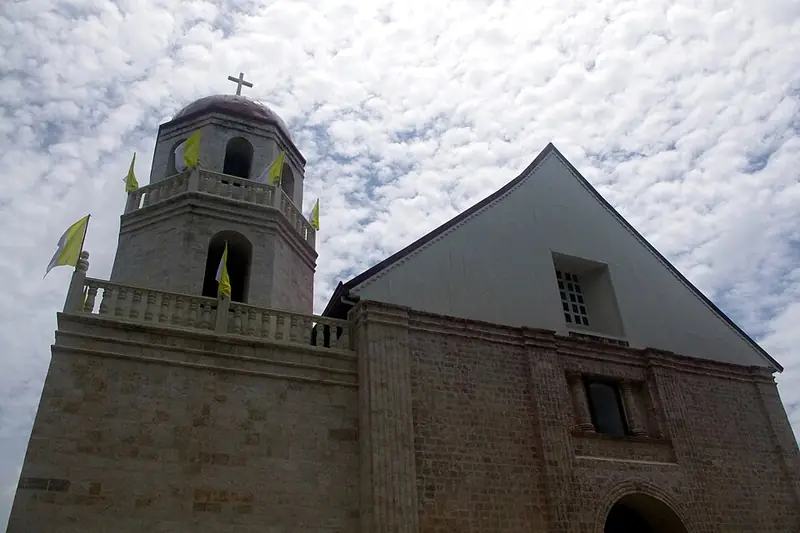
Filipino artisans built the present stone church of San Isidro Labrador in Lazi in 1884, and the coral-stone convent between 1887 and 1891, under a Recollect priest. The National Museum has declared the church a National Cultural Treasure.
1892–1901
Under Negros Oriental
Siquijor was governed from Bohol from 1854. In 1892 it was moved to Negros Oriental, and in 1901 it became a sub-province of Negros Oriental.
1971
Siquijor Becomes a Province
Republic Act No. 6398, approved on 17 September 1971, separated the sub-province of Siquijor from Negros Oriental and made it a province.
★
Mananabal — The Healer
Siquijor's traditional healers are called mananabal. They practice a form of herbal medicine using locally gathered plants, combined with ritual incantations. During Holy Week — particularly Black Saturday — mananabal from across Siquijor gather at Bandilaan mountain to collect and prepare their medicines for the coming year. The gathering has been documented and is partly open to observation.
Siquijor's culture is defined by the tension between its reputation and its reality. The island is quiet, Catholic, agricultural — fishing and coconut farming sustain most families. The healers and their practices are real, but they exist within an ordinary community life that has nothing mysterious about it.
The Mananabal Tradition
Traditional healing on Siquijor uses locally gathered medicinal plants prepared according to formulas passed within families. The practices draw from both indigenous Visayan healing tradition and from knowledge accumulated over centuries of isolation. The healers treat conditions that range from skin ailments to what they describe as spirit-caused illness. They do not advertise — knowledge of a specific healer passes by word of mouth.
Lazi Convent and Church
The San Isidro Labrador Church and Convent in Lazi — built by the Augustinians in the 18th century — is one of the most significant colonial heritage structures in the Visayas. The convent is said to be one of the largest in Asia. Its thick coral stone walls, massive interior courtyard, and views over the sea make it the island's most visited landmark.
✦
Holy Week on Siquijor
Black Saturday is the most active day for Siquijor's traditional healing culture. The Bandilaan mountain gathering of healers is the year's most significant event. The island also holds standard Catholic Holy Week processions in all municipal centers. Both happen simultaneously, which is probably the most Siquijor thing about Siquijor.
Siquijor's cuisine is Cebuano in foundation — the everyday food of the central Visayas, adapted to what the small island's fields and sea provide. Freshwater fish from the island's springs, saltwater fish from the Bohol Sea, coconut in all its forms, and root crops from the interior.
Buwad (Dried Fish)
The standard preserved protein of Siquijor: small fish — danggit, tunsoy, and others — salted and sun-dried on racks along the coastal barangays. Eaten with rice and vinegar, or fried to a crisp and eaten as a side dish. The quality of Siquijor buwad is local knowledge — certain barangays produce better dried fish than others, and residents know which.
Utan Bisaya (Visayan Vegetable Soup)
Siquijor Province — everyday household cooking
10 minPrep
20 minCook
4Serves
Ingredients
2 cups, stripped from stemsMalunggay (moringa) leaves
2 mediumEggplant, sliced
200gSquash, cubed
100gSitaw (string beans), cut
2 tbspDried fish or bagoong for flavouring
4 clovesGarlic, crushed
4 cupsWater
Method
Sauté garlic briefly in oil. Add water and bring to a boil.
Add squash and eggplant. Cook 8 minutes until nearly tender.
Add string beans. Cook 3 minutes.
Season with bagoong or crumbled dried fish.
Add malunggay leaves last. Remove from heat immediately — the leaves need only the residual heat.
Cook's note
Utan Bisaya is a principle more than a recipe — use whatever garden vegetables are available. The dried fish or bagoong provides all the seasoning needed. Do not add salt separately. The malunggay must go in last to preserve its color and nutrients.
Cebuano is the language of Siquijor, spoken across all six municipalities. The island's long separation from Negros Oriental and its position in the middle of the Bohol Sea mean that the Cebuano of Siquijor carries some distinct vocabulary and intonation — Siquijodnon Cebuano, as it is informally called.
CebuanoMain language
SiquijodnonLocal name
Filipino, EnglishSecond languages
BisayanFamily
The Language of Healing
The traditional healers of Siquijor use a ritual language in their incantations — a form of Cebuano mixed with archaic words and formulas that are passed within healing lineages and not generally understood by the wider community. Little of this ritual register has been written down.
★
Oral Transmission
The formulas and plant knowledge of Siquijor's mananabal are transmitted orally, from healer to chosen apprentice, often within the same family. There is no written manual of Siquijor healing practice. Some of it has been recorded, but most of the knowledge is held only by the healers themselves.
Siquijor is reached by fast ferry from Dumaguete (35 minutes), from Tagbilaran in Bohol (2 hours), or from Cebu (overnight). Once on the island, circumnavigation by motorcycle or bicycle is the standard way to see it — the island is small enough to circuit in a single day.
35 min (fast ferry)From Dumaguete
Overnight ferryFrom Cebu
~70 kmCircuit distance
Mar–MayBest season
Mount Bandilaan
The forested peak at the island's center — home to the firefly colonies that gave Siquijor its Spanish name. The National Park at the summit has walking trails and a meditation center. Come at dusk to see the fireflies before full darkness. The view of the island's coastline from the ridgeline at sunset is worth the drive up.
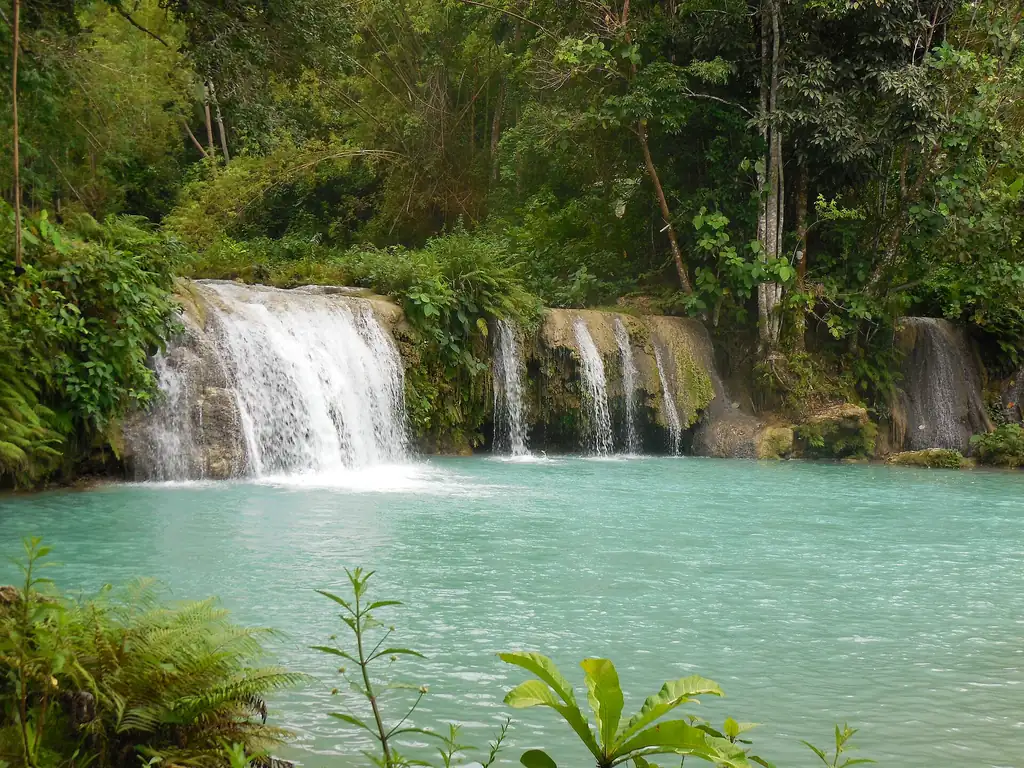
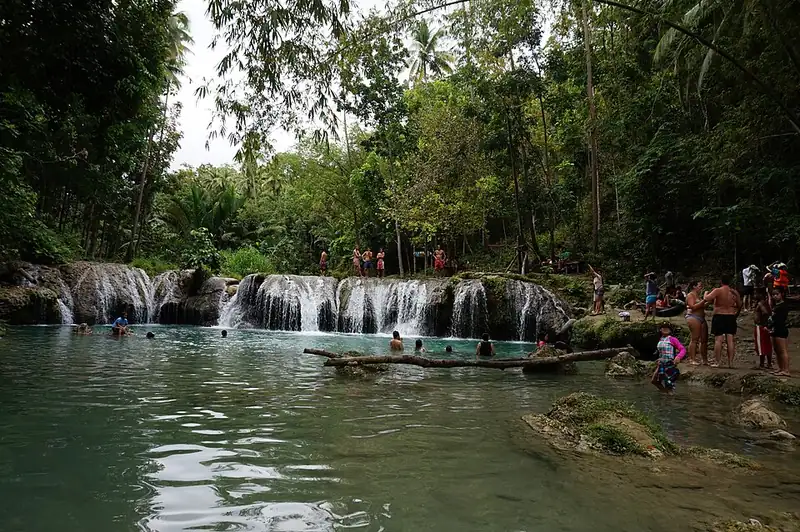
A series of three tiered falls in the interior of the island, with natural swimming pools of clear turquoise water. Rope swings, shallow pools, and a short hike through bamboo forest to reach the upper tiers. The water is cold and clean. One of the more genuinely pleasant swimming spots in the Visayas.
The San Isidro Labrador Church and the adjacent convent, known for its huge size, sit at the center of Lazi town, built from coral stone in the 18th century. The convent interior is not always accessible but the church and grounds are open. The old acacia tree in the churchyard is said to be several centuries old.
✦
Renting a Motorbike
Rent a motorbike in Siquijor town (capital) for the day. The island circuit — clockwise or counterclockwise — takes four to five hours with stops. The road is mostly flat and well-paved. Petrol is available in the main towns. The island is small enough that getting lost is not a serious risk.
Siquijor is a coral island, and fossil giant clams still turn up in farmers' fields inland. Most of the island's remaining forest is on and around Mount Bandilaan, which was declared a forest reserve in 1940 and now has a natural park and butterfly sanctuary at Cantabon. A 2007 survey of the island's four main forest patches recorded 44 bird species, with the most in Bandilaan.
Streak-breasted Bulbul
Hypsipetes siquijorensis
Endangered
A forest bulbul found only in the Philippines, with its own Siquijor subspecies. The 2007 survey found it in all four forest patches on the island, but firewood cutting, slash-and-burn farming and hunting threaten its habitat.
Field note: Stay on trails in Mount Bandilaan Natural Park and do not collect plants or wood.
Philippine Hanging Parrot (Siquijor form)
Loriculus philippensis siquijorensis
Not seen; presumed extinct on Siquijor
A small green parrot that sleeps hanging upside down. The Siquijor form was not seen at all in the 2007 survey and is presumed extinct, a warning of what forest loss can do on a small island.
Field note: Any sighting would be important. Report it with a photo to the DENR office in Siquijor.
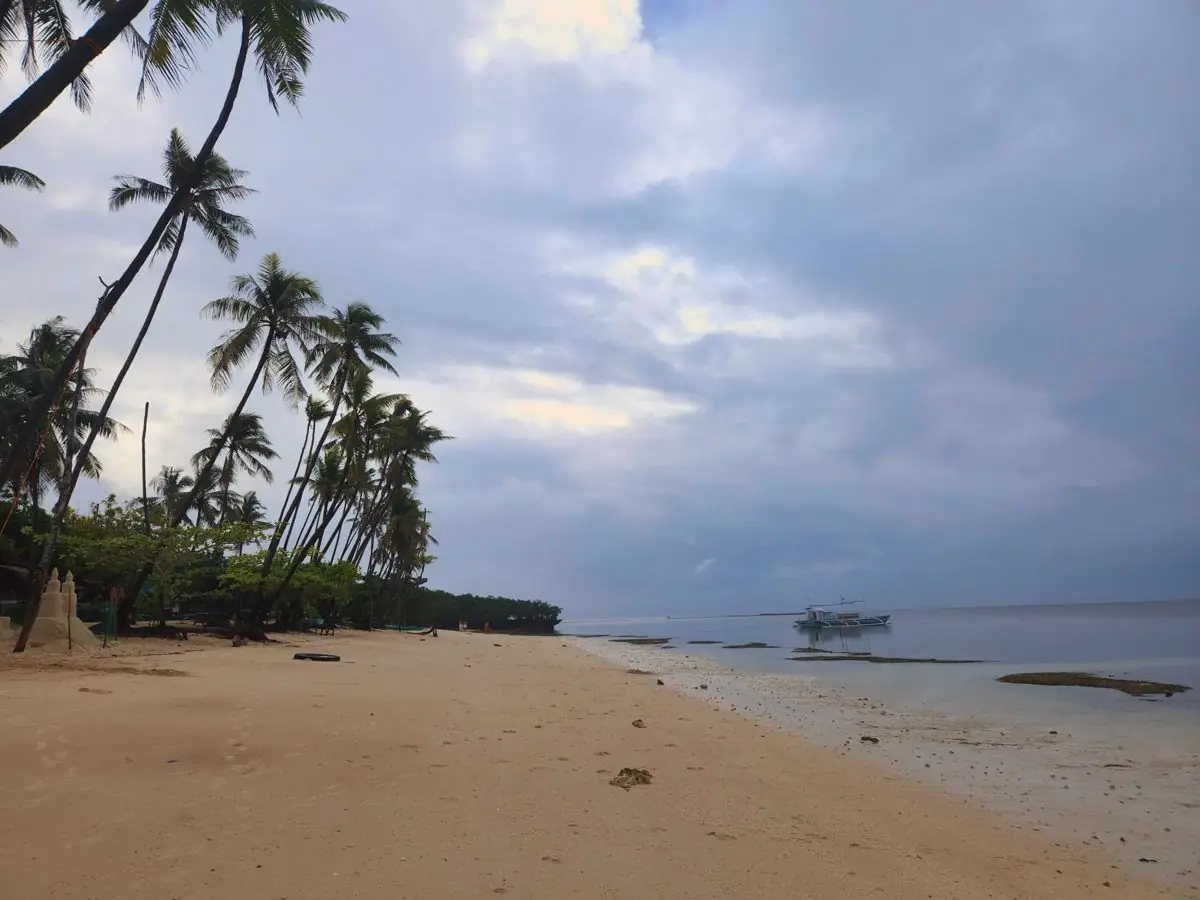
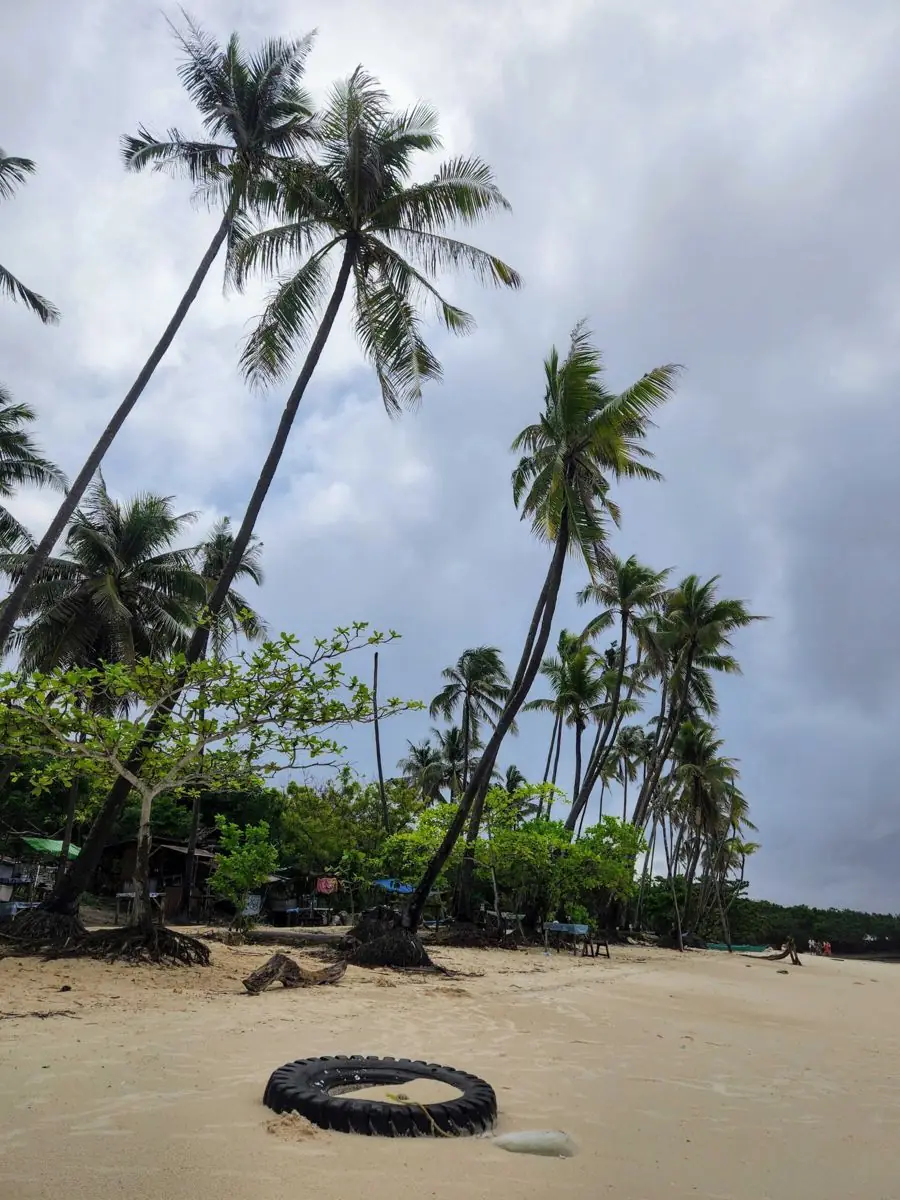
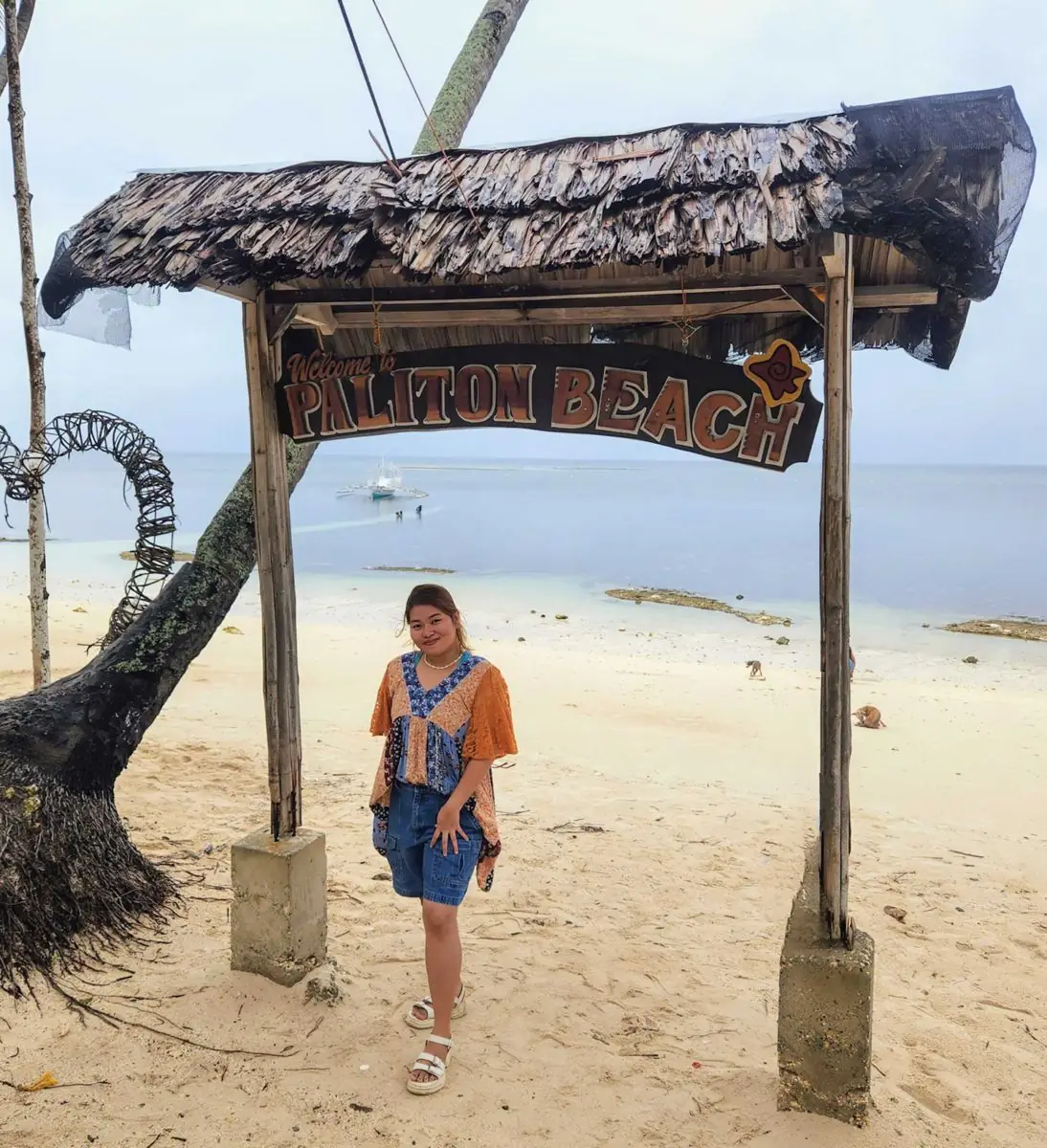
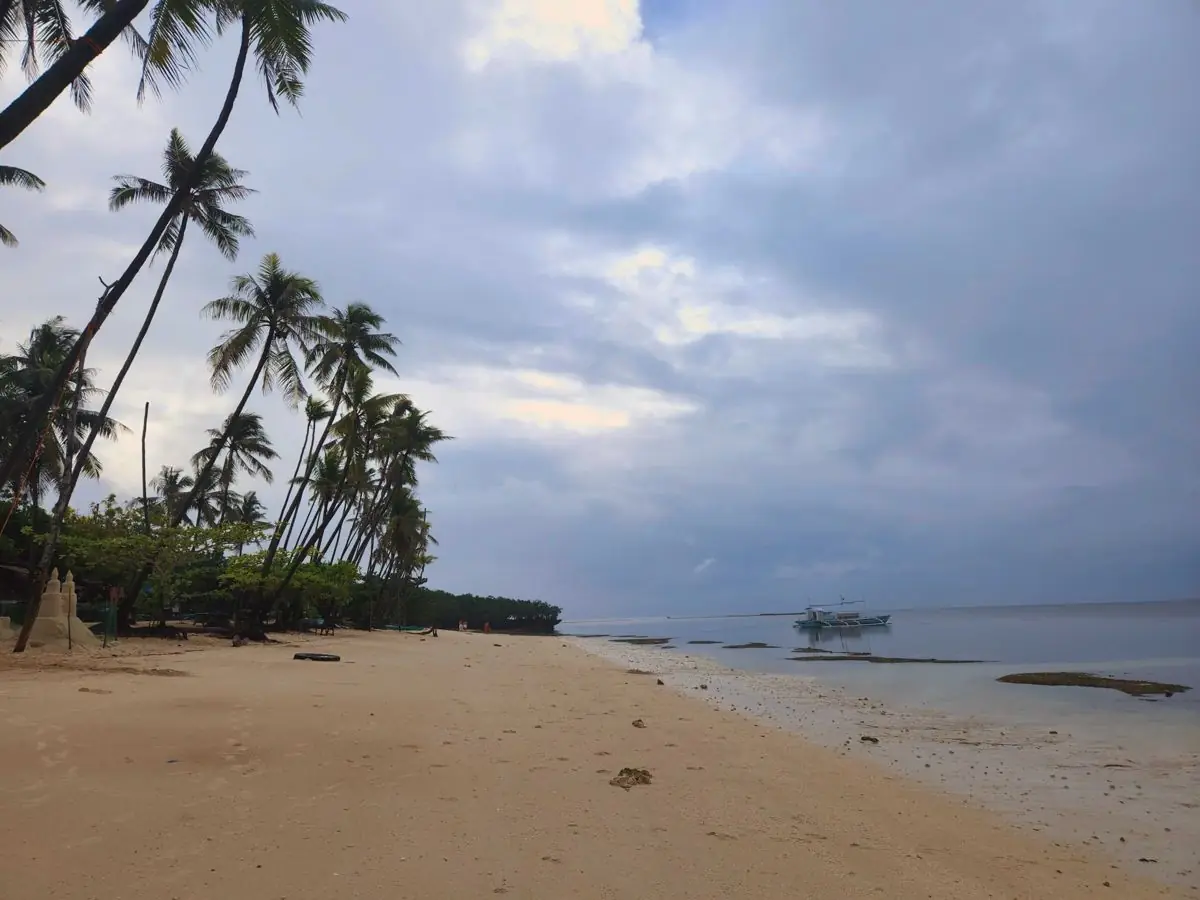
On the quiet island of Siquijor, in the town of San Juan, lies Paliton Beach, a serene escape often called Paliton Paradise. It is known for its white sand, clear water, and calm.
Siquijor carries an old reputation as the Island of Fire, a place of healers, folklore, and traditions passed down through generations. Amid all that mystery, Paliton stays a simple, hidden paradise.
For years it was mainly a fishing shore, a place of quiet livelihood. It is better known now, but it keeps its unspoiled charm, palms swaying, waves lapping, and sunsets that set the sky alight. A true paradise for those who take the time to find it.