Map

Sulu

BARMM
Mindanao
Capital Jolo
Population 1,000,108
Area 1,600 km²
Municipalities 19
Cities 0
Island Group Mindanao
Languages Tausug, Filipino

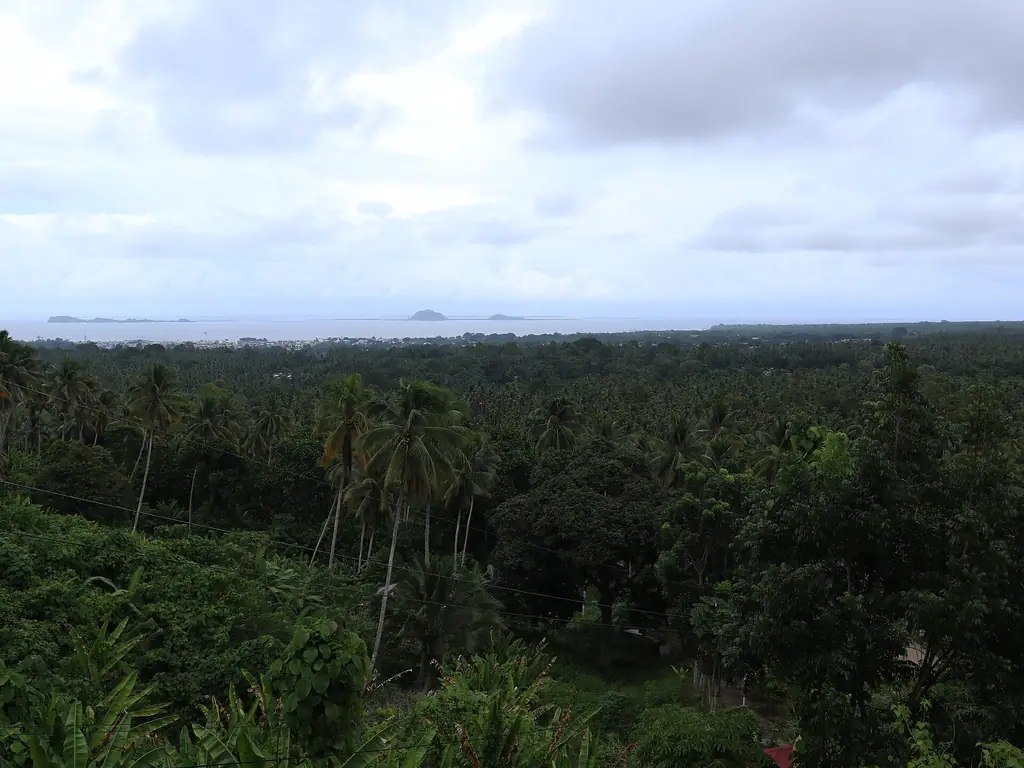
Sulu is an archipelago province of roughly 900 islands stretching southwest from Zamboanga toward the Malaysian state of Sabah — a chain of coral reefs, fishing communities, and the remnants of the Sulu Sultanate, once the most powerful maritime polity in Southeast Asia. Its capital, Jolo, sits on the island of the same name and was for centuries the centre of a commercial empire that connected the Philippines to the wider Islamic world.

JoloCapital
1,600 km²Area
19Municipalities
MindanaoIsland Group

The Tausug people — the people of the current, for that is what tausug means in their language — have lived on these islands and the surrounding sea for centuries, building a culture of maritime trade, Islamic scholarship, and warrior tradition that resisted colonisation longer and more effectively than almost any other community in the archipelago.

The Sulu Sultanate

At its height in the 18th century, the Sulu Sultanate's influence extended from the southern Philippines through parts of present-day Malaysia, Indonesia, and the islands of Borneo. The sultanate controlled key maritime trade routes between China, the Malay world, and the Philippine islands. Jolo was a cosmopolitan trading port where merchants from across maritime Asia did business.

The Sultanate of Sulu

The Sultanate of Sulu — established in the 15th century by Abu Bakr, a scholar from Johor who married into the local ruling class — became the most powerful Islamic polity in the Philippines. Its control of the sea lanes between China, Borneo, and the Spice Islands made Jolo one of the major trading ports of Southeast Asia. Spanish colonial forces attacked Jolo repeatedly across three centuries and never established permanent control.

1450

Sulu Sultanate Founded

Abu Bakr Abirin — a Muslim scholar from Johor — established the Sultanate of Sulu after marrying the daughter of the local paramount chief. He introduced systematic Islamic governance, a written legal code, and the court culture that would sustain the sultanate for five centuries. The first mosque and madrasa in what is now the Philippines were built in Jolo under his direction.

1578

Spanish Assault on Jolo

Spanish forces under Francisco de Sande attacked Jolo in 1578 in the first of many attempts to subjugate the Sulu Sultanate. They destroyed the fort and burned the settlement but could not hold the island — the Tausug rebuilt and resumed operations. The Spanish would attack Jolo at least eight more times across the next three centuries without achieving permanent occupation.

1876

Spanish Capture Jolo

After centuries of failed attempts, Spanish naval forces captured Jolo in 1876 using modern warships and artillery that the sultanate's defenders could not match. Spanish control proved unstable — guerrilla resistance continued until the Spanish-American War transferred sovereignty to the United States in 1898. The American pacification of Sulu involved military campaigns that continued until 1913.

1974–present

MNLF Conflict and Aftermath

Sulu was at the centre of the Moro National Liberation Front insurgency of the 1970s and subsequent decades. The Abu Sayyaf Group emerged in the 1990s and has operated in the Sulu archipelago, conducting kidnapping operations and bombings. The security situation has constrained development and tourism in the province. The BARMM peace process addresses the political dimension of the conflict but the security situation remains volatile.

Tausug culture is built around the sea and around Islam — two forces that shaped every aspect of life on the archipelago for centuries. The Tausug are among the most Islamised communities in the Philippines, with a tradition of Islamic scholarship, Quranic recitation, and the legal framework of the Sharia that predates Philippine nationhood by four centuries.

Okir and Brasswork

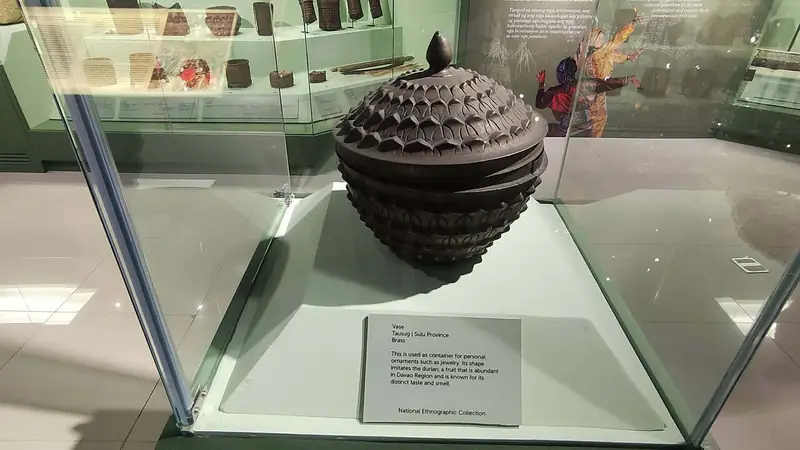
The okir decorative art — flowing geometric and botanical motifs used across woodcarving, metalwork, and textiles in the Bangsamoro world — reaches particular sophistication in Sulu. The brasswork of the Tausug craftsmen — betel nut sets, ceremonial containers, musical instruments — is among the finest decorative metalwork in Southeast Asia. The craft tradition is maintained in Jolo and the coastal municipalities despite the disruptions of the past decades.

Pangalay Dance

The pangalay — the classical dance tradition of the Tausug and related groups across the Sulu archipelago — is performed at royal and ceremonial occasions. The dancer's movements are characterised by the elaborate articulation of the fingers and wrists — movements trained from childhood and capable of expressing a complete vocabulary of cultural gesture. Pangalay is listed as a UNESCO intangible cultural heritage.

The Kris of Sulu

The kris — the wavy-bladed sword of the Malay world — is most elaborately made in Sulu. Tausug master craftsmen produce blades with complex metalwork using techniques brought from Malay and Javanese traditions centuries ago. A fine Sulu kris is simultaneously a weapon, a ritual object, and a work of art. The craft is listed as a UNESCO intangible cultural heritage.

Sulu's food is halal, maritime, and influenced by the Malay and Indonesian traditions that came with the sultanate's trade connections. Rice, fish, and coconut are the foundations. The piyaren and rendang-adjacent preparations that appear across the Bangsamoro world take distinct local forms in the Sulu archipelago, where the variety of seafood available shapes the cuisine more than anywhere else in Mindanao.

Tiyula Itum (Tausug Black Soup)

One of the most distinctive dishes in the Philippines: a dark beef or chicken broth blackened with burned coconut meat and spiced with ginger, lemongrass, and local peppers. The colour is extraordinary — deep black, smoky, with a flavour that is at once rich and clean. Served at celebrations and royal occasions. The preparation of the burned coconut base is the technical core of the dish.

Satti (Satay, Sulu Style)

Sulu's version of the grilled skewer tradition found across maritime Southeast Asia: small pieces of beef or chicken grilled over charcoal and served with a spiced coconut sauce and pressed rice cake (puso). The satti of Jolo is sold from stalls before dawn — the morning meal of the working waterfront. The sauce is thicker and more complex than the peanut sauce of Indonesian satay.

Halal Food Throughout

All food in Sulu is halal — pork is not available anywhere in the province. Beef, chicken, seafood, and goat are the primary proteins. The variety of seafood from the Sulu Sea is extraordinary: the same waters that once supplied the sultanate's royal kitchens still produce the fish, crab, and shellfish that define Jolo's market.

Tausug is the dominant language of Sulu — spoken by the Tausug people across the archipelago and serving as the lingua franca of trade throughout the southwestern Philippines. It is also widely spoken in parts of Malaysia's Sabah state, reflecting the historical connections of the Sulu Sultanate to the Bornean coast.

Tausug — Language of the Current

Tausug is an Austronesian language of the Philippine branch, most closely related to the languages of the Visayas — a connection that reflects ancient maritime movement across the Sulu Sea before the Islamisation of the archipelago. The language carries an extensive written tradition in the Arabic-derived Jawi script, used for centuries in the Sultanate's correspondence, legal documents, and religious texts.

The Sulu Letter to the King of Spain

The Sulu Sultanate maintained diplomatic correspondence with European powers — letters from the Sultan of Sulu to the King of Spain survive in the Archive of the Indies in Seville, written in Malay in the Jawi script. These documents represent some of the oldest surviving diplomatic records of Philippine political entities engaging with European states on formal terms.

Sulu is not currently accessible to general tourism. The security situation in the Sulu archipelago — due to the presence of armed groups — has resulted in sustained travel advisories from the Department of Tourism and from foreign governments. The information presented here describes the province's culture, history, and geography as a record, not as a travel guide for immediate use.

JoloCapital
Air or sea from ZamboangaAccess
Active — check before planningTravel advisory
Cultural and historicalBest context

Jolo Town

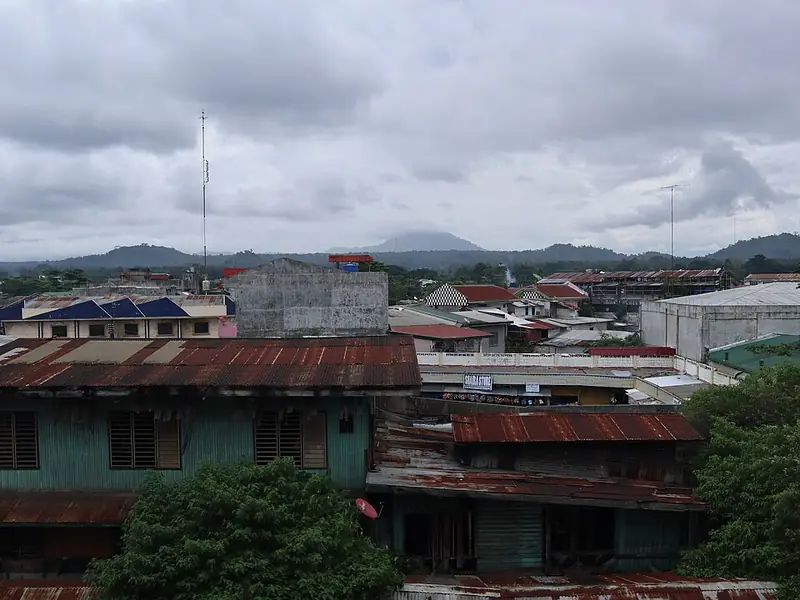
The capital of Sulu and the historic seat of the Sulu Sultanate. The old town retains traces of the Spanish fortification, the colonial-era street grid, and the waterfront market that has been operating for centuries. The Tulay Bridge and the old market area were central to Jolo's identity as a trading port.

Bud Daho

The volcanic peak rising above Jolo town — the site of the 1906 Battle of Bud Daho, where American forces killed hundreds of Tausug fighters who had taken refuge on the summit. The site is one of the most significant historical battlefields of the Philippine-American War and a place of deep significance in Tausug collective memory.

For Researchers and Journalists

Academic researchers and journalists covering the Bangsamoro peace process and the Sulu archipelago should coordinate with the Office of the Presidential Adviser on the Peace Process and with Sulu-based civil society organisations before travel. Local contacts are essential. Travel without coordination is strongly discouraged by the current security situation.

Five Hundred Years

In 1450, a scholar arrived at the island of Sulu from Johor with knowledge of Islamic law, governance, and scripture. He married into the ruling family, established a sultanate, built a court, and died — leaving behind an institution that would survive Spanish attacks, Dutch competition, British influence, American conquest, Philippine independence, and five decades of armed conflict. In 2025, the Sultanate of Sulu still has a sultan.

What survived across those five centuries was not territory — the sultanate lost territory continuously, retreating from Borneo, from the mainland trading posts, eventually from effective control of its own archipelago. What survived was the identity. The Tausug are the people of the current, and the current does not stop for political boundaries or military defeats. The pangalay dance is still performed. The kris is still made. The Jawi letters are still written. The mosques are still full on Friday.

The tragedy of Sulu in recent decades is not that the sultanate's reach is reduced — it was always reduced, across five centuries of contest with larger powers. The tragedy is that the security crisis has closed the archipelago to the scholars, traders, and travellers who would otherwise come to see what five hundred years of Islamic civilisation looks like when it has been built on coral and sustained by the sea.