Map

Zamboanga del Sur

Zamboanga Peninsula
Mindanao
Capital Pagadian City
Population 1,299,098
Area 6,250 km²
Municipalities 26
Cities 2
Island Group Mindanao
Languages Cebuano, Subanen, Chavacano

Zamboanga del Sur occupies the southern and central portion of the Zamboanga Peninsula — the long arm of Mindanao extending westward into the Sulu Sea. Its capital, Pagadian City, sits on Illana Bay and serves as the commercial hub of the peninsula region. The province bridges the Christian north and the Muslim south of the Zamboanga world.

Pagadian CityCapital
3,573 km²Area
26 + 1 cityMunicipalities
MindanaoIsland Group

The province is home to one of the Philippines' most unusual geographical features: the staircase town of Pagadian City, where the hillside neighbourhoods are connected by concrete steps that function as streets — too steep for vehicles, navigated by tricycles specially modified to climb them. The city has earned the informal title of Asia's Little Hong Kong for this topographic quirk.

The Staircase City

Pagadian City's hillside barangays are connected by a network of concrete stairways — some several hundred steps long — that serve as the streets for these upper residential areas. Locally-modified tricycles with extended wheelbases and low gear ratios navigate the steepest of these staircases. The system is functional, has been in use for decades, and continues to expand as the city grows upward.

The Middle of the Peninsula

The Zamboanga Peninsula's southern coast — facing Illana Bay and the Moro Gulf — was historically within the sphere of influence of the Maguindanao Sultanate to the east, while the interior mountains were Subanen territory. Spanish missions penetrated the northern coast from Dapitan and Dipolog but made limited progress along the southern Illana Bay coast, where Maguindanao influence was stronger.

1952

Zamboanga del Sur Established

Zamboanga del Sur was constituted from the southern portion of the undivided Zamboanga province in 1952 — the same reorganisation that created Zamboanga del Norte. Pagadian, a settlement on Illana Bay with a natural harbour, became the capital. The province's position between the Christian north and the Muslim south gave it a distinctive multi-faith character from the outset.

2001

Zamboanga Sibugay Separated

Zamboanga Sibugay was carved from Zamboanga del Sur in 2001, reducing the province's area but leaving it still substantial. The separation recognised the distinct character of the Sibugay Valley interior — an agricultural zone that had developed its own local government identity.

1970s–present

Settler Communities and the Peninsula

The Zamboanga Peninsula received significant migration from the Visayas and Ilocos during the American period and post-independence settlement programmes. Zamboanga del Sur's interior was opened to Christian settler farming communities in the mid-20th century, producing the mixed religious and cultural demographics that define the province today.

Zamboanga del Sur's culture is a genuine mix — Christian settler communities from the Visayas and Ilocos in the agricultural interior, Subanen in the highland forest margins, and Maguindanao and Yakan communities in the coastal and western municipalities. The province has navigated this diversity with varying degrees of success across its history.

Subanen of the Interior

The Subanen communities of the Zamboanga del Sur interior maintain the same cultural traditions as those across the broader Zamboanga Peninsula — the gyulen ceremony, the ritual specialist tradition, the knowledge of the highland forest. Many Subanen communities in the province have converted to Christianity over the past century while retaining elements of their indigenous practice alongside Catholic observance.

Sang-An Festival

Zamboanga del Sur's provincial festival — the Sang-An — is held annually in August, celebrating the foundation of the province with cultural presentations from all of its ethnic communities. The name comes from a Subanen word. The festival brings together the province's diverse communities in street dancing, cultural performances, and trade exhibits.

Lake Kumalarang

Lake Kumalarang in the municipality of the same name is a highland lake in the interior of Zamboanga del Sur — the largest natural lake on the Zamboanga Peninsula. Surrounded by the territories of Subanen communities, the lake is a significant freshwater ecosystem and the source of several rivers that drain to both coasts of the peninsula.

Pagadian City and the coastal municipalities of Zamboanga del Sur have access to the abundant seafood of Illana Bay — the same rich fishing ground that supports the communities of the adjacent Lanao del Sur and Maguindanao coasts. The interior municipalities cook in the Ilocano and Cebuano traditions brought by settler communities.

Kinilaw na Isda (Illana Bay Style)

Fresh fish from Illana Bay — yellowfin tuna, grouper, or the small reef fish of the bay's shallower sections — dressed in coconut vinegar, ginger, red onion, and local chilli. The Pagadian version uses a coconut vinegar produced in the coastal barangays — stronger and more aromatic than the commercial varieties. The bay's daily catch goes directly into the morning market and into the kinilaw preparations of the day.

Pinaupong Manok (Clay Pot Chicken)

Chicken cooked in an earthenware pot with rock salt, garlic, and local herbs — no liquid added beyond what the chicken produces itself. The pot is sealed with banana leaf and cooked over low heat until the chicken is tender and the juices have reduced to a concentrated, fragrant sauce. A preparation common across the Zamboanga Peninsula's interior municipalities.

Pagadian City's Waterfront

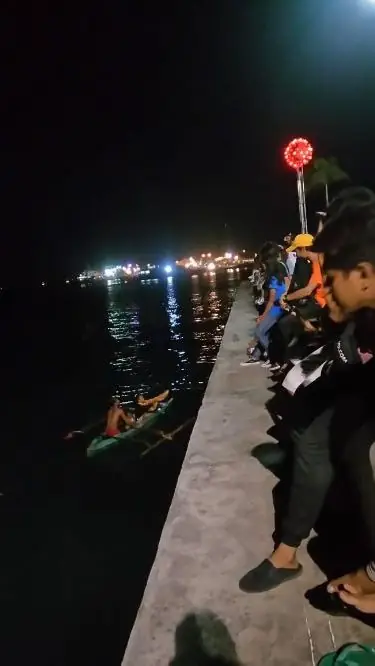
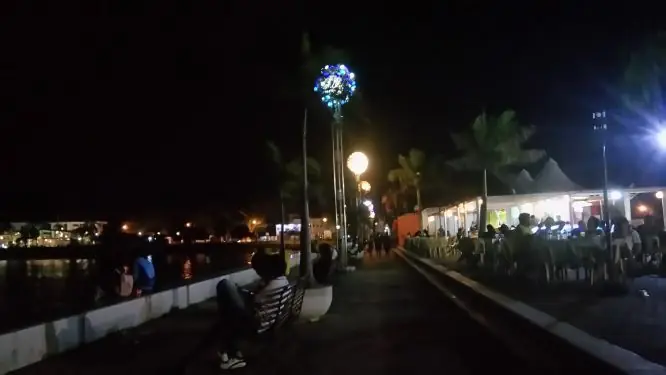
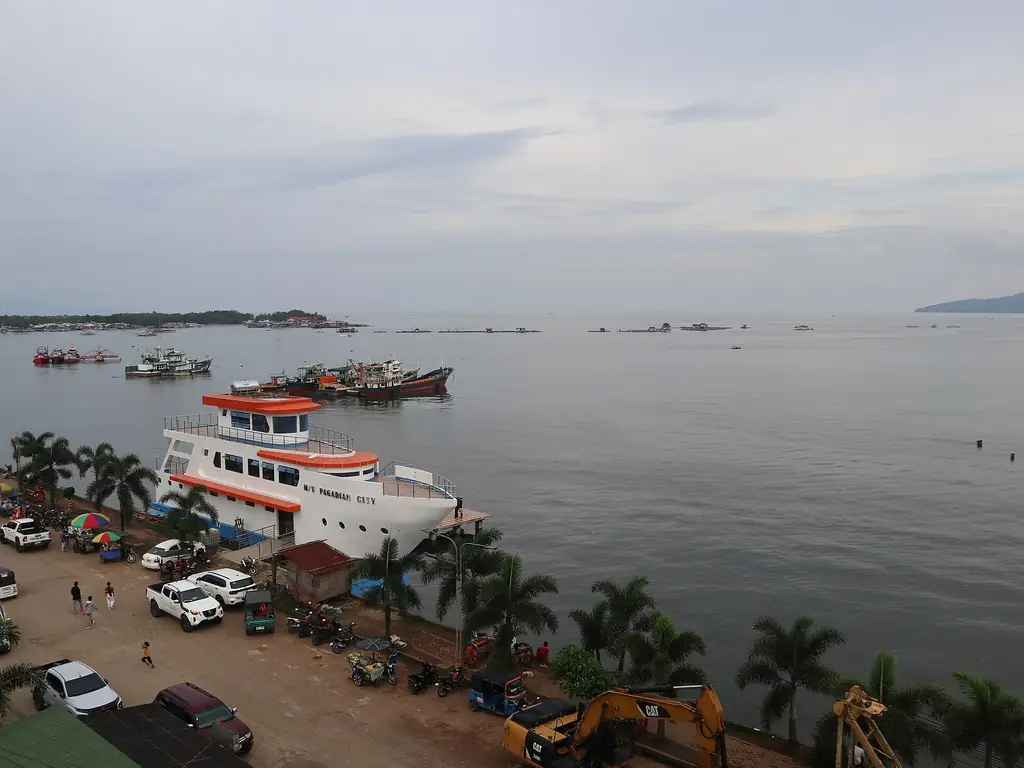
The Pagadian City waterfront has a fish market and several seafood restaurants overlooking Illana Bay. Morning arrivals at the market see the overnight catch being unloaded. The restaurants along the waterfront road serve grilled seafood from midday — the grouper and snapper from the bay are particularly reliable.

Cebuano is the dominant everyday language of Pagadian City and most coastal municipalities of the province. The interior communities speak Cebuano alongside varying levels of retention of Subanon. Chavacano — the Spanish creole of Zamboanga City — is not widely spoken in Zamboanga del Sur, distinguishing it from the city province across the peninsula tip.

Subanon in Zamboanga del Sur

The Subanen of Zamboanga del Sur's interior speak the Lapuyan dialect of Subanon — one of the largest dialect groups of the language. The Lapuyan Subanon are the most studied of the Subanen communities, with documentation efforts going back to the Spanish mission period. The language is under pressure from Cebuano and Filipino in the communities closest to the lowland towns.

Maguindanaon on the Coast

The western coastal municipalities of Zamboanga del Sur — facing the Moro Gulf and the Sibugay Bay — have Maguindanaon-speaking communities that reflect the historical influence of the Maguindanao Sultanate on the peninsula's southern coast. These communities maintain Islamic practice and are culturally continuous with the BARMM provinces to the east.

Pagadian City is reached by air from Cebu and Manila — a flight of about one hour from Cebu. The city serves as the gateway for the southern peninsula and is the transfer point for travel to Zamboanga Sibugay and onward to Zamboanga City by road. The staircase neighbourhoods and the bay view are the city's primary visitor attractions.

~1 hr (air)From Cebu
3–4 hrs (road)From Zamboanga City
Pagadian AirportAirport
Dec–MayBest season

Pagadian City Staircase Barangays

The hillside barangays of Pagadian City, connected by concrete staircases and navigated by the city's modified tricycles. Walking the staircases at dawn — when the city is waking and the bay is visible through the houses — gives the best sense of how the community has adapted to its impossible topography. The view of Illana Bay from the upper barangays is wide and clear.

Lake Kumalarang

The largest natural lake on the Zamboanga Peninsula — a highland body of water surrounded by Subanen communities and secondary forest. Reached by road from Pagadian, then by local transport into the interior. The lake is productive fishing ground and the water is clean. The surrounding community is the access point for the lake — coordinate with the municipal tourism office before visiting.

Lison Valley

An agricultural valley in the interior of the province — rice and corn farming communities in a relatively flat inland basin surrounded by the Zamboanga range. The valley has a cooler climate than the coast and a different character — quiet, agricultural, with the rhythms of farming rather than fishing. Reached by road from Pagadian.

Pagadian as a Hub

Pagadian City functions primarily as a transit and commercial hub rather than a tourism destination. Use it as the base for excursions into the interior — Lake Kumalarang, the Subanen communities of the highland, and the coastal fishing villages of the Illana Bay shore. The city has adequate accommodation and a range of food options for a one-night stay.

The City on the Hill

Pagadian City grew on a hillside that proved inconvenient for roads but not for people. The residents simply built where they could, and when the land ran out horizontally, they went vertical — up the slope, building houses that overlooked the houses below, connected by staircases rather than streets. The city grew upward the way cities in flatter places grow outward: because the people who lived there needed to live somewhere, and the hillside was where they were.

The tricycle modification that followed is a piece of provincial engineering worth admiring. The mechanics of Pagadian took standard sidecar tricycles and extended the wheelbase, lowered the centre of gravity, and geared the engine for the kind of climb that would defeat a standard vehicle. The result is a tricycle that can ascend staircases that walking up quickly makes the legs ache. The passengers sit in the sidecar as the driver navigates the steps, one at a time, at a pace that allows for conversation and for looking out at the bay below.

There is something instructive in this. The city's problem was not the hillside — the hillside was always going to be there. The city's solution was to stop treating the hillside as an obstacle and start treating it as the terrain. The staircases are now infrastructure. The modified tricycles are now an industry. What looked like a limitation became, over decades, the thing that makes Pagadian recognisable among all Philippine cities.